






Definition and Meaning
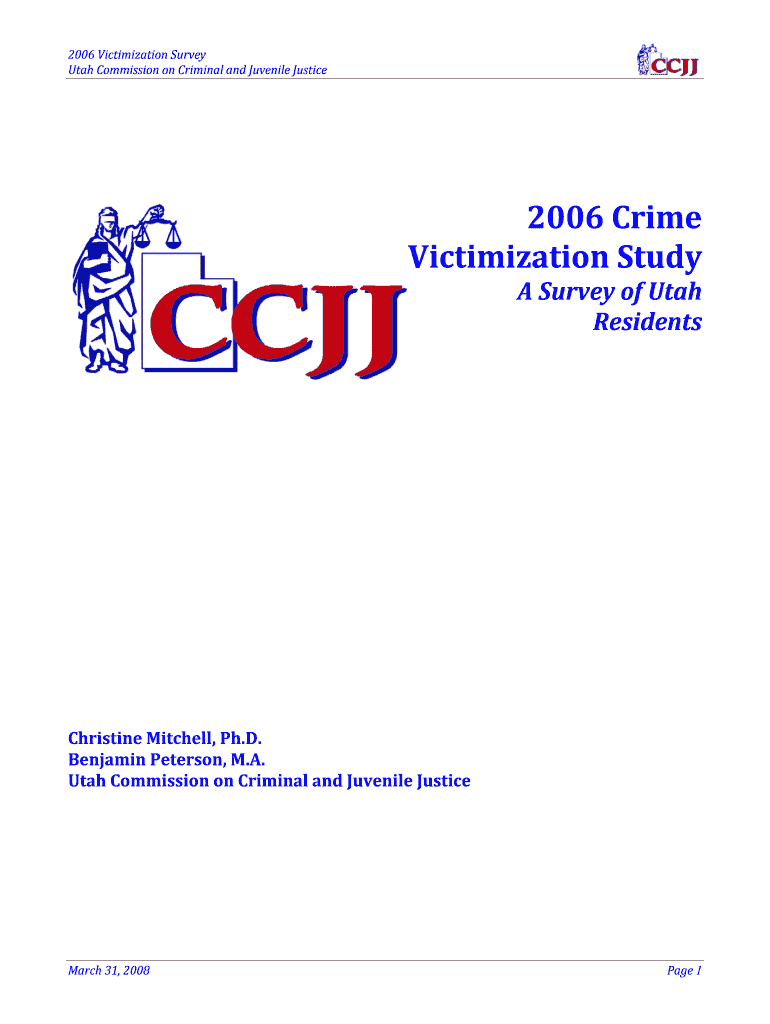
The 2006 Crime Victimization Study, conducted by the Utah Commission on Criminal and Juvenile Justice, serves as a pivotal tool in understanding the crime landscape within Utah during 2006. This comprehensive analysis provides insights into the types of crimes experienced by residents, the demographics of victims, and the perceived safety within communities. The study allows stakeholders to assess crime trends and the effectiveness of existing crime prevention strategies.
How to Use the 2006 Crime Victimization Study
The study can be utilized by policymakers, law enforcement agencies, and researchers to inform crime prevention strategies and policies. By analyzing data on crime types, victim demographics, and community safety perceptions, stakeholders can identify high-risk areas and allocate resources more effectively. Researchers may also use this data to study crime trends over time and assess the impact of interventions in reducing crime rates.
Key Elements of the 2006 Crime Victimization Study
The study includes various key elements:
- Crime Categories: Detailed breakdown of property and violent crimes along with emerging issues such as identity theft and stalking.
- Demographic Data: Information on victims’ age, gender, and other characteristics.
- Perception vs. Reality: Analysis of perceived safety compared to actual crime incidents.
- Unreported Crimes: Insights into why victims might choose not to report crimes to law enforcement.
Who Typically Uses the 2006 Crime Victimization Study
Various professionals rely on this study, including:
- Law Enforcement Agencies: To identify crime hotspots and develop targeted patrol strategies.
- Policy Makers: For crafting legislation aimed at reducing crime and improving public safety.
- Academics and Researchers: For sociological studies on crime and safety perceptions.
- Community Leaders: To better understand and address the concerns of their constituents.


Important Terms Related to the Study
Several important terms are commonly used within the study:
- Victimization: Refers to individuals who have been subjected to criminal acts.
- Perceived Safety: How safe individuals feel within their communities, regardless of actual crime data.
- Identity Theft: Newly emerging crime category highlighting the unauthorized use of personal information.
- Stalking: Persistent harassment that causes fear or discomfort, recognized within this study period.
Legal Use of the 2006 Crime Victimization Study
The study’s findings have legal significance, particularly in policy-making and law enforcement practices. It aids in:
- Policy Development: Proposing new laws based on crime trends.
- Resource Allocation: Directing funding to areas with higher crime rates.
- Community Safety Initiatives: Creating localized programs to enhance public safety based on crime data insights.
Examples of Using the 2006 Crime Victimization Study
Practical applications of the study include:
- Crime Prevention Programs: Launching targeted initiatives in areas identified as crime-prone.
- Public Awareness Campaigns: Educating the community on prevalent crime types and preventive measures.
- Support Services for Victims: Offering tailored support based on demographics most affected by specific crimes.
State-Specific Rules and Regulations
Utah's crime victimization landscape, as outlined in the study, necessitates adherence to state-specific rules:
- Reporting Requirements: Dictating how and when crimes should be reported.
- Victim Support Initiatives: Programs mandated by state law to support crime victims.
- Data Collection Standards: Ensuring the study aligns with Utah’s legal frameworks for data accuracy and privacy.
Digital vs. Paper Version
The study is accessible in both digital and paper formats:
- Digital Version: Offers easy electronic access and capability for data manipulation using software tools.
- Paper Version: Provides a traditional approach for those preferring hard copies for review and archival purposes.
Eligibility Criteria
Eligibility for utilizing and contributing to the data in this study may be defined by:
- Institutional Access: Entities involved in law enforcement, academia, or public policy.
- Research Purposes: Individuals or organizations aiming to conduct further studies based on the findings.
By exploring these sections, users can gain a comprehensive understanding of the 2006 Crime Victimization Study and its significant role in shaping crime prevention strategies in Utah.