






Definition and Meaning
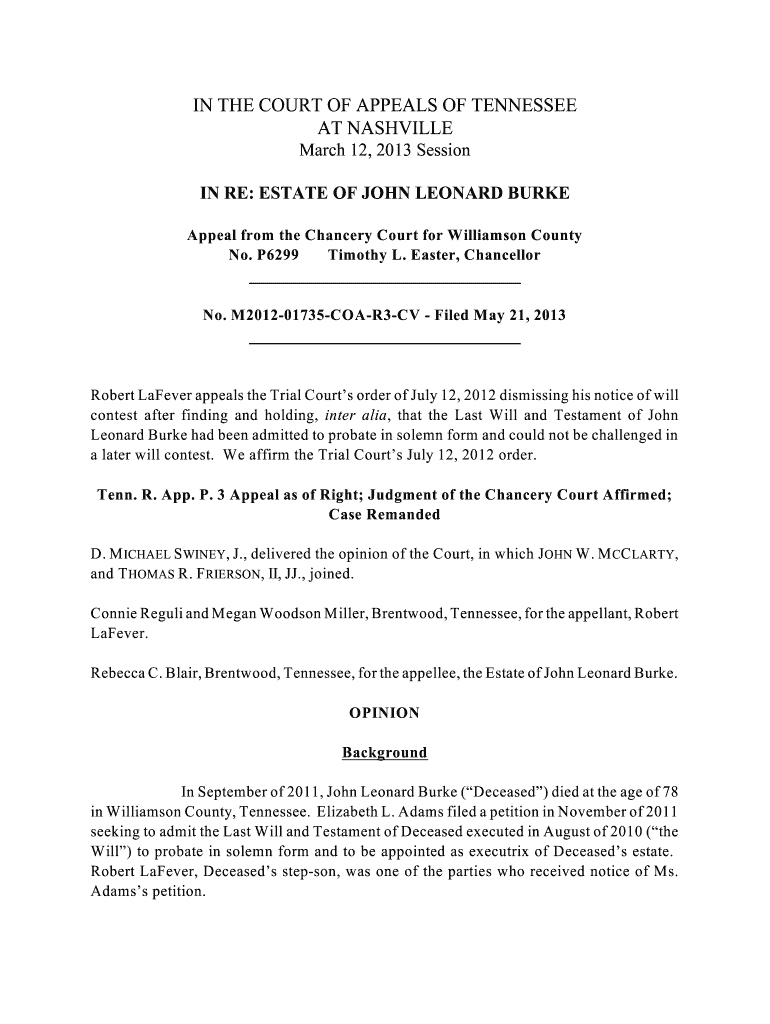
The "IN RE: ESTATE OF JOHN LEONARD BURKE" refers to a legal case involving the probate process of John Leonard Burke's estate. Probate is the legal procedure through which a deceased person's will is validated by the court. This process ensures the estate is distributed according to the deceased's wishes, debts are settled, and any remaining financial matters are concluded. The case of John Leonard Burke specifically deals with the administration and distribution of his estate as per his Last Will and Testament, amidst challenges that include claims of fraud and lack of testamentary capacity.
Key Elements of the IN RE: ESTATE OF JOHN LEONARD BURKE
The primary focus of the court proceedings in the estate of John Leonard Burke involves several key legal elements:
- Probate in Solemn Form: Burke's will was admitted to probate in solemn form, which is a comprehensive and conclusive process requiring all interested parties to be notified and the will to be proven in court, often before a judge, thus eliminating further contestation after the order.
- Contestation: The case reveals a dispute where Robert LaFever contested the will after it was admitted to probate, citing fraud and questioning Burke's testamentary capacity.
- Appellate Court Ruling: The appellate court analyzed procedural issues, ultimately affirming the trial court's decision to uphold the initial probate proceedings by dismissing the contest.
Legal Use of the IN RE: ESTATE OF JOHN LEONARD BURKE
The case acts as a reference for understanding legal standards and processes related to probate in the U.S. legal system:
- Establishment of Legal Precedence: This case underscores the importance of following procedural rules in will contests and appeals, especially regarding the timing of such contests.
- Clarification of Testamentary Capacities: It highlights legal criteria considered when assessing whether an individual had the capacity to execute a will at the time of its writing.
- Interpretation of Fraud Claims: The proceedings delve into how claims of fraud are evaluated within probate cases, requiring substantial evidence to alter or nullify the will.
Steps to Complete the IN RE: ESTATE OF JOHN LEONARD BURKE
Managing the estate within the framework of "IN RE: ESTATE OF JOHN LEONARD BURKE" typically involves several procedural steps:
- Filing a Petition for Probate: Initiating probate involves filing the Last Will and Testament with the appropriate court and notifying all parties.
- Notification and Hearing: Legal notices are sent to all interested parties, followed by a court hearing to discuss the verification and authenticity of the will.
- Estate Inventorying: An executor, often named in the will, must inventory and appraise all the estate's assets.
- Debt Settlement: Before distribution, all debts and obligations of the deceased must be settled from the estate’s assets.
- Distribution of Assets: After confirming the will's validity and settling obligations, the remaining assets are distributed to beneficiaries as specified in the will.
Who Typically Uses the IN RE: ESTATE OF JOHN LEONARD BURKE
The type of legal case represented by "IN RE: ESTATE OF JOHN LEONARD BURKE" is primarily utilized by:
- Estate Executors: Individuals responsible for administering and distributing a decedent's estate according to the will.
- Beneficiaries: People or entities named in the will who are to receive portions of the estate.
- Attorneys and Legal Representatives: Lawyers who specialize in estate planning and probate litigation represent executors or contesting parties.


Important Terms Related to IN RE: ESTATE OF JOHN LEONARD BURKE
Understanding the case requires familiarity with several legal concepts:
- Testamentary Capacity: Legal ability to create a valid will or testament.
- Probate Court: Specialized judicial body overseeing the validation of wills and the administration of estates.
- Contestant: An individual who challenges the validity or terms of a will within legal proceedings.
State-Specific Rules for the IN RE: ESTATE OF JOHN LEONARD BURKE
Different jurisdictions may have varying rules concerning probate processes:
- Notice and Hearing Requirements: States like Tennessee require elaborate notice and hearing procedures as seen in Burke's case.
- Procedures for Contestation: Many states, including Tennessee, set deadlines for when challenges to a will must be filed post-admission to probate.
- Regional Variations in Probate Stipulations: Differences exist in state laws concerning issues like testamentary capacity and acceptable evidence for contestation.
Examples of Using the IN RE: ESTATE OF JOHN LEONARD BURKE
The principles from the Burke case can be applied to a variety of contested probate scenarios:
- Handling Similar Contestations: When a will is contested post-probate due to alleged lack of capacity, parties can refer to the Burke case to understand procedural benchmarks.
- Defending Against Fraud Accusations: Executors can use this case to demonstrate how courts assess and rule on fraud claims.
- Guidance for Timely Contestation: Lawyers can utilize this case in advising clients about the importance of acting promptly when contesting probate decisions.