






Definition & Meaning
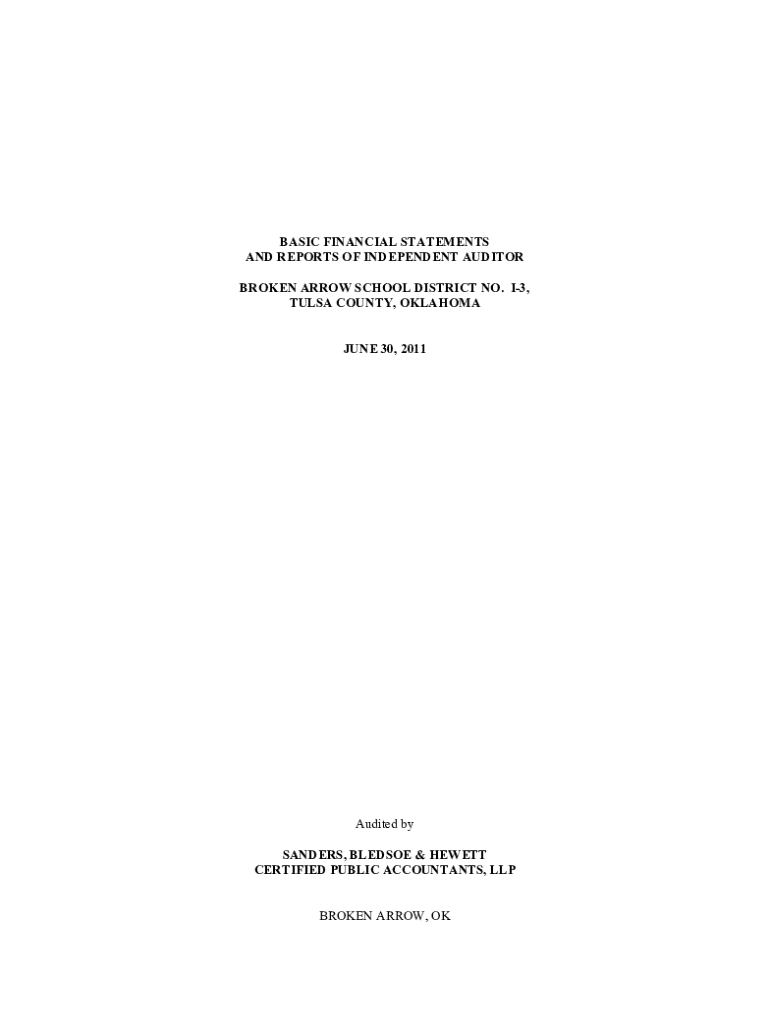
Basic financial statements and reports of independent refer to a set of documents that provide an overview of an organization’s financial performance and position, typically audited by an independent auditor. This term often includes various components, such as the balance sheet, income statement, cash flow statement, and accompanying notes. These statements are essential for stakeholders to assess an organization's financial health, understand management's approach to financial stewardship, and evaluate the organization’s compliance with accounting standards.
Components of Basic Financial Statements
- Balance Sheet: Provides a snapshot of the organization's assets, liabilities, and equity at a specific point in time.
- Income Statement: Shows the company’s revenue and expenses over a reporting period, providing insight into profitability.
- Cash Flow Statement: Highlights how cash is generated and used across operating, investing, and financing activities.
- Notes to Financial Statements: Offer additional context and detail, explaining figures, accounting policies, and any significant financial changes.
Key Elements of the BASIC FINANCIAL STATEMENTS AND REPORTS OF INDEPENDENT
Independent Auditor's Report
The independent auditor’s report is a critical element in basic financial statements, offering an external evaluation of the organization’s financial records. The report typically includes:
- Opinion on Financial Statements: An auditor's opinion on whether the financial statements are presented fairly in accordance with the applicable financial reporting framework.
- Basis for Opinion: Description of the audit conducted and methodologies used.
- Management's Responsibility: Management’s duty to prepare and maintain accurate financial records.
Management's Discussion and Analysis (MD&A)
The MD&A section provides management’s perspective on the financial results, including:
- Financial Highlights: Key financial metrics and notable changes from prior periods.
- Operational Insights: Discussion of operational performance, challenges, and strategic initiatives.
- Future Outlook: Management’s expectations and potential future financial implications.
How to Use the BASIC FINANCIAL STATEMENTS AND REPORTS OF INDEPENDENT
Users of these statements leverage them to make informed decisions by:
- Assessing Financial Health: Investors, creditors, and stakeholders analyze these documents to gain insights into financial stability and profitability.
- Compliance Verification: Ensuring alignment with regulatory and reporting requirements.
- Strategic Planning: Utilizing financial data to formulate business strategies and make investment decisions.
Steps to Complete the BASIC FINANCIAL STATEMENTS AND REPORTS OF INDEPENDENT
- Gather Financial Data: Collect all relevant financial records, such as transactions, asset values, and liabilities.
- Prepare Initial Drafts: Develop drafts of the balance sheet, income statement, and cash flow statement.
- Engage an Independent Auditor: Hire a licensed auditor to review and verify the financial data.
- Review and Revise: Incorporate auditor feedback and make necessary adjustments.
- Finalize the Reports: Ensure accuracy and compliance with applicable accounting principles before finalizing.
Who Typically Uses the BASIC FINANCIAL STATEMENTS AND REPORTS OF INDEPENDENT


Primary Users
- Investors: To make investment choices and evaluate potential returns.
- Creditors: To determine creditworthiness and assess risk.
- Regulators: To enforce compliance with financial regulations and standards.
Secondary Users
- Employees: For insights on the company’s stability and growth prospects.
- Suppliers: To evaluate the company's ability to meet future obligations.
Legal Use of the BASIC FINANCIAL STATEMENTS AND REPORTS OF INDEPENDENT
Compliance with legal standards is crucial, ensuring credibility and adherence to jurisdiction-specific regulations. Key legal aspects include:
- Regulatory Standards: Conforming to standards like GAAP or IFRS.
- Disclosure Requirements: Providing all necessary information to prevent legal penalties.
- Transparency: Maintaining clear and honest reporting to uphold corporate integrity.
Important Terms Related to BASIC FINANCIAL STATEMENTS AND REPORTS OF INDEPENDENT
- Audit: An official inspection of an organization's accounts by an independent party.
- Financial Position: The status of the assets, liabilities, and equity of an organization at a specific time.
- Liquidity: The ability of an organization to meet its short-term obligations.
Examples of Using the BASIC FINANCIAL STATEMENTS AND REPORTS OF INDEPENDENT
Organizations utilize these reports for various purposes:
- Annual Reports: Companies often include audited financial statements in their annual reports to provide a comprehensive view of performance.
- Loan Applications: Businesses may present these documents to lenders to secure financing.
- Mergers and Acquisitions: Essential analysis for parties involved in mergers or acquisitions to assess financial viability and risks.