






Definition & Meaning
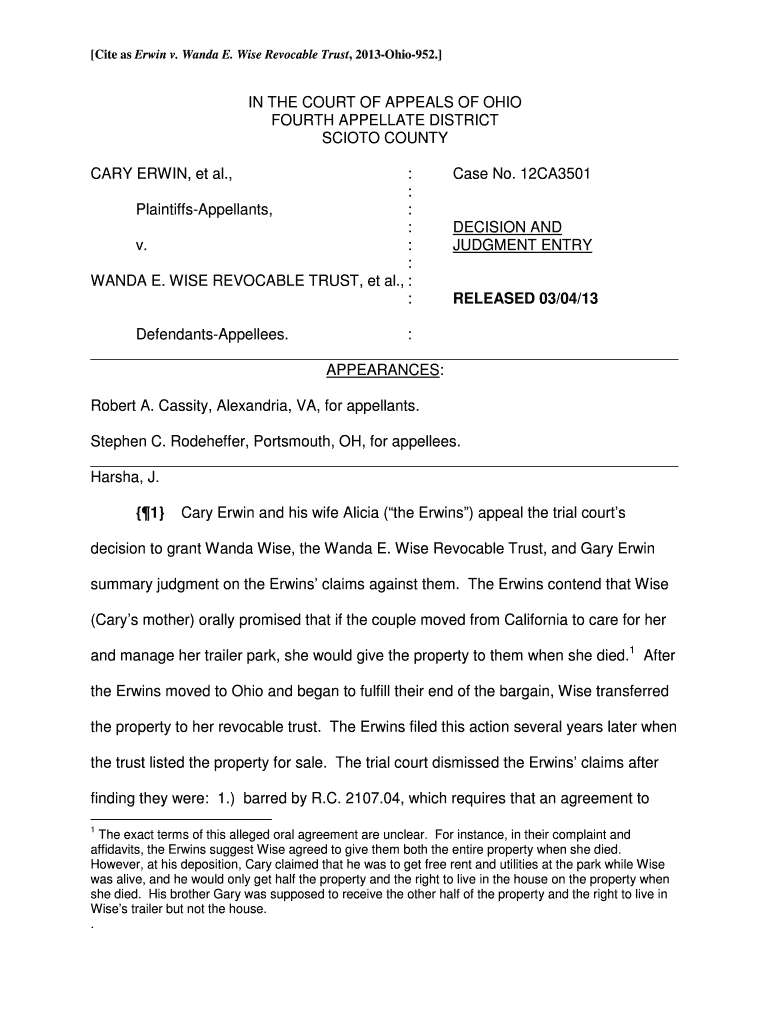
The case "Erwin v. Wanda E. Wise Revocable Trust - Supreme Court - sconet state oh" pertains to a legal dispute in which Cary and Alicia Erwin challenged the summary judgment ruling by the trial court in the state of Ohio. The issue centered around an alleged oral promise made by Wanda Wise to bequeath property in exchange for caregiving services. This case highlights important legal principles, such as the necessity of written agreements under Ohio's R.C. 2107.04 to enforce such promises. The court ultimately dismissed the Erwin's claims, emphasizing that the statute of limitations had expired and no exceptions to the existing statute applied.
Key Elements of the Erwin v. Wanda E. Wise Revocable Trust
Several critical elements are central to the case:
- Oral Agreements: The Erwins' claim was based on an alleged oral promise, which Ohio law requires to be documented in writing for enforcement.
- Statute of Limitations: The timing of the claims was crucial, as they were filed beyond the statutory period allowed for such cases.
- Legal Exceptions: The Erwins sought exceptions to the statute, but the court found none viable.
- Trust and Estates Law: The case involves nuances related to revocable trusts and property bequests.
Legal Use of the Case
The case serves as a precedent for understanding the application of Ohio law to oral agreements related to estate and trust administration. It exemplifies how courts enforce statutory requirements for the documentation of promises concerning property inheritance. Legal practitioners often reference this case to advise clients about the necessity of formalizing agreements in writing to avoid disputes.
Important Terms Related to the Case
Understanding different legal terms in this context is vital:
- Bequeath: To leave personal property to someone through a last will.
- Revocable Trust: An arrangement where the trustor can modify or terminate the trust during their lifetime.
- R.C. 2107.04: Ohio's legal requirement dictating that certain promises related to wills or estates need to be in writing.
- Summary Judgment: A legal determination made by the court without a full trial.
State-Specific Rules for Ohio
Ohio laws specifically affect the outcomes and proceedings of cases like this:
- Written Requirements: Ohio requires written documentation for agreements involving the transfer of estate-related property.
- Filing Deadlines: Strict adherence to statute timelines is essential to maintain legal claims.
Steps to Complete a Legal Action Related to the Case
- Consult a Legal Professional: Obtain legal advice to understand the nuances specific to Ohio's trust and estate laws.
- Documentation of Claims: Ensure all agreements are documented in writing to satisfy Ohio's statutory requirements.
- Timely Filing: File any claims or challenges within the state's statutory period to ensure they are considered by the courts.
- Evidence Gathering: Collect all necessary evidence that supports the execution or breach of the agreement.
Who Typically Uses Cases Like These
Cases like "Erwin v. Wanda E. Wise Revocable Trust" are relevant for:
- Estate Attorneys: They use such cases to guide clients through estate planning and disputes.
- Beneficiaries and Heirs: Understanding their rights and obligations in property bequests.
- Trustees: Managing trust administration and ensuring compliance with legal standards.
Examples of Using the Case
Consider these scenarios where the case might be referenced:
- Legal Education: Law students study this case to learn about trust law and oral agreement enforcement.
- Client Advisory: Attorneys might cite the case when advising clients on documenting estate agreements.
- Judicial Precedent: Judges may reference it in related cases to illustrate enforcement of Ohio's statutory requirements.
Application Process & Approval Time
For those involved in similar legal actions, understanding the process and timeline is key:
- Case Filing: Initiating a case similar to Erwin involves preparing a well-documented legal complaint.
- Legal Review: Expect initial reviews and possibly a summary judgment if the evidence is insufficient.
- Court Rulings: Relevant timelines will vary based on court schedules and the complexity of the case. Most cases progress through initial hearings to potential appeals, affecting the eventual timeline.