






Definition & Meaning
The "School Nurse Professional" designation pertains to the qualifications and credentials required for a nursing professional to provide pupil services in an educational setting. In this context, a School Nurse Professional is someone who holds a specialized license designed to demonstrate their expertise and capability in delivering health services to students within schools. This role not only requires comprehensive nursing skills but also a deep understanding of the educational environment, emphasizing the health and well-being of students as part of the holistic educational experience.
Key Competencies
- Effective Communication: School nurses must be adept at communicating with students, parents, and school staff to convey health-related information clearly.
- Competent Practice: They need to apply their nursing skills efficiently to address student health issues.
- Professional Behavior: Maintaining confidentiality, as well as ethical and respectful interactions, is crucial in the school environment.
How to Obtain the School Nurse Professional License
Obtaining a School Nurse Professional license typically involves meeting specific state-defined criteria. For instance, in Ohio, the process includes:
- Educational Background: Holding a degree in nursing from an accredited institution.
- Current Nursing Licensure: Possessing an active RN (Registered Nurse) license.
- Moral Character: Demonstrating the trustworthiness required for working with minors and managing sensitive health data.
- Specialized Training: Completing additional coursework or training specific to school nursing as defined by the state's education department.
Application Steps
- Submission of Credentials: Potential candidates need to submit their educational and licensure documents to the state's education board.
- Background Check: A criminal background check may be required to ensure the safety of students.
Steps to Complete the School Nurse Professional License Application
Completing the application for a School Nurse Professional license necessitates several detailed steps:
- Gather Required Documents: Compile all academic and professional credentials, including transcripts and a copy of the nursing license.
- Complete State-Specific Training: Participate in any mandated state courses or workshops focused on school nursing practices.
- Apply Online or In-Person: Submit your application through the designated state board portal or via mail if online submission is unavailable.
- Await Approval: Once submitted, the application undergoes review, and the applicant might need to provide additional documentation if requested.
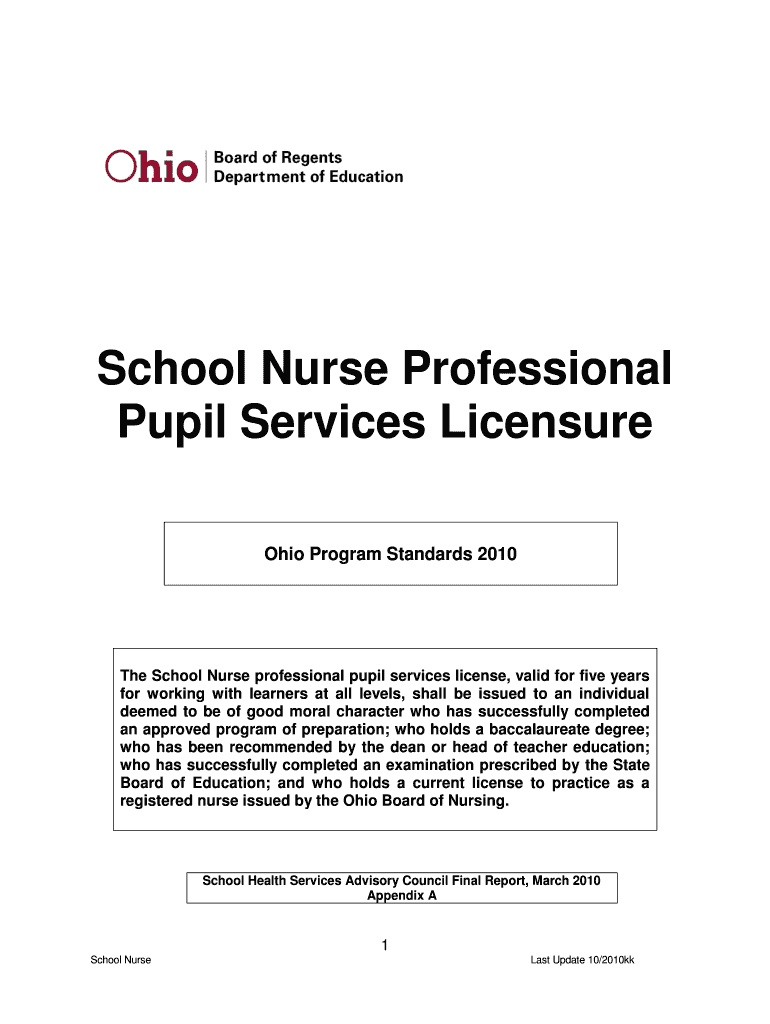
- Receive Certification: Upon approval, the state grants a School Nurse Professional license, typically valid for five years.
Importance of the School Nurse Professional License
The School Nurse Professional license is vital for several reasons:
- Student Health Advocacy: It equips nurses to act as advocates for student health, implementing school-wide health policies.
- Legal Credibility: Holding a valid license ensures that the nurse is recognized as qualified, legal, and fully competent to handle the unique challenges presented in educational environments.
- Compliance with State Regulations: This license demonstrates that the nurse adheres to state-specific regulations and standards in school healthcare services.
Who Typically Uses the School Nurse Professional Designation
School nurses across various educational levels, such as elementary, middle, and high schools, generally hold this designation. They are essential members of the school health team, responsible for:
- Conducting Health Screenings: Vision, hearing, and general health assessments to identify health needs early.
- Health Education: Delivering health education programs tailored to student needs and school policies.
- Emergency Care: Providing immediate care and coordinating with outside medical services when necessary.


State-Specific Rules for the School Nurse Professional
State-specific requirements govern the licensure of School Nurse Professionals. For example, in Ohio:
- Renewal Requirements: Nurses must renew their licenses every five years, demonstrating continued competence through ongoing education.
- Mandated Reporting: School nurses must understand and comply with state laws on reporting communicable diseases and other health threats.
Ohio Licensure Standards
Developed by the Ohio School Nurse Licensure Task Force, these standards guide school nurses in maintaining high quality of care and effective communication within schools.
Key Elements of the School Nurse Professional License
The license includes several critical components:
- Validity Period: Typically valid for five years before requiring renewal to ensure up-to-date practice standards.
- Scope of Practice: Clearly defines the environments and scenarios in which the nurse can operate, such as public, private, or charter schools.
- Continuing Education: Obligates licensees to participate in periodic training to stay informed about the latest school nursing practices and health trends.
Digital vs. Paper Version of the License
Digital and paper versions of the School Nurse Professional license cater to different preferences, although both serve as proof of licensure.
- Digital Version: Often available through the state board's online portal, it allows instant access and printing.
- Paper Version: Typically sent via mail upon initial licensing or renewal, offering a traditional tangible proof for record-keeping purposes.
Software Compatibility for School Nurse Professionals
DocHub, a platform offering digital document management, is compatible with several file formats, facilitating the handling of documents related to School Nurse Professional licensing.
- File Formats: Supports importing and editing of DOC, PPT, XLS, TXT, and PDF files.
- Integration: Seamlessly integrates with cloud services and allows easy annotation, signing, and sharing of documents necessary for licensure applications or renewals.