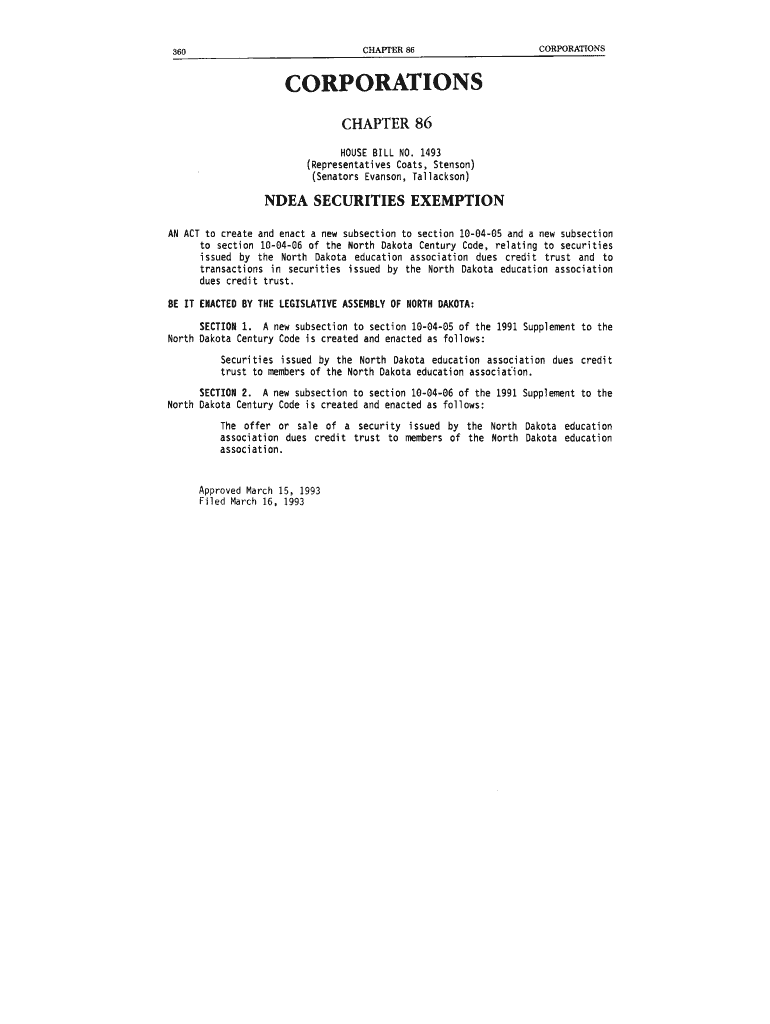







Understanding the CORPORATIONS - North Dakota - State of North Dakota Form
The "CORPORATIONS - North Dakota - State of North Dakota" form is a crucial document for individuals and entities engaging in corporate activities within North Dakota. It encompasses various procedures and guidelines for forming and managing corporations, with a particular emphasis on limited liability companies (LLCs).
Core Components of the Form
- Corporate Formation: This includes stipulations for establishing a corporation in North Dakota, covering the necessary documentation and compliance with state laws.
- LLC Regulations: Detailed information on creating and operating limited liability companies, focusing on governance and member rights.
- Tax Obligations: Guidelines concerning the fiscal responsibilities of corporations, including tax filings and related procedures.
- Dissolution Procedures: Instructions for legally dissolving a corporation, ensuring conformity with state mandates.
Steps to Complete the CORPORATIONS - North Dakota - State of North Dakota Form
- Gather Required Information: Assemble necessary details, including company name, address, and member information.
- Draft the Articles of Incorporation: Prepare legal documents that define your corporation's structure and purpose.
- Submit to State Authorities: File the completed form with the North Dakota Secretary of State.
- Pay Applicable Fees: Ensure payment of any fees associated with the filing to avoid processing delays.
- Compliance Review: Undergo a state compliance check to meet all regulatory requirements.
How to Use the CORPORATIONS - North Dakota - State of North Dakota Form
Utilizing the form involves a systematic approach to meeting legal and administrative requirements for corporate formation and operation within North Dakota. Key tasks include drafting, filing, and ensuring adherence to corporate regulations as outlined in the form.
Obtaining the CORPORATIONS - North Dakota - State of North Dakota Form
- Online Access: Visit the North Dakota Secretary of State's website to download the form.
- Physical Copies: Request paper forms via mail or obtain them directly from the state's office.
- Third-Party Services: Use authorized document preparation services to secure and fill out the form.
Legal Use and Implications
Engaging with this form ensures the legal recognition of your corporate entity in North Dakota. It is fundamental for securing limited liability protections, tax identification, and operational legitimacy as per state laws.
Key Elements of the Form
- Articles of Organization: Specify the foundational details of your corporation.
- Operating Agreement: Outlines the management structure and operating procedures within an LLC.
- Member Contributions: Documentation of financial and asset contributions from LLC members.
Important Terms Related to the Form
- Limited Liability Company (LLC): A business structure offering personal liability protection.
- Governance Structure: The organizational framework guiding business operations.
- Member-Control Agreements: Legal arrangements defining the rights and responsibilities of LLC members.
State-Specific Rules for the Form
North Dakota imposes specific regulations that govern the creation, operation, and dissolution of corporations and LLCs. Adhering to these ensures legal compliance and operational efficacy. These rules dictate how businesses must report, manage member contributions, and handle documentation.
Examples of Using the Form
A North Dakota tech startup might use this form to formally incorporate, securing limited liability for its founders. Similarly, a family-owned business opting for an LLC structure relies on the form to outline its legal and operational framework.
Penalties for Non-Compliance
Failure to properly submit or comply with the form's guidelines can result in legal penalties, including fines, loss of corporate status, or legal actions from the State of North Dakota.
Digital vs. Paper Versions
Both digital and paper versions of the form are available, catering to different preferences and technological capabilities. Online submission typically offers faster processing, while paper forms may appeal to those favoring traditional methods.