






Definition and Purpose of the Credit Application Form
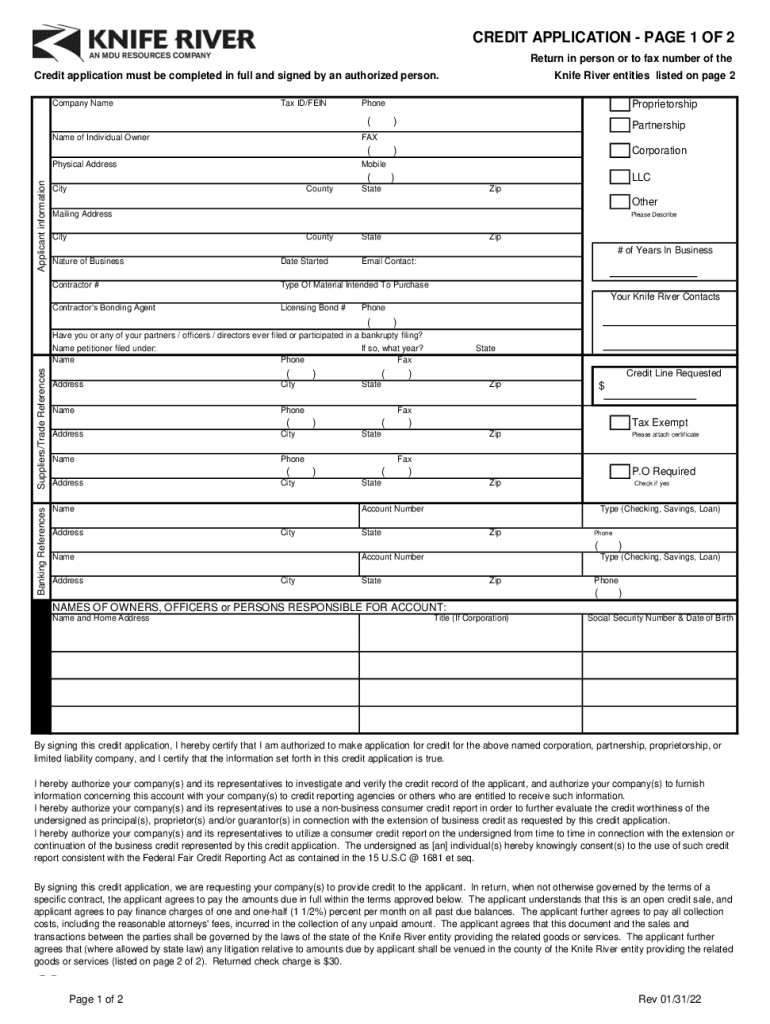
The credit application form serves as a standardized document utilized by businesses to evaluate potential customers' creditworthiness. It collects essential information about an applicant's financial history, business structure, and personal guarantees. This form is an integral component of managing credit risk and protecting against potential defaults. It outlines details including credit line requests and formalizes the terms under which credit is extended, ensuring both parties understand their responsibilities.
How to Use the Credit Application Form
Using the credit application form effectively requires precision in filling out each section. Applicants should carefully provide accurate business details, including company name, address, and identification numbers. It is crucial to accurately disclose financial details and references that verify creditworthiness. Attach necessary documentation for a thorough review. The completed form is then submitted to the credit-granting entity for evaluation, typically through either an online portal or a physical submission depending on the business's specified process.
Steps to Complete the Credit Application Form
- Provide Business Details: Include legal business name, physical address, and contact information.
- Financial Information: Outline current financial status, including credit line requested and any existing debts.
- Ownership and Structure: List the names and contact details of owners or major stakeholders, indicating the business's legal structure (e.g., LLC, Corp).
- Personal Guarantees: Provide personal financial information and guarantees from individuals associated with the business.
- Terms and Conditions: Agree to the outlined terms of credit and associated obligations.
- Authorization for Credit Check: Grant permission for the issuing entity to conduct necessary credit verifications.
Key Elements of the Credit Application Form
- Business Information: Identification of the applicant’s business entity, including operational details.
- Credit Line Request: Declaration of the credit amount desired, justified by prior financial performance and needs.
- Authorization and Legal Declarations: Section where applicants authorize credit checks and agree to the terms of credit.
- Financial References: Historically trending financial data and relevant references, providing insight into past payment behaviors.
Who Typically Uses the Credit Application Form
This form is predominantly used by businesses seeking trade credit from suppliers or financial institutions. Companies ranging from small businesses to corporations utilize this document when they require goods, services, or cash flow management without immediate payment. It is especially frequent in industries with long supply chains or extended service agreements.


Required Documents for Credit Application
- Financial Statements: Recent balance sheets, income statements, and cash flow records.
- Tax Returns: U.S. businesses typically include copies of the last two years of filed federal tax returns.
- Personal and Business Credit Reports: Comprehensive overviews of credit scores and repayment histories.
Legal Use and Compliance with the Credit Application Form
The form must comply with regulations such as the Fair Credit Reporting Act (FCRA) in the U.S., which governs how credit information is collected and used. Businesses must obtain consent from applicants before retrieving credit reports. Clear disclosures and agreements are necessary to ensure applicants understand the legal implications of submitting the form and the conditions of their credit terms.
Versions and Alternatives to the Credit Application Form
While the basic structure of credit application forms remains consistent, specific industries may have tailored versions to fit unique needs such as equipment financing or inventory purchasing. Digital versions are increasingly common, offering online submissions and electronic signatures through platforms like DocHub for more streamlined processes.
Advantages of Digital vs. Paper Versions
Digital forms allow for easier data management and tracking, reducing the risk of information loss or misfiling. Platforms like DocHub enable secure document sharing and real-time collaboration. Paper versions, while traditional, require manual handling and offer less flexibility for edits or updates once submitted. Digital forms often provide automated reminders and tracking capabilities, benefiting both applicants and issuers with greater efficiency.
Understanding these elements allows prospective applicants to accurately and effectively complete a credit application form, thereby increasing their chances for credit approval and ensuring compliance with U.S. regulations and standards.