






Understanding Credit Applications
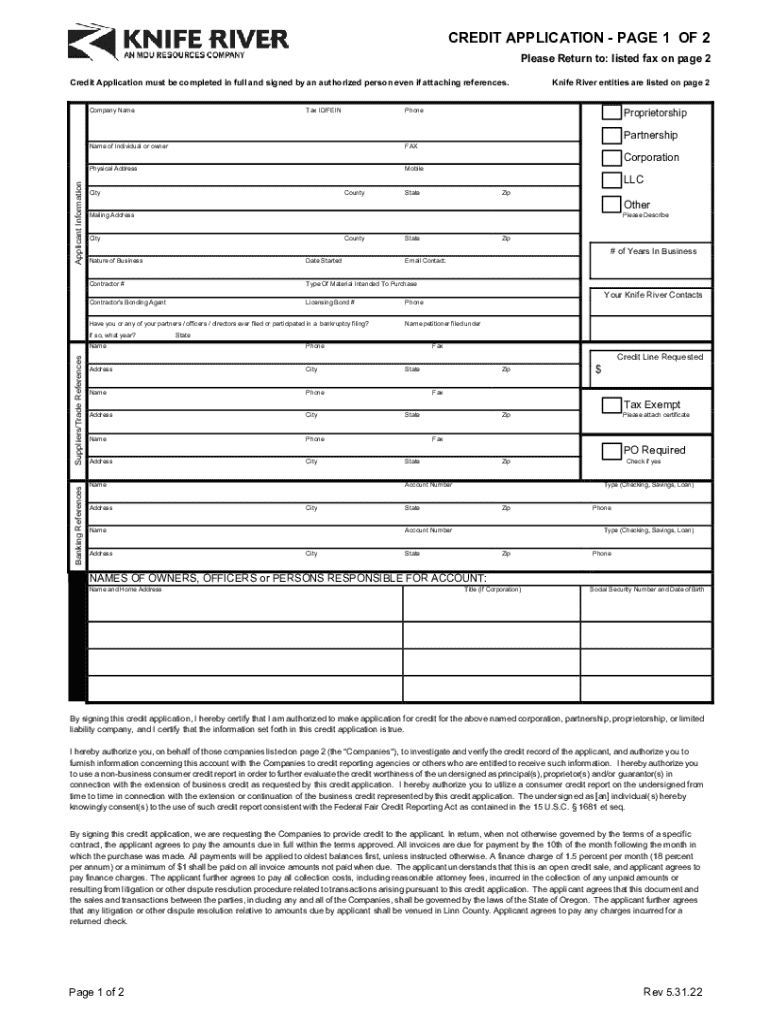
A credit application is an essential document for businesses that seek to obtain credit facilities. It captures pertinent details about the applicant, facilitating the lender’s decision-making process. This document typically requires comprehensive company information, details about the nature of business, references, and personal guarantees from business stakeholders. Ensuring the accuracy and completeness of this form can significantly influence the approval of credit by the lender.
Key Elements of a Credit Application
A credit application comprises several critical components that lenders review to assess creditworthiness:
- Company Details: Includes the legal name, address, and contact information of the business, alongside registration numbers or business identification codes.
- Business Nature: Describes the primary activities conducted by the business, operations scale, and sector-specific information.
- References: Often includes trade references or bank references that can vouch for the applicant's financial reliability and prior credit performance.
- Personal Guarantees: May require individuals associated with the business to provide personal guarantees, which offer lenders additional security.
Steps to Complete the Credit Application
- Compile Business Data: Gather all necessary business information, including financial statements and tax returns.
- Fill Out Company Information: Accurately complete the sections requiring business identification details and operational descriptions.
- Provide Financial References: List credible trade and banking references to demonstrate financial reliability.
- Assign Personal Guarantees: If required, ensure individuals within the business understand and complete the personal guarantee sections.
- Review and Submit: Carefully review the application for accuracy and completeness before submission to the lender.
Importance of Credit Applications
Credit applications are vital for businesses needing financial support. They serve multiple purposes:
- Risk Assessment: Lenders analyze applications to determine the risk involved in extending credit to a business.
- Financial Planning: A well-prepared application can enhance a business’s chances of obtaining favorable credit terms, aiding in financial planning and growth.
- Trust Building: Comprehensive and honest applications foster trust between the borrower and lender, potentially easing future credit renewals or increases.
Who Typically Uses Credit Applications?
Various business types and entities frequently use credit applications, including:
- Corporations and LLCs: Seeking lines of credit or loans to expand operations or manage cash flow.
- Partnerships and Sole Proprietorships: Often apply for credit to support smaller-scale business activities or expansions.
- Non-Profit Organizations: Might require credit applications when seeking financial backing for specific projects.
Legal and Compliance Considerations
Credit applications must adhere to specific legal and compliance standards:
Security and Privacy
- Data Protection: Include mechanisms to safeguard sensitive business information against unauthorized access or breaches.
- Consent and Disclosure: Clearly outline the terms under which business and personal details will be utilized and obtain necessary consents.
Penalties for Non-Compliance
- Non-compliance with credit application processes or falsification of details can lead to severe consequences, including denial of credit, legal actions, and reputational damage.
Digital vs. Paper Formats
Credit applications are available in both digital and paper formats, offering flexibility:
- Digital Applications: Enhance efficiency with options to integrate electronic signatures for rapid processing.
- Paper Applications: Offer an alternative for businesses that may not have access to digital resources or prefer traditional submission methods.
Software Compatibility
Applications compatible with software solutions like DocHub, TurboTax, and QuickBooks can streamline credit processes, allowing businesses to easily fill, sign, and submit documents electronically. This integration fosters a seamless workflow, keeping all records organized and accessible across platforms.
State-Specific Rules for Credit Applications
Different states may have unique regulations governing credit applications, affecting:
- Disclosure Requirements: Specific information mandates for inclusion in applications.
- Form Versions: Variants customized to comply with state-level legal frameworks.
Familiarizing with regional laws and tailoring applications accordingly ensures compliance and optimizes chances of successful credit acquisition.
By understanding these various aspects of credit applications, businesses can effectively navigate the process, enhancing their ability to secure necessary credit facilities and support broader financial objectives.