






Definition & Meaning
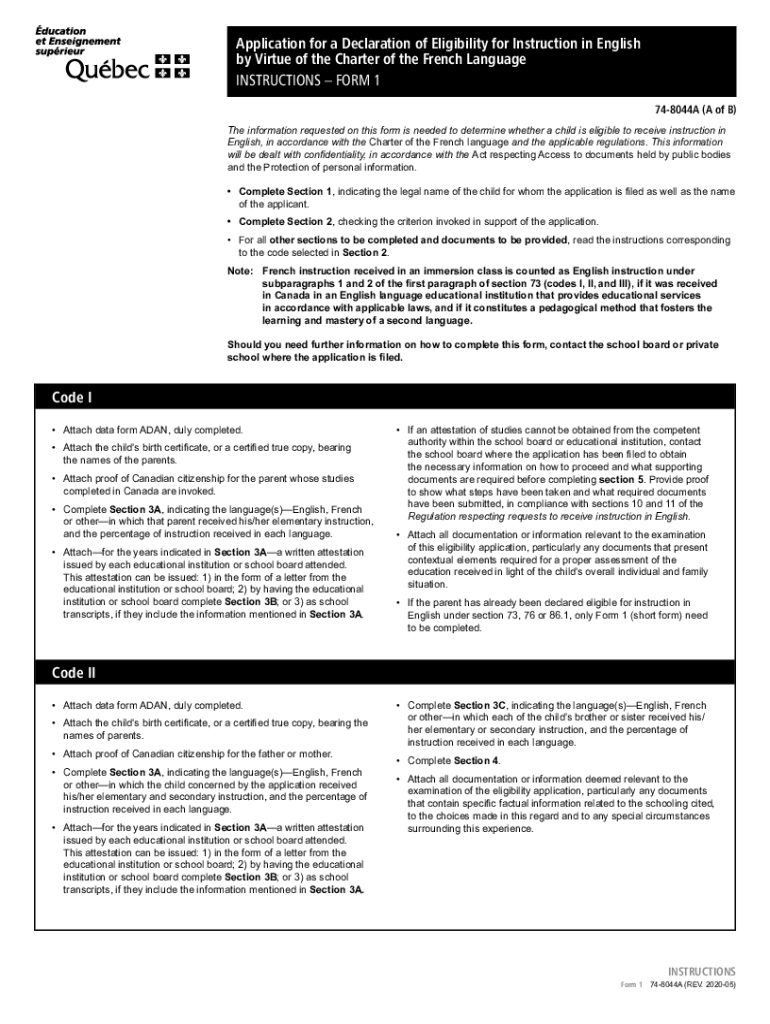
The "FORM 1 - Application for a Declaration of Eligibility for Instruction in English by Virtue of the Charter of the French Language" is a significant document designed for individuals seeking permission for their children to receive education in English in a predominantly French-speaking jurisdiction. This form is vital as it outlines eligibility criteria, which could include parental education history and citizenship status, necessary for securing English language instruction for a child within an educational institution governed by the French language charter.
Eligibility Criteria
Understanding who is eligible to use Form 1 is crucial. Typically, eligibility hinges on factors such as the educational background of the parents, their citizenship, and residency status. Also, language preference and previous schooling in English might play roles in determining eligibility. Here are key considerations:
- Parental Education: At least one parent should have received education in English.
- Citizenship Status: Canadian citizenship or permanent residency is typically required.
- Previous Instruction: If the child or their siblings have previously been instructed in English, this enhances eligibility.


Steps to Complete the Application
Completing Form 1 involves a series of detailed steps to ensure all necessary information is captured accurately. Here’s a structured guide:
- Personal Information: Enter the full names and contact details of the child and parents or guardians.
- Educational History: Provide a detailed account of the parents' educational backgrounds, focusing on any English language education.
- Supporting Documents: Attach necessary documents like transcripts or certificates proving attendance in English-speaking institutions.
- Review: Double-check all entries for accuracy and completeness before submission.
- Sign and Date: Ensure the form is signed by the parent or guardian, and include the date of completion.
Key Elements of the Form
Several critical sections must be correctly filled out to ensure the application is processed smoothly. These elements include:
- Personal Details: Includes child’s name, date of birth, and school details.
- Parental Education: Requires documentary proof and specifics about English-language instruction.
- Supporting Evidence: This section requests additional documentation, like proof of residency or citizenship.
Required Documents
Accompanying the form, several documents are often required to substantiate claims and verify information provided:
- Educational Certificates: For both the child and parents.
- Proof of Citizenship or Residency: Such as birth certificates or residency cards.
- Previous School Records: If the child or siblings have attended English-language schools.
Form Submission Methods
Various methods are available for submitting the completed form, each catering to different preferences and availabilities:
- Online Submission: Through authorized education department online portals.
- Mail: Sending to the specified address on the form with all documents included.
- In-Person: Submission at designated educational offices.
Application Process & Approval Time
The process of compiling and submitting Form 1 goes through several steps:
- Initial Review: Once received, the form is evaluated for completeness.
- Verification: Educational and citizenship documentation is verified.
- Decision Notification: Applicants are notified of approval or denial, typically within a six to eight-week timeframe.
Legal Use of the Form
Form 1 serves as a legal declaration acknowledging an applicant’s request for English instruction based on the laid-out criteria. It protects both the applicant and the issuer by clearly outlining and certifying the eligibility and rights of the student with respect to language instruction.
Who Typically Uses the Form
Form 1 is primarily used by parents or legal guardians who wish their children to receive English-based education in regions where French is the mandated language of instruction. This includes:
- Newly Relocated Families: Moving to a French-speaking jurisdiction but with a preference for English instruction.
- Multilingual Households: Where one or both parents were educated in English and wish for continuity in linguistic instruction.
- Diverse or Multinational Families: Who meet the eligibility criteria and seek formal recognition for English language schooling.