






Understanding the Residential Tenancy Agreement (RTB 1)
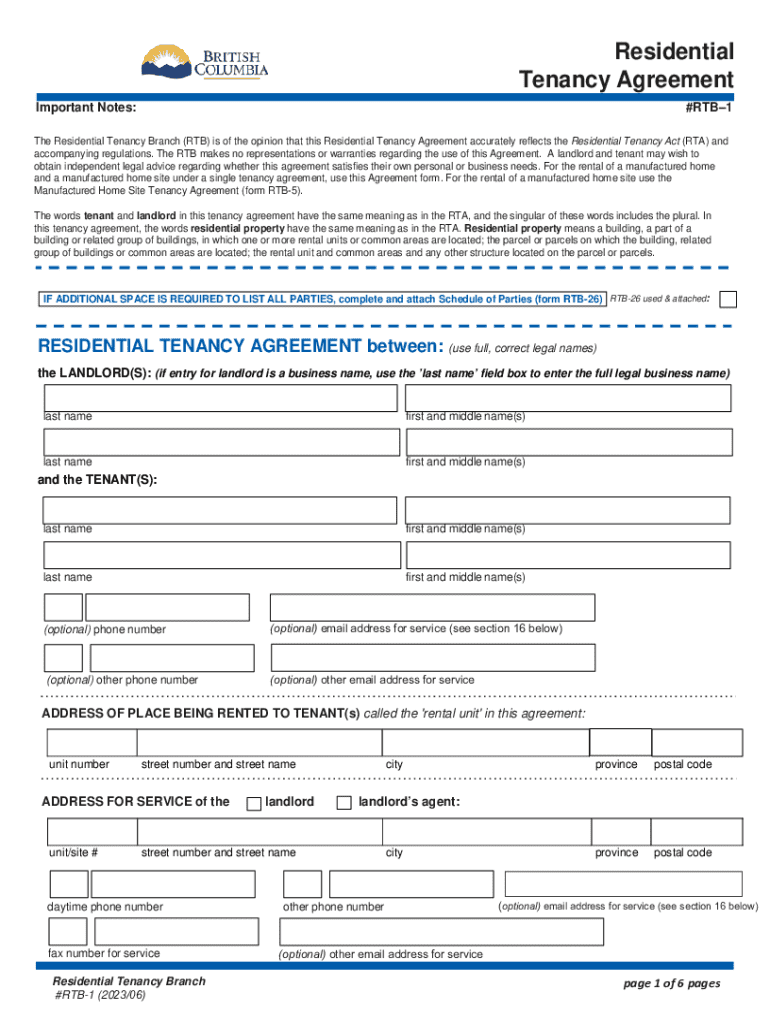
The Residential Tenancy Agreement (RTB 1) is a crucial document outlining the legal relationship between landlords and tenants within the United States. It governs rights and responsibilities as defined under various local Residential Tenancy Acts (RTA). This legally binding contract delineates essential areas such as rent, security deposits, repairs, and the process for alterations or terminations of the lease. Understanding its comprehensive nature helps ensure both landlords and tenants comply with local laws and avoid potential disputes.
Detailed Description and Purpose
The Residential Tenancy Agreement (RTB 1) is designed to offer a clear framework for rental arrangements. Its main purpose is to safeguard both parties by defining terms that are enforceable under state regulations. The agreement typically includes sections on:
- Rent and Payment Terms: Specifies the amount, frequency, and method of rent payment.
- Security Deposits: Details the required deposit amount and conditions for its return.
- Pet Policies: Outlines rules for having pets on the property and potential additional fees.
- Repair Obligations: Clarifies responsibilities for property maintenance and addressing repairs.
This structure ensures clarity and sets expectations, preventing misunderstandings.
Steps to Complete the Residential Tenancy Agreement (RTB 1)
Filling out the Residential Tenancy Agreement involves several critical steps to ensure accuracy and compliance with legal standards. Follow this guide for a comprehensive approach:
- Property Details: Record the property's address and specific rental unit details.
- Tenant Information: Include full legal names of all adult tenants.
- Lease Terms: Determine and include the lease duration, highlighting the start and end dates.
- Rent Specifications: Clearly state terms regarding rent amount, due date, and payment method.
- Additional Clauses: Add specific clauses related to utility responsibilities, visitor policies, and any agreed alterations to the standard agreement.
Following these steps facilitates the creation of a legally sound and mutually beneficial contract.
Important Terms Related to the Residential Tenancy Agreement (RTB 1)
Comprehending key terms within the Residential Tenancy Agreement is crucial for proper comprehension and execution. Some pivotal terms include:
- Lease Term: Duration for which the rental agreement is valid.
- Occupants: Individuals who reside in the property and their relationship to the tenant.
- Condition Inspection Report: A requisite report completed prior to move-in and at move-out to assess property conditions.
- Landlord Entry: Regulations concerning when and how a landlord may enter the rental property.
Familiarity with these terms ensures that both parties understand their rights and obligations, minimizing conflicts.
Legal Use of the Residential Tenancy Agreement (RTB 1)
Using the Residential Tenancy Agreement appropriately is essential to uphold legal standards and tenant rights. The contract acts as a legal safeguard:
- Ensures compliance with state-specific rental laws.
- Provides a clear record of agreements made, pivotal during disputes.
- Mandates written consent for any amendments.
By adhering to these legal requirements, the tenancy agreement protects both parties and fosters a secure, transparent renting environment.
Role in Dispute Resolution
The residential tenancy agreement often serves as a foundational document in resolving rental disputes, either through mediation or in court. It provides a written point of reference for claims and defenses related to tenancy issues, serving as a pivotal document in legal proceedings.
Key Elements of the Residential Tenancy Agreement (RTB 1)
Several crucial elements form the backbone of the Residential Tenancy Agreement, each designed to protect involved parties:
- Rent Details: Specifications include due dates, amounts, and late fees.
- Security Deposit Information: Terms noting deposit amount, conditions for withholding, and return procedures.
- Alteration and Repair Responsibilities: Assigns duties for maintaining the property and any alterations.
- Insurance Requirements: Mandates insurance coverage, often liability coverage by tenants.
These key elements create a comprehensive and enforceable agreement, adding security and predictability to the landlord-tenant relationship.
How to Obtain the Residential Tenancy Agreement (RTB 1)
Securing the Residential Tenancy Agreement is a straightforward process. It is typically available through:
- Real Estate Agencies: Many provide standard forms aligned with local laws.
- Online Legal Document Services: Platforms like DocHub offer editable templates suitable for diverse needs.
- Local Government Websites: Providing downloadable forms compliant with state-specific requirements.
Accessibility ensures landlords and tenants can quickly formalize rental agreements, promoting compliance and legal soundness.
Who Typically Uses the Residential Tenancy Agreement (RTB 1)
The Residential Tenancy Agreement is widely used among different groups involved in real estate renting:
- Individual Landlords: Use the agreement to protect investment properties and outline tenant obligations.
- Property Management Companies: Implement agreements consistent with company policies and local laws.
- Tenants: Rely on the document to ascertain their rights and responsibilities within the rental property.
This universality highlights the agreement's role in providing a standardized structure for residential leasing across diverse circumstances.


Business and Residential Use
While primarily used in residential settings, variations can be adapted for mixed-use properties where portions of the unit may be for business activities, provided state laws are respected for any modifications.
State-Specific Rules for the Residential Tenancy Agreement (RTB 1)
Navigating state-specific rules is essential when drafting the Residential Tenancy Agreement. States often have unique regulations relating to:
- Rent Control: Some states impose limits on how much rent can be increased annually.
- Security Deposit Limits: Variations exist regarding maximum permissible deposits.
- Eviction Procedures: Rules regarding notices and conditions for eviction can differ significantly.
Ensuring compliance with state rules within the tenancy agreement protects against legal issues and ensures fair treatment.
Examples of State Variances
For instance, California has strict guidelines regarding security deposit limits and the disclosure of building hazards, whereas Texas may have different maintenance notice requirements. These variations underscore the importance of tailoring agreements to specific state laws.