






Definition & Meaning
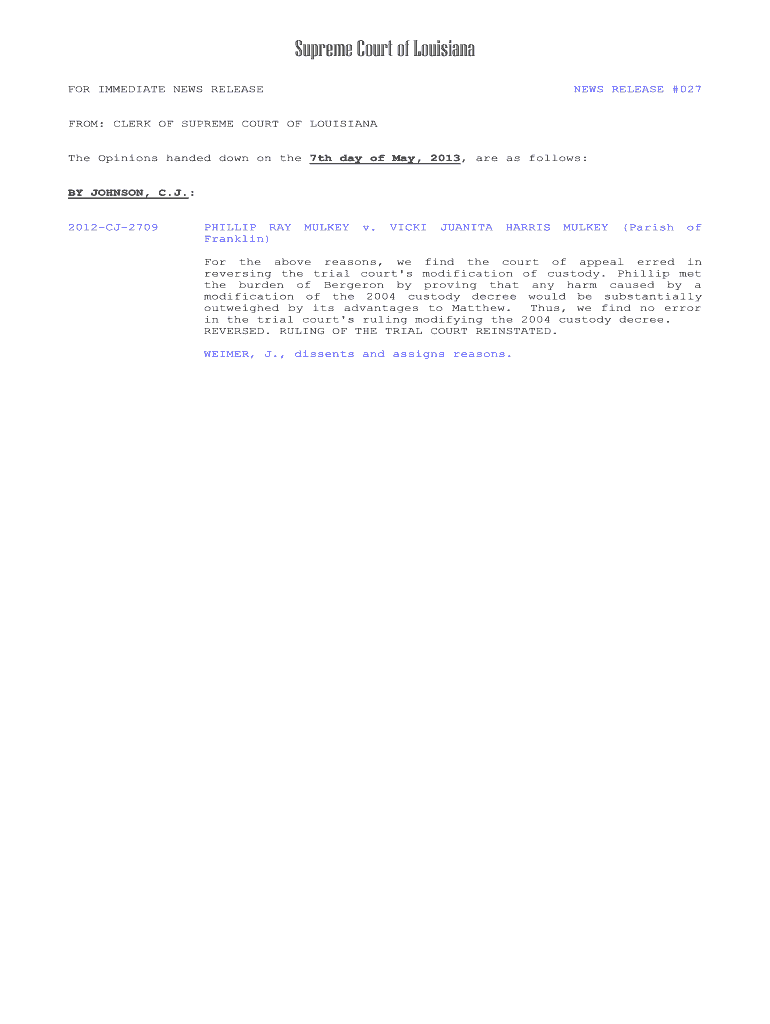
The Supreme Court of Louisiana No. 13-B-0283, In Re: Philip M Kleinsmith, refers to a specific legal proceeding adjudicated by the judicial authority of Louisiana's highest court. This case involves disciplinary proceedings concerning the conduct of the attorney, Philip M Kleinsmith. The notation "13-B-0283" is a unique docket number used to identify and track the case in the court's records. Each such docket number reflects the year and sequence of filings, granting structured accessibility to relevant case details.
Importance of Understanding the Case
Understanding this case is crucial for legal professionals involved in similar disciplinary matters. It serves as a legal precedent that highlights the procedural standards and ethical considerations expected within the Louisiana legal system. Familiarity with this case provides attorneys insights into potential outcomes and judicial reasoning applied in disciplinary actions against lawyers.
How to Use the Supreme Court of Louisiana No. 13-B-0283 in Re: Philip M Kleinsmith
Legal practitioners and scholars can use this case as a reference point for analyzing how the Louisiana Supreme Court interprets and enforces ethical standards within the legal profession. This case can be cited in legal briefs, academic papers, and continuing legal education materials to demonstrate specific aspects of judicial discipline.
Practical Applications
- Legal Briefs: Attorneys might reference this case to support arguments about ethical violations and their consequences.
- Continuing Legal Education: This case can be used in seminars to teach ethics, highlighting real-world applications of disciplinary actions.
- Research Papers: Scholars may analyze the decision to discuss broader trends in legal ethics enforcement.
Steps to Complete the Supreme Court of Louisiana No. 13-B-0283 In Re: Philip M Kleinsmith
- Understand the Case Background: Familiarize yourself with the relevant facts, allegations, and initial rulings related to Philip M Kleinsmith.
- Review Court Documentation: Access the official case documents, judgments, and court opinions to gather comprehensive details.
- Analyze Legal Principles: Study the ethical standards and legal principles applied by the court in reaching its decision.
- Identify Key Takeaways: Note the judicial reasoning, penalties imposed, and implications for legal practice standards.
Legal Use of the Supreme Court of Louisiana No. 13-B-0283 In Re: Philip M Kleinsmith
The case is utilized within legal circles primarily for its precedential value in interpreting and applying professional conduct rules. It establishes parameters for ethical behavior expected from attorneys and outlines the judicial processes for addressing deviations from these standards.
Judicial and Educational Context
- Judiciary: Judges can refer to this case when ruling on similar disciplinary matters involving attorneys.
- Legal Education: Professors and instructors can incorporate the case into curricula focusing on ethics, enhancing lessons with real-world examples.
Key Elements of the Supreme Court of Louisiana No. 13-B-0283 In Re: Philip M Kleinsmith
- Ethical Allegations: The case involves allegations concerning breaches of the Louisiana Rules of Professional Conduct.
- Judicial Findings: Detailed findings by the court regarding the attorney’s conduct and the applicable ethical standards.
- Penalties Imposed: The specific disciplinary actions taken against the attorney, which may include suspension, disbarment, or other sanctions.
- Impact on Practice: The implications of the case for attorneys practicing in Louisiana and wider applications for ethical standards enforcement.
Who Typically Uses the Supreme Court of Louisiana No. 13-B-0283 In Re: Philip M Kleinsmith
This case is principally used by:
- Attorneys: To understand ethical boundaries and the consequences of misconduct.
- Legal Researchers: To analyze trends in disciplinary proceedings within the Louisiana judiciary.
- Judicial Officials: As a resource for adjudicating attorney discipline cases.


Stakeholder Insights
- Ethics Boards: Regulatory bodies can use the case as a benchmark for developing policies and guidelines.
- Legal Support Staff: Paralegals and legal researchers referencing the case in various legal document preparations.
Important Terms Related to the Supreme Court of Louisiana No. 13-B-0283 In Re: Philip M Kleinsmith
- Docket Number: Unique identifier for court cases enabling efficient case tracking and retrieval.
- Professional Conduct: The ethical guidelines outlined in the Louisiana Rules of Professional Conduct.
- Disbarment: A severe penalty involving the removal of an attorney's license to practice law.
- Suspension: Temporary removal of an attorney's right to practice law, often pending further review.
State-Specific Rules for the Supreme Court of Louisiana No. 13-B-0283 In Re: Philip M Kleinsmith
Louisiana's approach to attorney discipline may differ from other states due to its unique legal code based on both civil and common law traditions. This case reflects Louisiana's specific procedures for enforcing professional conduct regulations, which are crucial for attorneys practicing within the state to understand.
State Legal Framework
- Civil Law Influence: Louisiana’s legal system is influenced by civil law principles, affecting interpretations of professional conduct.
- Court Procedures: The specific processes undertaken by the Louisiana Supreme Court when addressing ethical violations by attorneys.
This detailed exploration of the Supreme Court of Louisiana No. 13-B-0283, In Re: Philip M Kleinsmith provides comprehensive legal insights and practical applications for attorneys, scholars, and legal educators.