






Definition & Meaning
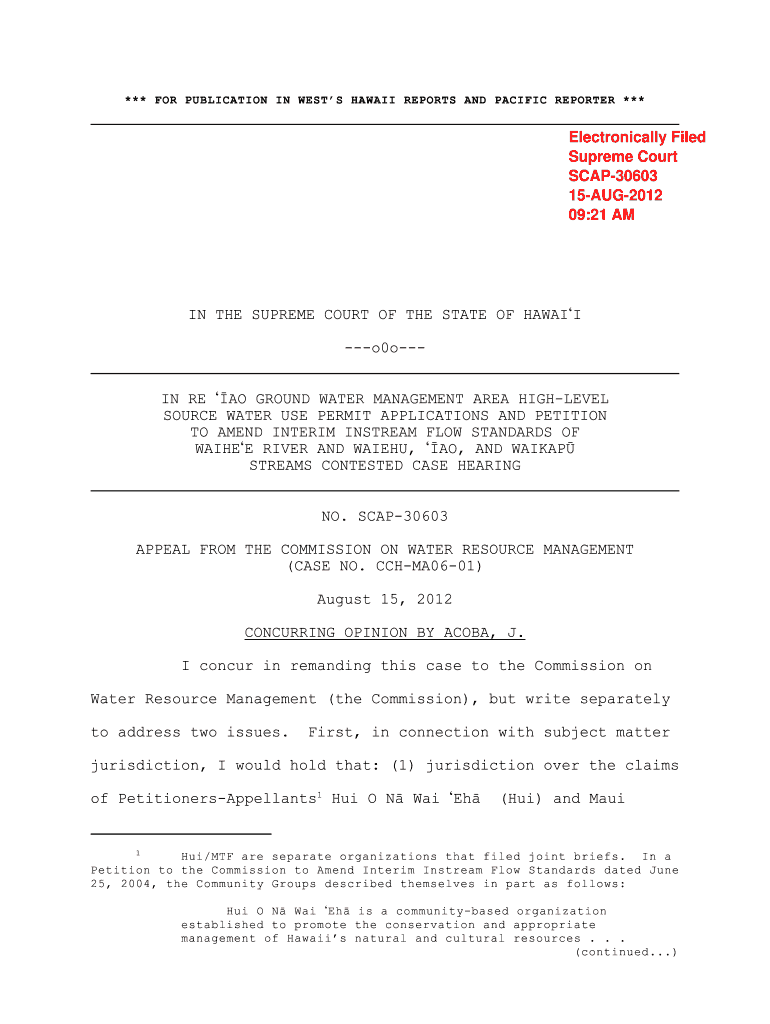
The "Electronically Filed Supreme Court SCAP-30603 15-AUG-2012 09 - courts state hi" refers to a specific legal document or case filing with the Hawaii Supreme Court. The format of the reference indicates the case number (SCAP-30603), the filing date (August 15, 2012), and the unique identifier for the electronic filing system. This electronic filing availability underscores the court's shift to digital processes, expediting legal documentation submission and access.
How to Use the Electronically Filed Supreme Court SCAP-30603 15-AUG-2012 09
When dealing with a case filed under the given number, legal professionals or parties involved can access the documents electronically. To use this form, they might:
- Search the Court Database: Utilize the Hawaii Judiciary's electronic court records system to locate and view the file.
- Download Formatted Information: Extract key case details for reference in legal proceedings or documentation.
- Review Case Details: Examine the filing to understand the case's nature, parties involved, and legal arguments presented.
Steps to Complete the Electronically Filed Supreme Court SCAP-30603 15-AUG-2012 09
Completing a Supreme Court filing electronically involves several core steps:
- Prepare the Legal Document: Draft all necessary case components, including motions, briefs, and supporting documents in a digital format supported by the court.
- Verify Compliance: Check that the documentation meets the Hawaii Supreme Court's formatting and procedural requirements.
- Submit via E-File System: Upload the documents through the Hawaii Judiciary's electronic filing system, ensuring all fields and attachments are correctly included.
- Confirm Receipt: Await electronic confirmation that the submission was successful and the acceptance of the filing by the court.
Key Elements of the Electronically Filed Supreme Court SCAP-30603 15-AUG-2012 09
The key components of this filing would generally include:
- Case Number: Uniquely identifies the legal proceeding, crucial for tracking and referencing.
- Party Details: Information on the plaintiff and defendant, or other litigants.
- Filing Date: The date when the document was filed, significant for deadlines and procedural timelines.
- Legal Arguments: Core arguments and legal basis provided by the parties.
- Supporting Evidence: Any documentation or exhibits that substantiate the case's claims.
Legal Use of the Electronically Filed Supreme Court SCAP-30603 15-AUG-2012 09
The electronically filed document can be used to:
- Establish Legal Precedents: Access prior rulings that could impact current legal arguments.
- Facilitate Case Management: Enable attorneys and parties to manage case documentation efficiently.
- Public Access to Information: Allow the public, where permissible, to view and study cases impacting public law or interest.
State-Specific Rules for the Electronically Filed Supreme Court SCAP-30603 15-AUG-2012 09
In Hawaii, specific regulations govern electronic submissions to the Supreme Court:
- System Compatibility: Filings must align with the permitted electronic formats and system requirements.
- Timeliness: Documents should be submitted within the timeframes specified by the court rules to be valid.
- Authentication: Digital signatures and associated security protocols must be adhered to, ensuring the document's authenticity.
Important Terms Related to Electronically Filed Supreme Court SCAP-30603 15-AUG-2012 09
- E-Filing: The method by which documents are submitted electronically to the court system.
- Jurisdiction: Refers to the authority of the Hawaii Supreme Court over legal matters.
- Public Trust Doctrine: A principle that may be referenced in opinions related to public resources management, such as water rights.
Form Submission Methods (Online / Mail / In-Person)
While the primary focus is electronic submission, it is essential to acknowledge:
- Online Submission: Preferred method, offering immediate confirmation and record-keeping.
- In-Person Submission: Rarely necessary due to electronic filing but may still be available for specific circumstances.
- Mail Submission: Often phased out, reinforcing the need for adeptness with digital platforms.
Examples of Using the Electronically Filed Supreme Court SCAP-30603 15-AUG-2012 09
Case examples utilizing this form might include:
- Water Management Cases: Like the 'Îao Ground Water Management Area, where filings might impact public resource allocation.
- Native Hawaiian Rights: Cases involving jurisdictional issues or cultural rights that demand detailed legal documentation.
- Public Policy Litigation: Influencing significant state or federal rulings based on Hawaii's legal framework.