






Definition & Meaning
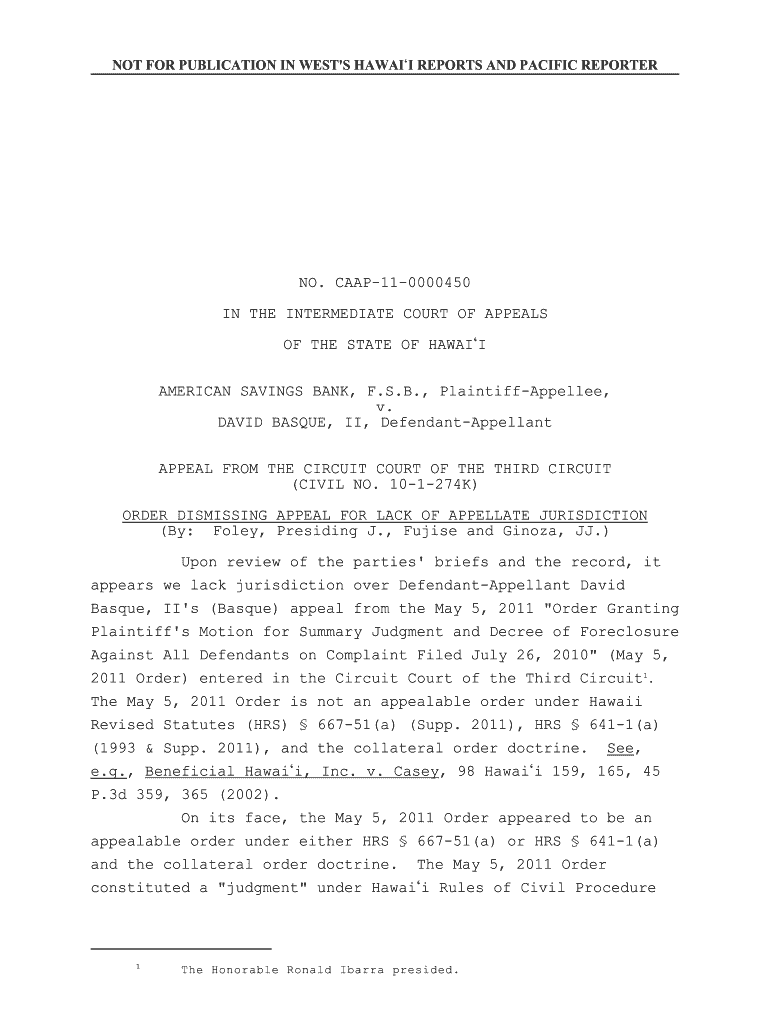
The "Memo form - Hawaii State Judiciary" is an official document utilized within the Hawaii State Judiciary system. This form serves as a formal communication tool for recording and conveying legal information or instructions between parties involved in judicial matters. It is typically used to document court decisions, procedural updates, or requests for judicial actions. Understanding its specific purpose within the judicial system is essential for those engaging in Hawaii's legal processes.
Important Terms Related to the Memo Form
Understanding the terminology associated with the "Memo form - Hawaii State Judiciary" is crucial for its accurate completion and use. Key terms include:
- Appellate Jurisdiction: Refers to the authority of a higher court to review and amend decisions made by lower courts.
- Summary Judgment: A legal determination made by a court without a full trial, often used when the material facts of the case are not in dispute.
- Foreclosure: The legal process by which a lender takes control of a property due to the borrower's failure to comply with mortgage terms.
These terms help frame the context within which the memo form is often utilized, particularly related to legal appeals and decision-making documentation.
Who Typically Uses the Memo Form
This memo form is primarily used by legal professionals, including judges, attorneys, and court clerks within the Hawaii State Judiciary. It serves as a communication vehicle for official court matters, procedural instructions, and formal documentation of legal actions. Law firms, judicial staff, and involved parties in legal proceedings may all interact with this form during the litigation process.


Steps to Complete the Memo Form
To accurately complete the "Memo form - Hawaii State Judiciary," follow these steps:
- Identify Purpose: Clearly determine the primary purpose of the memo, whether it is to communicate a decision, request an action, or document a procedural step.
- Gather Information: Collect all necessary data and legal references that need to be included in the memo.
- Draft Content: Use clear, precise language to draft the memo, ensuring all required sections are filled out thoroughly.
- Review: Double-check the memo for accuracy and completeness.
- Submit: Submit the form through the designated method, whether electronically or in person, following the specific guidelines of the Hawaii State Judiciary.
Detailed attention during each of these steps ensures legal compliance and clarity in communication.
How to Obtain the Memo Form
The memo form can be acquired directly from the Hawaii State Judiciary's official website or through physical request at court offices. Digital access allows for downloading and printing, which can streamline the process of filling and submitting the form. Consulting court staff for guidance on form acquisition can also be beneficial, especially for those unfamiliar with judiciary processes.
Legal Use of the Memo Form
The "Memo form - Hawaii State Judiciary" must be used within the confines of legal guidelines established by the Hawaiian judicial system. This includes:
- Documentation of Judicial Decisions: Used to record and communicate decisions made by courts.
- Official Requests: For initiating judicial actions or procedural steps.
- Formal Communications: Among judicial entities and involved legal parties.
Proper use is critical to maintain the form's legal standing and achieve the intended judicial outcomes.
Examples of Using the Memo Form
Example scenarios where the memo form might be employed include:
- Record of Court Rulings: Documenting a judge’s decision on a summary judgment or appeal.
- Request for Legal Action: Submitting an official request for judicial review or intervention in a case.
- Inter-Office Communication: Facilitating communication between different branches or levels of the judiciary system.
Each of these examples highlights the form’s utility in diverse legal contexts.
State-Specific Rules for the Memo Form
Hawaii has specific rules governing the use and content of judicial memo forms, ensuring they meet state legal standards. Understanding these rules involves:
- Compliance with Hawaii Revised Statutes: Ensure all form content aligns with applicable laws and regulations.
- Adherence to Court Protocols: Follow prescribed structures and procedures for memo submissions.
Being informed about these state-specific rules is essential for ensuring that the form fulfills its legal purpose accurately and effectively within Hawaii's judicial framework.