







Definition & Meaning
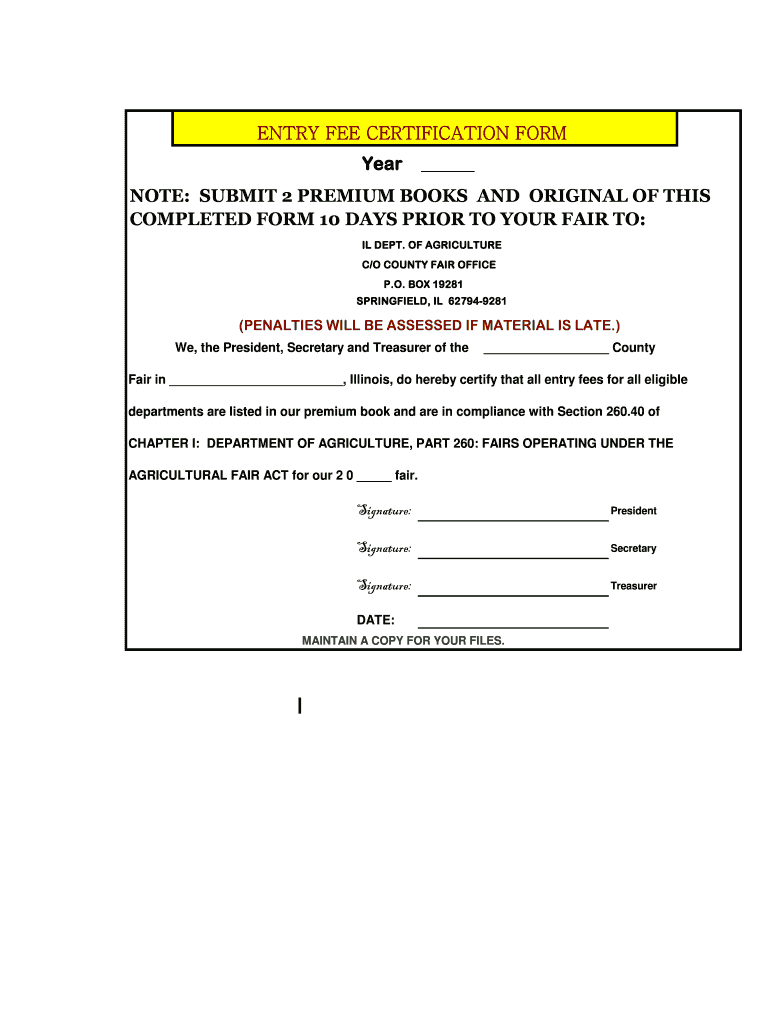
An Entry Fee Certification Form is a mandatory document required by certain county fairs, particularly within the state of Illinois, to certify that all entry fees comply with state regulations. The form is submitted to the Illinois Department of Agriculture at least 10 days before the fair begins. This form is essential to ensure the financial and regulatory accountability of the event, helping to maintain the fair's eligibility for public funding or state approvals.
Key Responsibilities on the Form
- Certification of Compliance: The form verifies that all entry fees collected are in line with state requirements and have been agreed upon by the event organizers.
- Signatures Required: The Presidents, Secretaries, and Treasurers of the county fair must sign the form to validate its accuracy and completeness. This underscores accountability at various organizational levels, ensuring that responsibilities are clearly designated.
Steps to Complete the Entry Fee Certification Form
- Gather Required Information: Before completing the form, collect data on entry fees and related financial documentation, including premium books needed for submission.
- Fill in the Entry Details: Enter every participant's entry fee and relevant details to ensure compliance with stated regulations.
- Obtain Necessary Signatures: Secure the signatures from the event's President, Secretary, and Treasurer to validate the form.
- Submission: Submit the completed form along with two premium books to the Department of Agriculture at least 10 days before the event.
Ensuring Accurate Submission
- Double-Check Details: Ensure no discrepancies in fees recorded and actual amounts received.
- Timely Submissions: Missing the deadline may result in penalties or disqualification, so timely submission is critical.
Who Typically Uses the Entry Fee Certification Form
Organizers of county fairs in Illinois primarily use this form. These events often include a range of participants, from local farmers and craftsmen to food vendors, requiring a standardized document to manage registration and participation fees efficiently.


Organizational Roles
- Event Organizers: Responsible for collecting fees and ensuring compliance.
- Administrative Staff: Typically involved in preparing and verifying the information within the form.
- State Officials: Use the form to verify compliance with Illinois state regulations.
Legal Use of the Entry Fee Certification Form
The Entry Fee Certification Form must be used following Illinois's legal standards and policies. Adhering to these legal requirements is crucial to maintain legal standing:
Regulatory Compliance
- State Regulations: Ensure all fees and operations are within the legal parameters established by state law.
- Financial Accountability: Provides a financial audit trail for state officials to ensure transparency and accountability in the collection and reporting of fees.
Key Elements of the Entry Fee Certification Form
Essential Components
- Entry Details: Information about each fee collected.
- Certification Clause: Agreement by signing officials affirming that information provided is accurate.
- Submission Checklist: Ensures all accompanying documentation, such as premiums books, is included during submission.
Importance of Accurate Details
Complete and precise information is necessary to avoid legal issues and ensure that the fair can proceed without interruptions due to regulatory non-compliance.
Examples of Using the Entry Fee Certification Form
The form is typically completed during events planning for agricultural fairs. For instance, a fair showcasing local livestock entries would use this form to record participant fees and gain Department of Agriculture approval.
Scenario Examples
- Livestock Show: Participants pay an entry fee, documented within the form, which organizers then submit for verification.
- Craft Fair: Vendor registrations and fees collected align with regulations, supporting fair transparency.
Penalties for Non-Compliance
Failing to submit the Entry Fee Certification Form or providing inaccurate information can result in:
Consequences to Avoid
- Monetary Fines: Ensued due to non-compliance with state laws.
- Disqualification: The fair may lose eligibility for hosting if found non-compliant with relevant financial or regulatory mandates.
- Legal Action: Severe discrepancies could lead to legal interventions or further scrutiny.
Form Submission Methods
The completed Entry Fee Certification Form can be submitted through various channels:
Available Submission Techniques
- Online Submission: Direct electronic uploads to the state’s designated online portal.
- Mail: Sending physical copies to the Department of Agriculture.
- In-Person: Direct handover to state representatives for swift processing.
Choosing the Right Method
Consider deadlines and preferred communication channels with the Department to select the most suitable submission route.




