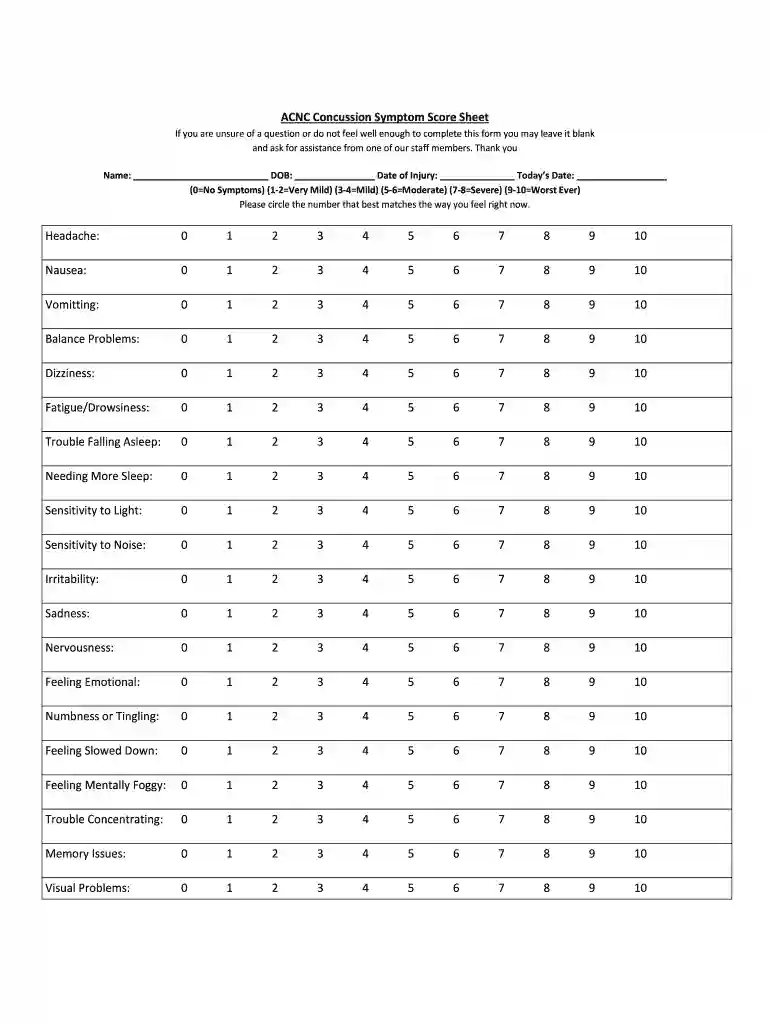
Concussion symptom score sheet 2026

Get Form
concussion symptom score sheet pdf Preview on Page 1

Here's how it works

01. Edit your concussion symptom score sheet pdf online
Type text, add images, blackout confidential details, add comments, highlights and more.

02. Sign it in a few clicks
Draw your signature, type it, upload its image, or use your mobile device as a signature pad.

03. Share your form with others
Send concussion symptom checklist via email, link, or fax. You can also download it, export it or print it out.

Definition and Importance of the Concussion Symptom Score Sheet

The concussion symptom score sheet is a critical tool used to evaluate and quantify the symptoms associated with a concussion. It consists of a detailed questionnaire where individuals rate the severity of various symptoms on a numerical scale, typically from zero (no symptoms) to ten (worst ever). This scoring mechanism serves various purposes:

  • Understanding Severity: The score sheet helps identify the intensity of symptoms, aiding healthcare professionals in assessing the severity of the concussion and determining the necessary course of treatment.
  • Tracking Progress: Over time, the score sheet can be used to monitor changes in symptoms, providing valuable insights into recovery progress.
  • Establishing Baseline: It establishes a baseline for individual symptoms, which is essential for comparing future assessments and making informed decisions about return-to-play protocols or other activities.

Common symptoms assessed on the sheet include headaches, dizziness, fatigue, and cognitive impairments. Accurate scoring is vital, as it can influence medical decisions and recovery strategies.

How to Use the Concussion Symptom Score Sheet

Using the concussion symptom score sheet involves several straightforward steps that ensure accurate reporting of symptoms. Here’s a structured approach to utilizing this essential tool effectively:

  1. Obtain the Form: Acquire the latest version of the concussion symptom score sheet, typically available from healthcare providers or educational institutions.
  2. Read Instructions: Carefully read any accompanying instructions to understand how to fill out the form properly.
  3. Rate Each Symptom: For each symptom listed, rate your experience on a scale from zero to ten. It’s crucial to reflect on your symptoms over the past 24 hours for an accurate account.
  4. Calculate Total Score: After rating each symptom, total the scores to determine your overall symptom burden.
  5. Review with a Professional: Share your completed score sheet with a healthcare provider who can interpret the results and recommend appropriate next steps based on symptom severity.

This systematic approach ensures that healthcare professionals receive a comprehensive overview of symptoms, aiding in effective treatment planning.

Who Typically Uses the Concussion Symptom Score Sheet?

The concussion symptom score sheet is widely utilized by various stakeholders concerned with concussion management. Primary users include:

  • Healthcare Professionals: Physicians, neurologists, and concussion specialists use the sheet to evaluate patients’ symptoms, aiding in diagnosis and treatment planning.
  • Athletic Trainers and Coaches: They monitor athletes for concussion symptoms before deciding on allowing them to participate in sports post-injury.
  • Educational Institutions: Schools and universities implement the score sheet as part of their concussion management protocols to protect student-athletes.
  • Parents and Guardians: They may help children complete the score sheet to ensure accurate reporting of symptoms, particularly when those affected are not fully aware of their condition.

Recognizing who utilizes the score sheet highlights its integral role in a wide range of settings, underscoring its importance in concussion management.


decoration image ratings of Dochub

Key Elements of the Concussion Symptom Score Sheet

The concussion symptom score sheet consists of various elements designed to effectively capture and evaluate symptom severity. Understanding these key components is vital for accurate usage:

  • Symptom List: A comprehensive list of common symptoms associated with concussions, such as headaches, nausea, and sensitivity to light. Each symptom is accompanied by a rating scale for self-assessment.
  • Rating Scale: Typically a zero to ten scale, where individuals can quantify their level of discomfort or impairment for each symptom. This scale allows for consistent measurement across different assessments.
  • Instructions for Use: Clear guidance on how to complete the score sheet, including explanations of each symptom and the rating process.
  • Patient Identification Information: Sections at the top of the sheet often request the individual's name, date of birth, and date of assessment to keep track of multiple evaluations.
  • Follow-up Sections: Some versions include areas for notes or follow-up recommendations based on the scores provided, facilitating comprehensive care.

These elements are carefully designed to ensure that the form effectively captures the nuances of each individual's experience with concussion symptoms.

Steps to Complete the Concussion Symptom Score Sheet

Completing the concussion symptom score sheet requires careful attention to detail to ensure accurate self-reporting. Here are the essential steps:

  1. Prepare the Environment: Choose a quiet place free of distractions to help focus on assessing symptoms accurately.
  2. Read Each Symptom Carefully: Understand what each symptom entails to provide an accurate rating. For example, assess not just the severity of headaches but also their frequency.
  3. Reflect on Recent Experiences: Consider the past week’s symptoms before rating each one, as acute symptoms may differ from chronic ones.
  4. Use a Consistent Scale: Apply the same scale for all symptoms. For example, if a headache is rated as eight one day, ensure you are reflecting on similar experiences on subsequent days for consistency.
  5. Document Any Changes: Note any discrepancies or fluctuations in symptoms over time, as these reflections can be critical for follow-up discussions with healthcare professionals.

Following these steps can help individuals provide healthcare providers with valuable insights into their symptoms, enhancing the quality of care and recovery strategies.

Legal Use of the Concussion Symptom Score Sheet

The legal implications surrounding the concussion symptom score sheet are significant, particularly in contexts such as sports and education. Understanding its legal relevance can protect both the individuals filling it out and the organizations requiring it. Key points include:

  • Informed Consent: Using the score sheet should be preceded by informing individuals about its purpose, ensuring their understanding before participation.
  • Documentation for Liability: Having documented symptom assessments can serve as crucial evidence in liability cases, particularly in athletic programs, if a player suffers further injury after the initial assessment.
  • Compliance with State Regulations: Various states have specific laws regarding concussion management in sports. Organizations must ensure that their use of the score sheet aligns with these regulations to avoid legal repercussions.
  • Potential for Accommodations: In academic settings, a clear understanding of symptoms can lead to necessary accommodations for students dealing with post-concussion symptoms, ensuring compliance with educational policies.

These legal considerations reinforce the need for careful handling and assessment of data collected through the concussion symptom score sheet, impacting practices across various fields.

Examples of Using the Concussion Symptom Score Sheet

Practical application of the concussion symptom score sheet can aid in illustrating its value. Here are several scenarios:

  • Athlete Post-Injury Assessment: An athlete sustains a concussion during a game and fills out the score sheet before being evaluated by a medical professional. Results indicate moderate symptoms; thus, the athlete is advised to rest and return for a follow-up.
  • School Protocol Compliance: In a school setting, a student experiences symptoms after a fall during recess. The school nurse administers the score sheet, revealing elevated symptom scores. The student is given accommodations per the school's concussion management policy until cleared by a healthcare provider.
  • Tracking Recovery Over Time: An adult who has been diagnosed with a concussion completes the score sheet weekly. By tracking symptom improvements or relapses, they and their doctor can make informed decisions about returning to normal activities.

These examples demonstrate the practical benefits of using the score sheet, emphasizing its importance in managing concussion cases effectively.

be ready to get more

Complete this form in 5 minutes or less

Get form

Got questions?

We have answers to the most popular questions from our customers. If you can't find an answer to your question, please contact us.
Contact us
A score is assigned to each response type for a combined total score of 3 to 15 (with 15 being normal). An initial score of less than 5 is associated with an 80 percent chance of a lasting vegetative state or death.
Scoring: Sum total number of symptoms present per area, and sum all four areas into Total Symptom Score (score range 0-22). (Note: most sleep symptoms are only applicable after a night has passed since the injury. Drowsiness may be present on the day of injury.)
Concussion Index In the FDA Validation study, the CI was demonstrated to have high accuracy in identifying the likelihood of concussion within 72 hours of injury. The CI is expressed as an index from 0 to 100 with a lower score indicating greater severity of injury.
A Grade 2 concussion is characterized by a more prolonged loss of consciousness, typically lasting longer than a few seconds but less than a minute. Other symptoms of a Grade 2 concussion can include: Severe headache. Memory problems.
Concussion Rating Scale Grade 1: Confusion but no loss of consciousness with symptoms resolved in less than 15 minutes. Grade 2: Confusion and remains conscious, but the signs and symptoms last longer than 15 minutes. Grade 3: Loss of consciousness, regardless of duration.

Security and compliance

At DocHub, your data security is our priority. We follow HIPAA, SOC2, GDPR, and other standards, so you can work on your documents with confidence.

Learn more
ccpa2
pci-dss
gdpr-compliance
hipaa
soc-compliance
be ready to get more

Complete this form in 5 minutes or less

Get form