






Definition and Meaning of the Hawaii Mediation Guidelines
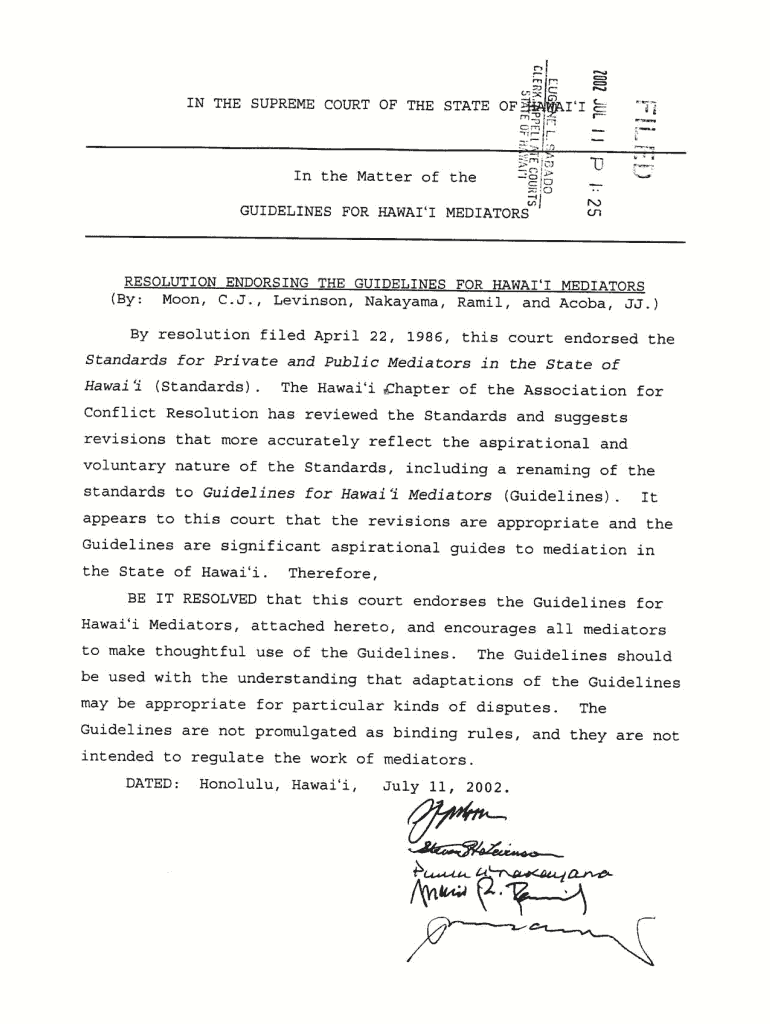
The Hawaii Mediation Guidelines are voluntary protocols designed to assist mediators engaged in facilitating dispute resolution within the state of Hawaii. These guidelines serve as a framework to promote fairness, impartiality, confidentiality, and self-determination among all participants involved in mediation. By adhering to these guidelines, mediators can ensure that they maintain the integrity and effectiveness of the mediation process, which is distinctly unique compared to other methods of conflict resolution. Central to the guidelines is the emphasis on educating participants, transparently identifying issues, and managing costs and fees involved in mediation sessions.
How to Use the Hawaii Mediation Guidelines
To effectively employ the Hawaii Mediation Guidelines, mediators should familiarize themselves with the protocol’s core tenets. The guidelines start with a thorough understanding of the role of impartiality, which requires mediators to remain neutral and objective in all stages of dispute resolution. Mediators must also prioritize confidentiality, ensuring that any shared information during the mediation process is kept private unless explicitly agreed otherwise by the parties involved.
Mediators should use these guidelines to facilitate open-discussions, helping participants identify and articulate their needs and interests. It's crucial to remind all parties of the importance of obtaining independent advice before making final decisions. By following the guidelines, mediators can foster an environment conducive to voluntary and mutual agreement, avoiding the adversarial nature typically present in legal proceedings.
Key Elements of the Hawaii Mediation Guidelines
The guidelines cover several essential elements critical for successful mediation:
- Impartiality: Mediators are required to remain unbiased, treating all parties equitably.
- Confidentiality: Safeguarding the privacy of discussions, with exceptions only as agreed by the involved parties.
- Self-Determination: Encouraging participants to make autonomous decisions regarding the outcomes of their disputes.
- Voluntariness: Participation in mediation is entirely voluntary, and parties should be free to exit the process if necessary.
- Recognition and Respect: Mediators should recognize and respect cultural and individual differences, fostering an inclusive environment.
These elements work collectively to maintain the standard and ethical nature of mediation in Hawaii, enhancing trust among participants.
Who Typically Uses the Hawaii Mediation Guidelines
The guidelines are primarily utilized by certified mediators operating within Hawaii, though they can also be referred to by parties involved in mediation. Legal professionals specializing in family law, civil disputes, and small claim matters also commonly reference these guidelines to advise clients considering mediation. Organizations that provide mediation services in Hawaii, such as community centers and legal aid societies, frequently employ these guidelines to ensure a consistent approach to dispute resolution.


Legal Use of the Hawaii Mediation Guidelines
The Hawaii Mediation Guidelines are non-binding; however, they are recognized as best practices within the state, offering mediators legal cover in ensuring that the mediation process meets recognized standards of practice. While the guidelines themselves are not legislated, adherence to them can enhance public confidence in the mediation process. Mediators can reference the guidelines in legal contexts to demonstrate a commitment to standard practices when disputes arise regarding the mediation process itself.
Important Terms Related to the Hawaii Mediation Guidelines
Understanding key terms related to mediation is essential:
- Mediator: An impartial third party who facilitates discussions between disputing parties.
- Arbitration: A legal technique differing from mediation where an arbitrator makes binding decisions for the parties.
- Conflict Resolution: The process of facilitating a peaceful end to a conflict.
- Settlement: An agreement reached between disputants resolving their issues.
- Negotiation: The discussion aimed at reaching a mutually beneficial agreement.
These terms provide a foundational understanding that complements the application of the Hawaii Mediation Guidelines.
Steps to Complete a Mediation Session Under the Guidelines
- Initial Consultation: Discuss the process and set the groundwork for mediation, including roles and confidentiality.
- Issue Identification: Clearly define the issues at play and what each party seeks to achieve from mediation.
- Facilitation: Guide the discussion, encouraging open and honest communication.
- Negotiation: Support parties as they explore possible solutions, guiding the negotiation process to reach an agreement.
- Finalizing Decisions: Consolidate agreements into a written form, ensuring all parties understand and agree to the terms.
Examples of Using the Hawaii Mediation Guidelines
Case Study 1: A family dispute regarding inheritance was settled through mediation, with the mediator ensuring all parties were informed and agreements were made voluntarily without coercion.
Case Study 2: A workplace conflict involving allegations of discrimination was addressed by maintaining confidentiality as stipulated by the guidelines, allowing parties to reach an understanding without public exposure.
These examples underscore the practical application of the guidelines in resolving disputes amicably and efficiently.
Eligibility Criteria for Mediation Under the Guidelines
Any parties involved in a dispute who are seeking a confidential, voluntary process to resolve their differences are eligible to use mediation services following the Hawaii Mediation Guidelines. There are no strict eligibility criteria, apart from a willingness by all parties to engage in the process and work towards a mutual agreement. Mediators should ensure parties understand the voluntary nature of mediation and commit to the process in good faith.

Who Issues the Hawaii Mediation Guidelines
The guidelines are typically developed and maintained by professional mediation bodies and organizations dedicated to upholding standards in conflict resolution practices. In Hawaii, these could be legal associations, university programs specializing in mediation, or professional mediator networks that work in consultation with legal experts to provide standards that meet both community and legal expectations.