






Definition and Purpose of Citizenship Fair
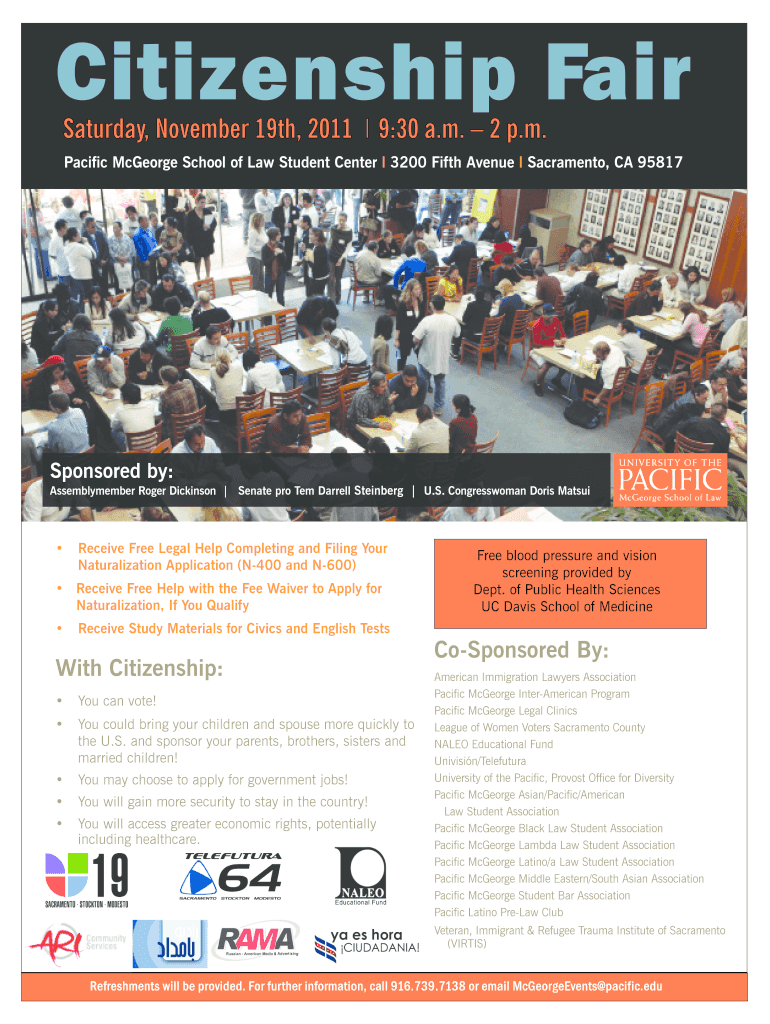
The Citizenship Fair is an event typically designed to assist individuals in navigating the naturalization process required to obtain U.S. citizenship. Often hosted by legal organizations, community groups, and government officials, the fair provides a structured environment where prospective citizens can receive free personalized guidance. The event covers key aspects such as completing the necessary naturalization application forms (N-400 and N-600), obtaining fee waivers, and preparing for the English and civics tests that applicants must pass.
In a broader context, the Citizenship Fair serves an educational and supportive role. It demystifies the intricacies associated with becoming a U.S. citizen by offering attendees detailed resources and direct assistance. This includes information about eligibility requirements, the benefits of U.S. citizenship, and the responsibilities associated with it. By breaking down barriers to information and support, the Citizenship Fair empowers individuals to confidently pursue their citizenship goals.
Steps to Complete the Citizenship Fair Process
-
Register for the Event: Begin by registering for the citizenship fair. This may involve signing up online or contacting a local organization hosting the event to secure your participation.
-
Gather Necessary Documentation: Prior to attending, gather all necessary documents, such as a permanent resident card, travel documents, identity proofs, and any other relevant materials needed for the naturalization application process.
-
Attend Workshops and Consultations: On the day of the fair, participate in workshops and consultations. These sessions often include expert guidance on form completion, test preparation, and understanding the legal requirements of obtaining citizenship.
-
Complete Application Forms: Utilize the support offered at the fair to fill out applications such as the N-400 and N-600. Legal professionals and volunteers are typically on hand to ensure applications are completed accurately.
-
Submit Applications and Documents: Once the necessary forms are filled, they may be submitted directly at the fair if facilities are available, or you may receive guidance on how to submit them by mail or online.
-
Follow Up: After the fair, it's important to follow up on your application process, attend any required interviews, and complete any additional instructions provided by the citizenship officers.
Eligibility Criteria for Attending a Citizenship Fair
-
Permanent Residency Requirement: Attendees usually need to hold a valid Green Card, demonstrating their status as lawful permanent residents intending to apply for U.S. citizenship.
-
Residency and Physical Presence: Applicants must have maintained residency in the U.S. for a specific period, typically five years, or three years if married to a U.S. citizen, and meet physical presence requirements.
-
Moral Character: Fair attendees are often advised on the importance of demonstrating good moral character, which is a legal prerequisite for citizenship and may require criminal background checks.
-
Knowledge of U.S. Government and English: Applicants must have an understanding of U.S. civics and be proficient in reading, writing, and speaking basic English, except in cases where exemptions apply based on age and residency duration.

Key Elements Addressed During a Citizenship Fair
-
Application Forms: Primarily the N-400 and N-600, covering personal information, residency history, and eligibility questions tailored to an individual's unique circumstances.
-
Naturalization Interview Preparation: Guidance on preparing for the naturalization interview, including practice questions and coaching on test-taking strategies.
-
Fee Waivers and Reductions: Assistance in completing fee waiver paperwork for individuals facing financial difficulties, under specific eligibility criteria.
-
Legal Advice and Resources: Access to legal professionals who provide insights on complex cases, answer individual queries, and guide attendees through unique legal scenarios.
Who Typically Uses the Citizenship Fair
-
Immigrants and Refugees: Individuals seeking U.S. citizenship who need support navigating the complex naturalization process.
-
Community Organizations: Groups focused on immigrant support often partner with legal bodies to maximize outreach and provide resources.
-
Legal Practitioners and Volunteers: Lawyers, paralegals, and trained volunteers provide crucial free legal assistance, helping to ensure applicants meet necessary federal laws and requirements.

Real-World Scenarios of Citizenship Fair Benefits
-
Case of a Working Parent: Consider a working parent who lacks the time to complete a complicated application process; attending a citizenship fair can provide them with streamlined assistance in a single day.
-
Support for Seniors: Elderly applicants may face challenges in accessing online resources or attending multiple appointments. The fair offers one-on-one assistance in a community setting, promoting easier access to needed services.
-
Young Adults Preparing for College: Young adults who have spent their formative years in the U.S. may attend the fair to gain citizenship before attending college, ensuring they qualify for scholarships and financial aid benefits accorded to U.S. citizens.
Legal Use and Compliance During Citizenship Fair
-
Adherence to Immigration Laws: Legal experts at the fair ensure that all assistance provided aligns with current immigration policies, guiding each attendee to comply fully with immigration laws.
-
Confidentiality and Data Protection: Information shared by attendees is kept confidential under strict data protection protocols, ensuring that personal information is not disclosed without consent.
-
Verification of Documents: Legal advisors verify the authenticity and compliance of all submitted documents, preventing potential rejections or requests for additional information after filing.
By compiling relevant resources, offering structured assistance, and fostering an inclusive environment, Citizenship Fairs play a vital role in aiding individuals on their path to U.S. citizenship.