






Definition & Purpose of the Highway Use Tax Exemption Certification
The Highway Use Tax Exemption Certification is a formal document utilized in various jurisdictions to claim exemption from the Highway Use Tax, a tax typically levied on vehicles for road use funding. This certification is particularly significant for individuals and organizations that qualify for specific exemptions, such as vehicle transfers between family members, donations to non-profit educational institutions, or vehicles used by volunteer fire departments. The documentation ensures that qualifying parties can legally bypass this tax obligation under defined circumstances.
Eligibility Criteria for the Highway Use Tax Exemption Certification
To qualify for a Highway Use Tax Exemption, certain eligibility requirements must be met. These criteria often include:
- Family Transfers: Exemptions may apply for vehicle transfers between family members, such as spouses, parents, and children.
- Non-Profit Organizations: Vehicles donated to or purchased by qualifying non-profit organizations, particularly educational institutions, may be exempt.
- Government or Emergency Services: Vehicles acquired for use by volunteer fire departments or other emergency services are often eligible for exemption.
Each applicant must provide sufficient documentation to prove their eligibility, adhering to the specified guidelines.


How to Obtain the Highway Use Tax Exemption Certification
Obtaining the Highway Use Tax Exemption Certification involves several steps:
- Determine Eligibility: Review the specific criteria for exemptions applicable in your state.
- Collect Required Documentation: Gather supporting documents, such as proof of charitable organization status or family relationship documentation.
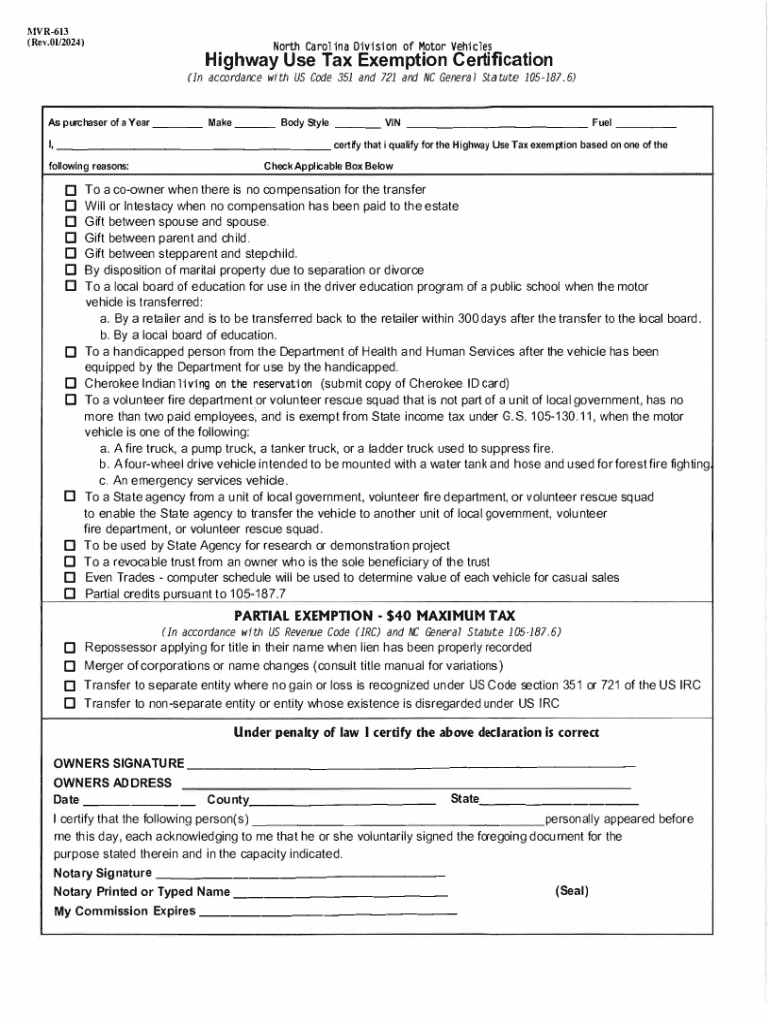
- Complete the Certification Form: Fill out the necessary details on the form accurately, ensuring all required fields are completed.
- Submit the Application: Applications can typically be submitted via mail, online, or in-person at a Department of Motor Vehicles (DMV) office.
Consultation with legal advisors or tax professionals can be beneficial to ensure all requirements are met.
Steps to Complete the Highway Use Tax Exemption Certification
Completing the Highway Use Tax Exemption Certification involves detailed steps:
- Read Form Instructions Carefully: Start by familiarizing yourself with the form's detailed instructions.
- Enter Personal and Vehicle Information: Include accurate personal details and vehicle identification numbers (VIN).
- State the Reason for Exemption: Clearly specify the grounds for seeking an exemption, backed by appropriate documentation.
- Signature and Notarization: Ensure that forms are signed and, when necessary, notarized to validate the exemption claim.
- Attach Required Documents: Enclose all essential documents to substantiate the exemption request before submission.
Adhering to these steps carefully will facilitate a smoother application process.
State-Specific Rules for the Highway Use Tax Exemption Certification
Rules and regulations surrounding the Highway Use Tax Exemption Certification can vary significantly from state to state. For instance:
- North Carolina: The MVR-613 form is used for this purpose, emphasizing notarization for certain exemptions.
- California: Offers specific provisions for vehicles used for carpools under certain conditions.
- Texas: May have unique categories, such as exemptions for hybrid vehicles.
It is crucial for applicants to understand their state’s unique requirements to ensure compliance.
Important Terms Related to Highway Use Tax Exemption Certification
Understanding key terminologies related to the exemption certification is imperative:
- VIN (Vehicle Identification Number): A unique code used to identify individual motor vehicles.
- Notarization: The process of verifying the signature on legal documents by a notary public.
- Exemption Criteria: Specific conditions or scenarios under which taxes do not apply.
Familiarity with these terms can aid applicants in navigating the exemption application process effectively.
Examples of Using the Highway Use Tax Exemption Certification
Practical examples highlight the document's utility:
- Gifts Between Family Members: A family wishing to transfer ownership of a vehicle as a gift within immediate family can use this certification.
- Charitable Donations: An organization donating a vehicle to a school can apply for tax exemption.
- Volunteer Fire Departments: Acquiring new service vehicles using this certification can prevent additional financial burden.
Such instances underscore the practical benefits of obtaining this certification.
Required Documents for Highway Use Tax Exemption Certification
Applicants need to prepare several critical documents:
- Proof of Relationship or Non-Profit Status: Documents like birth certificates or 501(c)(3) determination letters.
- Vehicle Purchase Agreement: Showing details of the transaction.
- Supporting Affidavit: If required by the state, confirming the exemption grounds.
Providing accurate and complete documentation is vital for a successful application process.