







Definition & Meaning
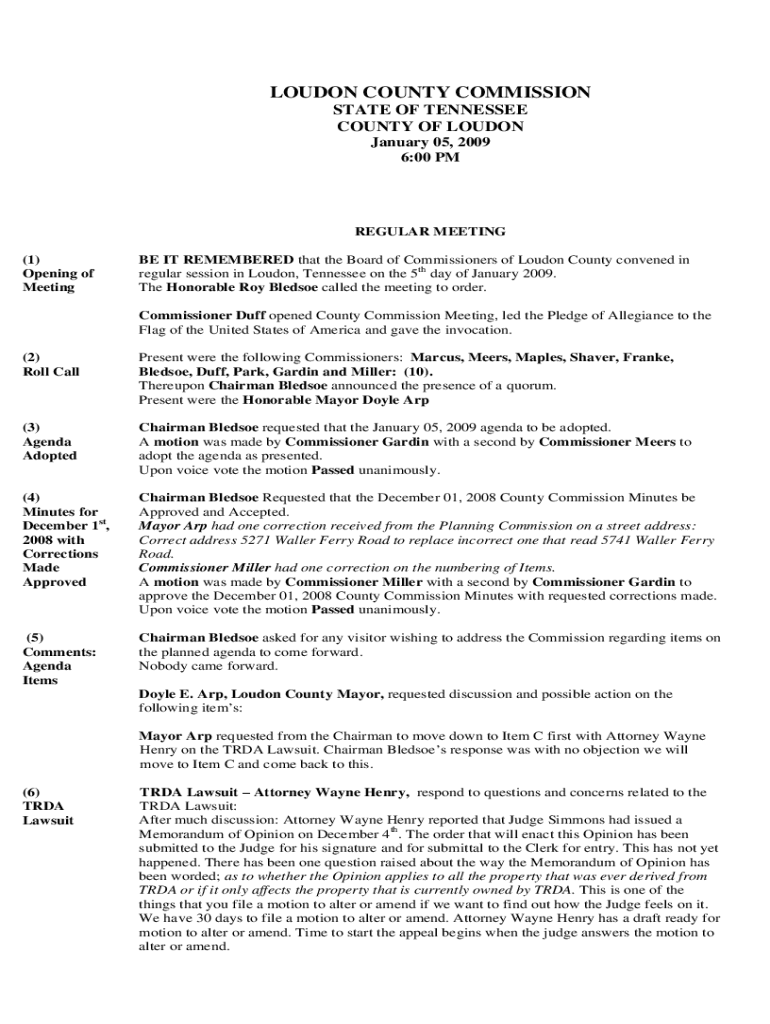
The term "regular session in Loudon, Tennessee on the 5th day of January 2009" refers to a formal meeting held by the Loudon County Commission. This meeting, like other regular sessions, is designed to address civic issues, legislate local policies, and allow for public participation. On January 5, 2009, specific agenda items were discussed, such as ethics laws, employment policies, and amendments to funding allocations. Understanding the context of this session helps grasp the local government's functioning, decision-making processes, and community engagement on that specific day.
Key Elements of the Regular Session
The regular session in Loudon, Tennessee on January 5, 2009, comprised several key components:
- Opening and Roll Call: The session began with an official opening, followed by a roll call to confirm the presence of commission members, ensuring quorum.
- Agenda Adoption: The agenda was reviewed and formally adopted, which laid out the structured order of business for the day.
- Discussion Items: Topics like lawsuit updates and resolutions on public policies were deliberated.
- Approval of Minutes: The minutes from the previous meeting were reviewed for accuracy and approved with necessary corrections.
- Public Participation: Opportunities for public comment on both agenda and non-agenda items were provided.
Each of these elements contributed to the orderly flow and comprehensive nature of the meeting.
Steps to Complete the Regular Session
Completing a regular session involves several standard procedures, each pivotal for proper governance:
- Preparation of Agenda: Administrative staff draft and circulate the meeting agenda ahead of time, outlining topics for discussion.
- Session Initiation: The session opens with a formal call to order, followed by roll call to verify member presence.
- Discussion and Decisions: Members deliberate on agenda items, propose amendments, and cast votes.
- Meeting Minutes: Documentation of proceedings and decisions is ensured, with minutes taken for record-keeping.
- Closing: The session concludes with final comments, time for public expression, and adjournment until the next scheduled meeting.
These steps establish the groundwork for effective local governance.
Legal Use of the Regular Session
Regular sessions such as the one held on January 5, 2009, in Loudon, Tennessee, have specific legal implications:
- Legislative Authority: These sessions provide a legal forum for enacting local legislation and resolutions.
- Public Transparency: They fulfill legal requirements for government transparency, allowing public scrutiny of decisions and spending.
- Official Record: Minutes serve as an official and legal record of decisions made, aiding in accountability.
- Statutory Compliance: They ensure that local governance complies with relevant state and federal laws.
Legal adherence ensures that governance processes and decisions are valid and enforceable.
Important Terms Related to Regular Session
Understanding key terms enhances comprehension of the session's dynamics:
- Quorum: The minimum number of commission members required to hold the meeting.
- Resolution: A formal expression of opinion or intention agreed upon by the commission.
- Ordinance: A law or regulation enacted at the county level.
- Public Works: Government-funded projects for public infrastructure.
- Amendment: A formal change or addition proposed during a session.
These terms represent the foundational elements of governance deliberations.
Who Typically Uses the Regular Session
The regular session in Loudon, Tennessee, on the specified date typically involves:
- Commission Members: Elected officials participating in legislative processes.
- Administrative Staff: Personnel supporting the logistical and procedural aspects.
- Local Residents: Community members attending or participating to voice concerns or support.
- Legal Advisors: Experts ensuring compliance with applicable laws.
- Special Interest Groups: Organizations or individuals lobbying for specific issues or projects.
These stakeholders collectively contribute to the local governance ecosystem.


State-Specific Rules for the Regular Session
In Tennessee, state-specific regulations stipulate how regular sessions are structured:
- Open Meetings Act: Ensures transparency, requiring sessions to be accessible to the public.
- Notification Requirements: Public notices must be posted in advance to inform citizens about upcoming sessions.
- Quorum Regulations: State policy dictates the number of members required for a session to proceed.
Understanding these rules is crucial for appreciating the procedural integrity of such meetings.
Examples of Using the Regular Session
Analyzing specific past scenarios can provide insights into the regular session's practical applications:
- Ethics Legislation: During the session, discussions might have included reinforcing ethical standards for public officials.
- Budget Amendments: Adjustments to county budgets to address unforeseen expenses or reallocate resources.
- Community Feedback: Instances where public input led to the reconsideration of proposed policies or projects.
These examples highlight the diverse influence of regular sessions on local policy and community welfare.




