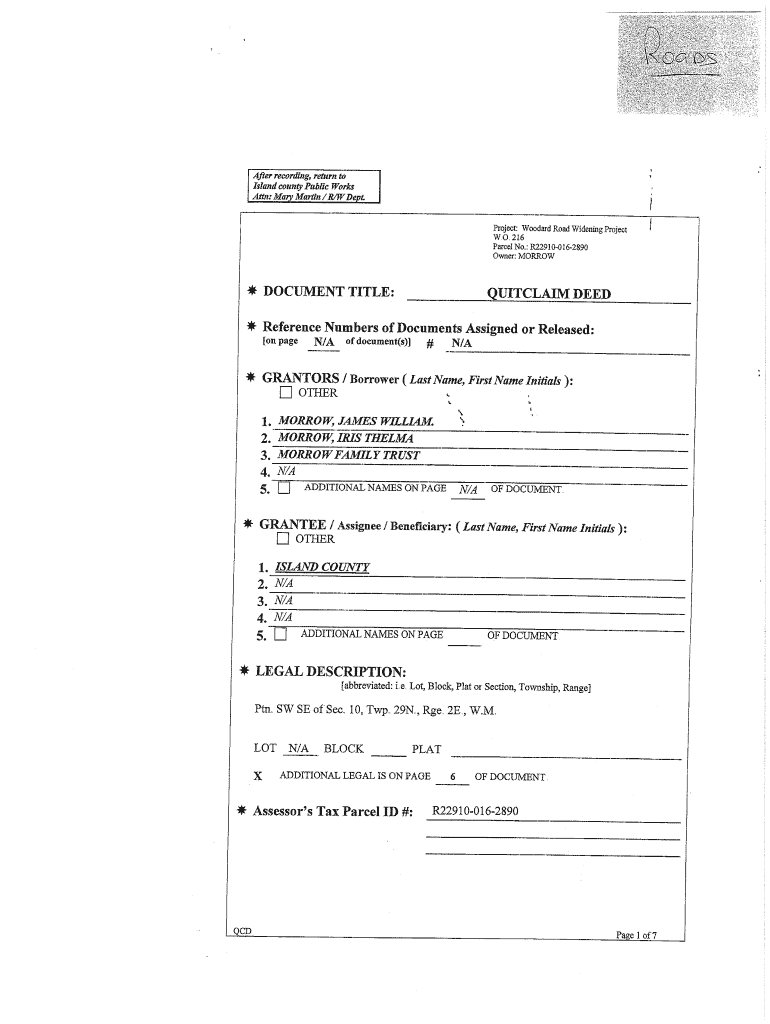







Definition & Meaning
A Quit Claim Deed is a legal instrument primarily used for transferring ownership or interest in a property without warranting the title in Island County, Washington. It serves to relinquish any claims the grantor (the person transferring the interest) has on the property to the grantee (the person receiving the interest), without ensuring that the title is free of encumbrances. This type of deed is commonly utilized in transactions between family members or to clear up any title discrepancies.
How to Obtain the Quit Claim Deed - Island County Government
To acquire a Quit Claim Deed in Island County, you can visit the County Auditor's Office in person or their official website, where templates or forms might be provided. This form can also be custom-made to suit specific requirements. Many choose to work with a real estate professional or attorney to draft a quit claim deed, ensuring it meets legal standards and specifics related to Island County.
Steps to Complete the Quit Claim Deed - Island County Government
- Identify Parties Involved: Clearly state the full legal names of the grantor and grantee.
- Describe the Property: Include a legal description of the property, such as lot and block numbers, as found in official records.
- Consideration Clause: Indicate any monetary consideration. It can often be nominal, such as $1 or "for love and affection" if it's within a family.
- Execution: The grantor must sign the deed in front of a notary public. In some cases, the grantee may also need to sign.
- Record the Deed: File the completed and notarized deed with the Island County Auditor's Office to make the transfer official and public.
Who Typically Uses the Quit Claim Deed - Island County Government
Quit Claim Deeds are frequently used by individuals looking to transfer property to family members, finalize divorce settlements, correct title errors, or add a co-owner to a property. These deeds are less common in traditional sale transactions due to their lack of warranty, making them more suitable for informal transfers or low-risk transactions.


Key Elements of the Quit Claim Deed - Island County Government
- Parties Involved: Clearly list the grantor and grantee.
- Legal Description: Include the official description of the property.
- Signatures: Require the signature of all grantors.
- Notarization: Must be witnessed by a notary public to be valid.
- Recording Information: Submit to the relevant government office to become effective.
Legal Use of the Quit Claim Deed - Island County Government
Quit Claim Deeds are legally used for a variety of property transfers, including correcting title errors, transfers among family members, or resolving ownership disputes. It's crucial to understand that this deed offers no guarantees about the property's title, highlighting the importance of a title search when not already familiar with the property history.
Important Terms Related to Quit Claim Deed - Island County Government
- Grantor: The person relinquishing their ownership or claim.
- Grantee: The person receiving the ownership or claim.
- Consideration: Anything of value promised to another when making a contract.
- Encumbrance: A claim, lien, charge, or liability attached to and binding real property.
State-Specific Rules for the Quit Claim Deed - Island County Government
In Washington State, it is essential for a quit claim deed to be notarized and, in some cases, the real estate excise tax affidavit must accompany the deed. Island County requires the recording of the deed to complete the transfer, which ensures transparency and public access to the property records. The document should be prepared with attention to state and local requirements to avoid legal conflicts or rejection from the county recorder's office.
Examples of Using the Quit Claim Deed - Island County Government
- Family Transfers: A mother transfers a property to her daughter.
- Divorce Settlements: Property transferred between spouses as part of a divorce agreement.
- Title Corrections: Correcting the name on a title due to a clerical error.
- Estate Planning: Adding a family member to a title as part of an estate plan.