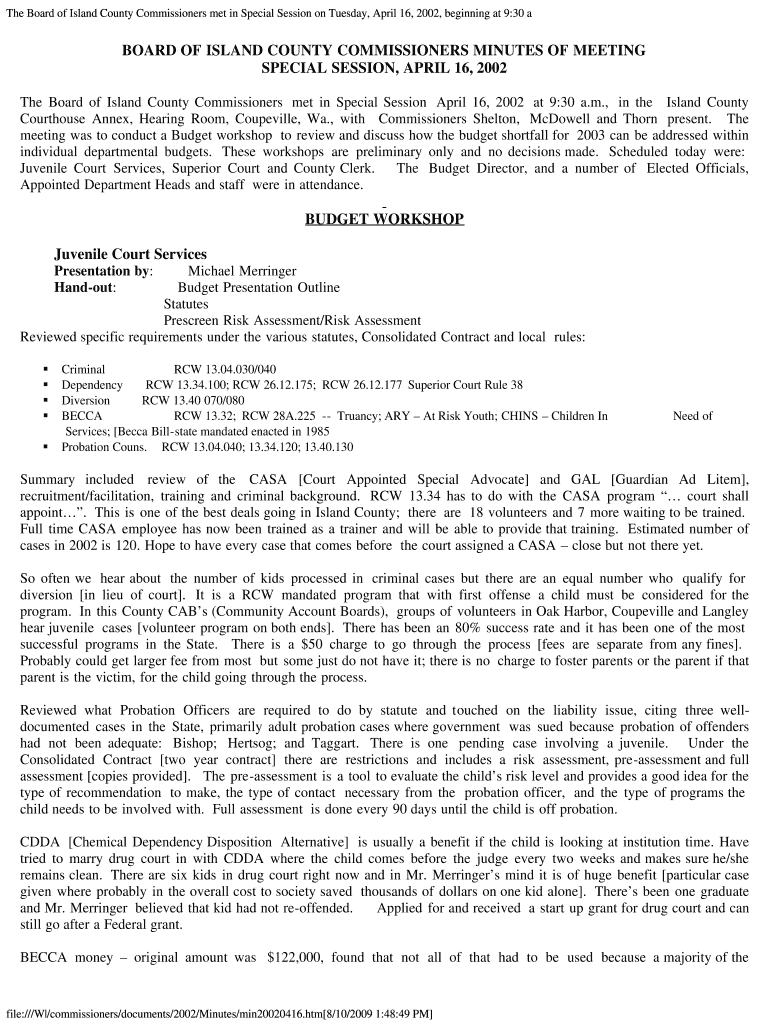







Definition and Meaning of the CASA Program Court Form
The "34 has to do with the CASA program court shall" refers to documentation associated with the Court Appointed Special Advocates (CASA) program, mandated by court orders. CASA is a national association that supports and promotes court-appointed advocates for abused or neglected children, ensuring that their welfare and best interests are represented in court.
Key Elements
- CASA Role: CASAs are volunteers appointed by judges to advocate for the safety and well-being of children. They conduct independent investigations and make recommendations to the court.
- Legal Necessity: This form is legally required in cases where a CASA is involved, providing documentation of their findings and recommendations to guide judicial decisions.
Steps to Complete the CASA Program Court Form
Completing the CASA form involves several detailed steps to ensure accuracy and compliance:
- Gather Required Information: Collect all pertinent details about the child’s case, including background information, current living situation, and any previous court actions.
- Conduct Interviews: Meet with the child, family members, and professionals involved in the child's care, documenting these interactions accurately.
- Analyze Findings: Compile your observations and data into coherent and factual statements that accurately reflect the child’s circumstances and needs.
- Draft Recommendations: Based on your analysis, draft clear and concise recommendations aimed at serving the child’s best interest.
- Review the Document: Perform a thorough review of the completed form to ensure all sections are complete and free of errors.
- Submit to the Court: File the form with the appropriate court officials as mandated by the court’s submission guidelines.
Legal Use of the CASA Program Court Form
The CASA form is a critical document within the legal system, used to:
- Guide Judicial Decisions: Judges rely on the insights and recommendations provided by CASAs to make informed decisions about a child's future.
- Document the Child's Situation: Provides a comprehensive overview of the child's living conditions, education, and health, ensuring the court is fully informed.
- Maintain a Legal Record: Serves as an official record within the child welfare and judicial systems, documenting the intervention and decisions taken.
Who Typically Uses the CASA Program Court Form?
This form is utilized by several key stakeholders in the child welfare system:
- CASA Volunteers: As primary authors of the form, CASAs use it to document their activities, findings, and recommendations.
- Judges and Court Personnel: Utilize the form to get detailed insights and guidance for case decisions.
- Social Workers and Child Advocates: Reference the submitted data to coordinate ongoing care and support services for the child.


Important Terms Related to the CASA Program Court Form
Understanding important terminology is crucial for the accurate completion of this form:
- Guardian ad Litem: An appointed guardian representing the best interests of a child in court.
- Foster Care System: Temporary care arrangement for children removed from their homes due to safety concerns.
- Permanency Planning: Process focused on achieving a stable and permanent living situation for children in foster care.
State-Specific Rules for the CASA Form
The application and requirements of the CASA form can vary by state:
- Jurisdiction Variations: Different states may have specific mandates regarding the information and format of submitted CASA forms.
- State Legislation: Certain states may have unique child welfare laws influencing how CASAs operate and document their findings.
Examples of Using the CASA Program Court Form
Illustrating practical scenarios provides further clarity:
-
Case Example 1: A CASA discovers educational neglect; the form details current academic challenges with recommendations for tutoring and school placement.
-
Case Example 2: Upon discovering a safe home environment, a CASA might recommend reunion with the biological family, substantively documented in the form for court deliberation.
Penalties for Non-Compliance with the CASA Program Court Form
Failing to complete or improperly filing the CASA form leads to significant consequences:
- Judicial Impacts: Incomplete or inaccurate forms can delay court proceedings, impacting decisions related to child's welfare.
- Legal Ramifications: May result in sanctions against the volunteer or other involved agency, potentially jeopardizing the status of the CASA program within a jurisdiction.
By providing an expansive, in-depth view into the "34 has to do with the CASA program court shall," users gain a comprehensive understanding of its significance, application process, and impact within the judicial system related to child advocacy.