






Definition and Meaning
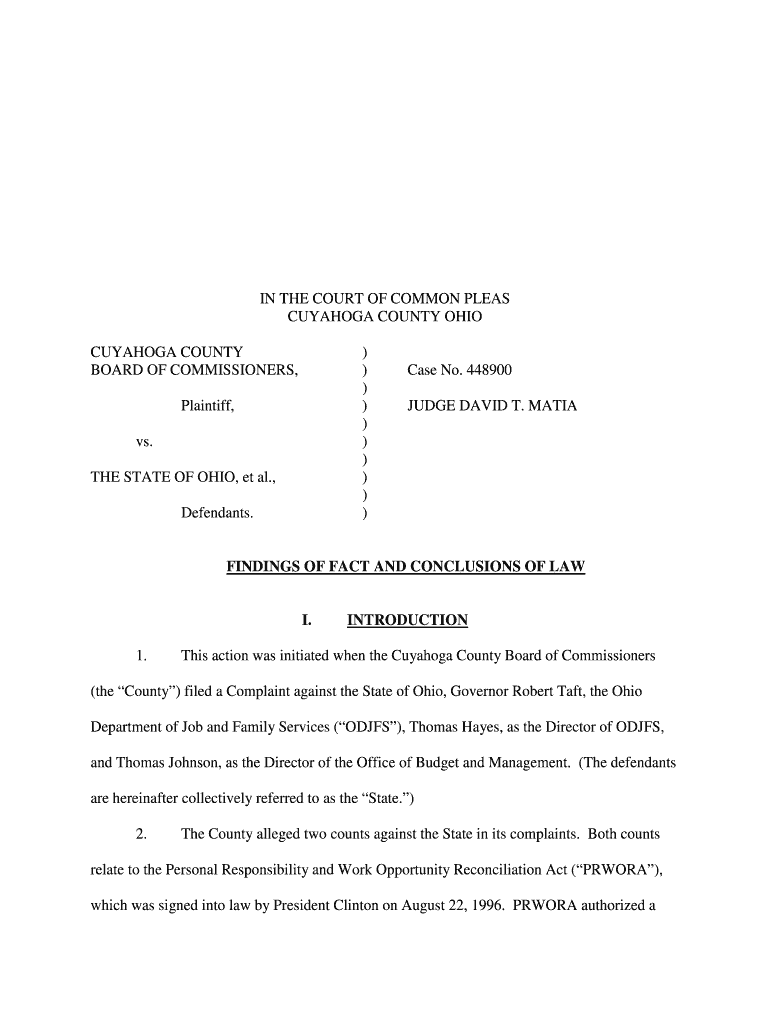
The "In the Court of Common Pleas Cuyahoga County Ohio Cuyahoga County Board of Commissioners" refers to a legal document or court proceeding involving the Cuyahoga County Board of Commissioners in Ohio. This form or case typically pertains to legal actions initiated or defended by the county board, highlighting administrative or legal disputes within the jurisdiction of the Cuyahoga County Court of Common Pleas. These proceedings are crucial for resolving disputes involving local government actions and ensuring compliance with state laws.
How to Use the Form in Legal Proceedings
To effectively utilize the "In the Court of Common Pleas Cuyahoga County Ohio Cuyahoga County Board of Commissioners," parties involved must understand its purpose within a specific legal context. This form is generally part of a broader legal filing or procedural document. Attorneys or legal representatives often prepare such forms as part of a case filing, outlining legal arguments, presenting evidence, or requesting specific judicial actions. Its use involves detailed legal drafting and compliance with court procedural rules, ensuring all details, including claims and requests, align with statutory requirements and judicial guidelines.
How to Obtain the Form
Obtaining this form usually involves accessing legal or judicial documents through the Cuyahoga County Court’s records system. Typically, parties involved in a specific case may request copies directly from the court clerk's office. Additionally, some forms or related documents may be available online through the court's official website, allowing parties to download, print, and fill them as needed. Legal representatives often have streamlined access to such forms as part of their professional service to clients.
Steps to Complete the Form
-
Identify the Specific Case: Ensure clarity on which legal matter the form pertains to by confirming the case number and parties involved.
-
Prepare Required Information: Collect all necessary details, including parties’ identities, claims, legal bases, and supporting documents.
-
Document Completion: Fill out the form with accurate information, ensuring alignment with legal arguments and standards required for the court.
-
Submit to the Court: File the completed form with the Cuyahoga County Court of Common Pleas according to procedural guidelines.
-
Follow-Up: Monitor the case status and respond to any further court requirements or actions related to the form submission.
Key Elements of the Form
- Case Information: Includes case number, filing date, and involved parties' names.
- Legal Claims: Specific legal basis for the filing with comprehensive documentation of the claims presented.
- Requested Actions: Details of judicial or administrative actions sought, such as injunctions or judgments.
- Supporting Evidence: Accompanying evidence such as documents, testimonies, or affidavits that substantiate the claims.
Legal Use in Administrative Actions
This form is critical in administrative legal actions where the Cuyahoga County Board of Commissioners is involved, often addressing issues like budget disputes, regulatory compliance, or local governance challenges. Legally, it is used to affirm the county's position, assert legal rights, or challenge actions by other governmental entities or individuals.
State-Specific Rules and Compliance
Ohio's legal framework and specific procedural rules guide the proper use and filing of the "In the Court of Common Pleas Cuyahoga County Ohio Cuyahoga County Board of Commissioners." These rules dictate submission timelines, formats, required signatures, and the presentation of evidence. Ensuring compliance is essential for the acceptance and legal recognition of the form, preventing delays or dismissals.
Examples of Legal Scenarios
- Budget Allocation Dispute: As demonstrated in the TANF funds case, where funds were allegedly diverted, forms can be used to challenge state actions against local mandates.
- Zoning and Land Use: Legal actions for or against zoning decisions impacting county developments.
- Contractual Disputes: Situations arising from county contracts with external parties, requiring judicial intervention to resolve conflicts.
Required Documents for Filing
- Initial Complaint or Petition: Outlines the legal issue and requests relief.
- Supporting Affidavits: Written statements from witnesses confirming claims.
- Evidence Attachments: Documents such as contracts, correspondence, or financial records supporting the claims.
Penalties for Non-Compliance
Failure to properly file or complete the form can lead to penalties, including dismissal of the case, fines, or compelled compliance with counterclaims. Legal representatives ensure accuracy and adherence to prevent procedural penalties.
Who Typically Uses the Form
This form is typically used by:
- County Legal Departments: Handling official legal matters involving the county board.
- Private Attorneys: Representing clients in disputes with or against the county board.
- Government Officials: Seeking legal redress or clarification through formal judicial proceedings.
These sections provide a comprehensive look at the form "In the Court of Common Pleas Cuyahoga County Ohio Cuyahoga County Board of Commissioners," enhancing understanding and legal preparedness for involved parties.