






Definition and Meaning
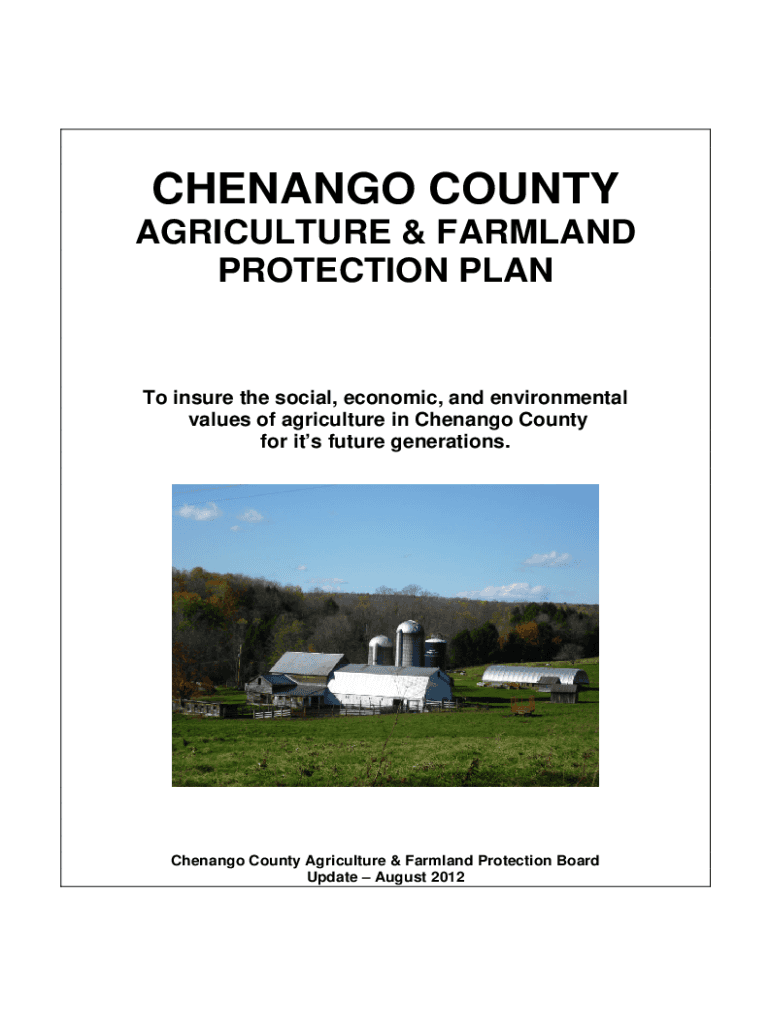
The "Agriculture and Farmland Protection Plan2012 - Chenango County" is a strategic document developed to preserve the agricultural integrity and environmental value of farmland within Chenango County, New York. The plan emphasizes the importance of agriculture to the local economy and addresses challenges such as land fragmentation and development pressures. Its primary goal is to implement strategies that protect viable agricultural lands through supportive policies, community involvement, and educational initiatives. This document serves as a blueprint for ensuring sustainable farming practices while maintaining the economic viability of agriculture in the region.
Key Elements of the Plan
The Agriculture and Farmland Protection Plan includes several critical components designed to foster agricultural sustainability:
- Land Preservation Strategies: Techniques to prevent land fragmentation and maintain large contiguous parcels for farming.
- Policy Recommendations: Suggestive frameworks that local governments can adopt to support agricultural activities.
- Community Engagement: Initiatives to involve local communities in preserving and promoting agricultural activities.
- Educational Programs: Resources to educate farmers and the public about sustainable practices and the economic importance of agriculture.
Each element plays a role in ensuring long-term agricultural productivity and environmental health in Chenango County.
How to Use the Plan
Using the Agriculture and Farmland Protection Plan involves understanding and implementing its strategies within your farming operations or community planning:
- Review the Document: Understand key strategies and recommendations.
- Identify Relevant Sections: Focus on areas that apply to your specific needs, such as land use policies or community programs.
- Engage Stakeholders: Discuss the plan with local farmers, community leaders, and policymakers to align efforts.
- Implement Recommendations: Apply practical strategies to preserve farmland and enhance agricultural viability.
This approach ensures that you leverage the full potential of the plan to benefit local agriculture.
Important Terms Related to the Plan
Familiarity with specific terms is crucial for understanding the plan:
- Agricultural Viability: The capability of farmland to support profitable and sustainable farming operations.
- Land Fragmentation: The division of larger agricultural plots into smaller, less viable parcels.
- Sustainable Practices: Methods of farming that protect natural resources and ensure long-term productivity.
- Zoning Laws: Regulations governing land use that can impact agricultural activities.
Understanding these terms helps interpret the plan’s content more effectively.
Legal Use of the Plan
The Agriculture and Farmland Protection Plan is a legally recognized document that guides local zoning laws and development policies:
- Zoning Consistency: Local zoning regulations often align with the plan’s recommendations to support agricultural activities.
- Policy Adoption: Municipalities may adopt the plan’s strategies as part of their legal framework to preserve farmland.
- Legal Support for Farmers: Provides a basis for legal arguments to protect farmland from development pressures.
These legal aspects ensure that the plan can effectively safeguard agricultural lands.
Examples of Using the Plan
Several real-world scenarios illustrate the plan's application:
- Community Grants: Utilizing the plan to secure funding for agricultural education programs.
- Land Conservation Initiatives: Implementing strategies to merge small parcels into larger, productive farms.
- Policy Development: Integrating plan recommendations into local government planning documents.
These examples demonstrate the practical application of the plan to achieve its preservation goals.
State-Specific Rules for the Plan
The Agriculture and Farmland Protection Plan may be influenced by New York State laws and guidelines:
- State Agricultural Districts: Areas designated by New York State to encourage agriculture and prevent urban sprawl.
- Environmental Regulations: State rules concerning soil and water conservation that align with the plan’s objectives.
- Tax Incentives: New York offers tax relief for participating farmers who comply with preservation practices outlined in the plan.
Understanding these rules ensures alignment with state and local agricultural policies.
Who Typically Uses the Plan
The intended users of the Agriculture and Farmland Protection Plan include:
- Local Governments: To develop policies supporting agricultural preservation.
- Farmers and Landowners: To learn about and apply best practices for land conservation.
- Community Organizations: To promote awareness and assist in implementing the plan’s strategies.
The wide range of potential users underscores the plan’s comprehensive approach to farmland protection.


How to Obtain the Plan
Access to the Agriculture and Farmland Protection Plan is essential for effective implementation:
- Contact Local Government Offices: The Chenango County planning department can provide copies or direct you to the appropriate resources.
- Visit Public Libraries: Copies may be available for reference or borrowing.
- Online Access: Some local governments may offer digital versions on their official websites.
Having access to the plan is the first step in integrating its strategies into local agricultural efforts.