






Definition & Meaning
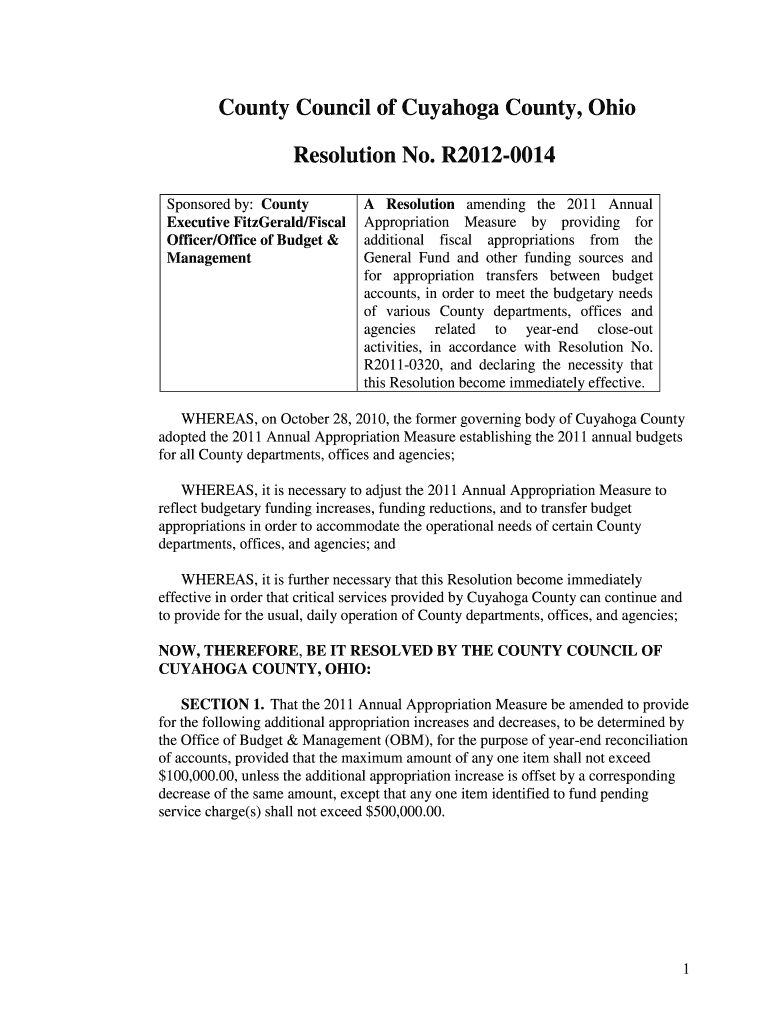
The term "Ordinance No - Cuyahoga County Council" refers to a specific legislative document enacted by the County Council of Cuyahoga County, Ohio. These ordinances are formal legal measures used to amend existing laws, enact new regulations, or adopt changes in policies that impact county operations and services. Ordinances can address a wide range of issues from zoning regulations to budget appropriations, and are crucial for implementing changes within the county’s administrative framework.
Purpose of Ordinances
- Serve as a tool for local governance and policy-making.
- Amend existing regulations or introduce new laws.
- Respond to the evolving needs of the community.
- Ensure that county operations conform to legal and fiscal requirements.
Steps to Complete the Ordinance No - Cuyahoga County Council
Completing an ordinance within the Cuyahoga County Council involves several procedural steps that ensure thorough consideration and legal compliance.
- Drafting: A proposed ordinance is drafted, often involving collaboration between council members, department heads, and legal advisors. This draft outlines the purpose and specifics of the ordinance.
- Review: The draft is reviewed for legal compliance and effectiveness. This may involve consultations with legal experts and other stakeholders.
- Committee Hearings: The ordinance is presented to relevant committees within the council for discussion and refinement. Public hearings may also be conducted to gather input from community members and stakeholders.
- Council Vote: After committee recommendations, the ordinance is brought before the full council for voting. Passage usually requires a majority vote.
- Implementation: Once approved, the ordinance is signed by the council president and often by the county executive before becoming effective.
Who Typically Uses the Ordinance No - Cuyahoga County Council
Various stakeholders within Cuyahoga County may engage with ordinances, each playing a different role in the legislative process or implementation.
- County Council Members: Draft and vote on ordinances, ensuring they align with community goals and legal standards.
- County Departments: Implement changes as required by ordinances, adapting operations and policies accordingly.
- Legal Teams: Provide advice and review to ensure ordinances meet statutory and regulatory requirements.
- Community Members and Organizations: Influence ordinance drafting through public comments and participation in hearings, and comply with new regulations once enacted.


Key Elements of the Ordinance No - Cuyahoga County Council
Each ordinance typically includes crucial components that facilitate its implementation and effectiveness.
- Title and Number: Unique identifier and descriptive title.
- Purpose Statement: Explanation of the ordinance’s objectives.
- Effective Date: When the ordinance goes into effect.
- Detailed Provisions: Specific regulations or changes introduced.
- Funding Sources: Financial implications and budget appropriations, if applicable.
- Amendments: Any revisions to existing laws or policies outlined within the ordinance.
Legal Use of the Ordinance No - Cuyahoga County Council
Ordinances within Cuyahoga County must comply with legal standards to ensure they are enforceable and effective.
- Compliance: All ordinances must align with state and federal laws.
- Enforcement: County officials are responsible for enforcing ordinances which may involve inspections, penalties, or legal actions for non-compliance.
- Judicial Review: Ordinances can be subject to judicial review if challenged, ensuring they do not infringe on constitutional rights or exceed statutory authority.
Important Terms Related to Ordinance No - Cuyahoga County Council
Understanding key terminology is important for comprehending ordinance processes and implications.
- Appropriation: Allocation of funds for specific government functions.
- Amendment: A change or addition to an existing ordinance or law.
- Resolution: A formal expression of opinion or intention by the council, which differs from ordinances in that it does not have the legal force of law.
- Public Hearing: A forum for gathering community feedback on proposed ordinances.
- Bylaws: Rules governing the internal management of the council or departments.
State-Specific Rules for the Ordinance No - Cuyahoga County Council
Ordinances in Cuyahoga County are subject to Ohio state laws, informing how they are crafted and enforced.
- State Preemption: Certain areas are regulated solely by state law, limiting the county’s legislative authority.
- Home Rule: Cuyahoga County exercises a certain degree of self-governance, allowing it to pass ordinances specifically tailored to local needs unless preempted by state law.
- Notification Requirements: State mandates may require public notice before an ordinance is adopted or amended.
Examples of Using the Ordinance No - Cuyahoga County Council
Ordinances can have wide-ranging applications, impacting various aspects of county governance.
- Budget Appropriations: Ordinances may dictate how funds are distributed among county departments, ensuring critical services continue.
- Zoning Regulations: Establish land use standards, influencing development and community planning efforts.
- Public Safety: Implement measures for community health and safety, such as regulations on noise, traffic, and emergency services.
Form Submission Methods
Ordinances in Cuyahoga County Council follow specific submission protocols, emphasizing accessibility and transparency.
- Online Platforms: The council may use digital platforms to receive public comments or feedback on proposed ordinances.
- In-Person Consultations: Stakeholders can attend council meetings or hearings to provide input.
- Mail: Written comments or proposals can be submitted via postal mail for inclusion in public records.
This structured approach ensures that all ordinance processes promote democratic participation and maintain public confidence in governance.