Definition and Meaning
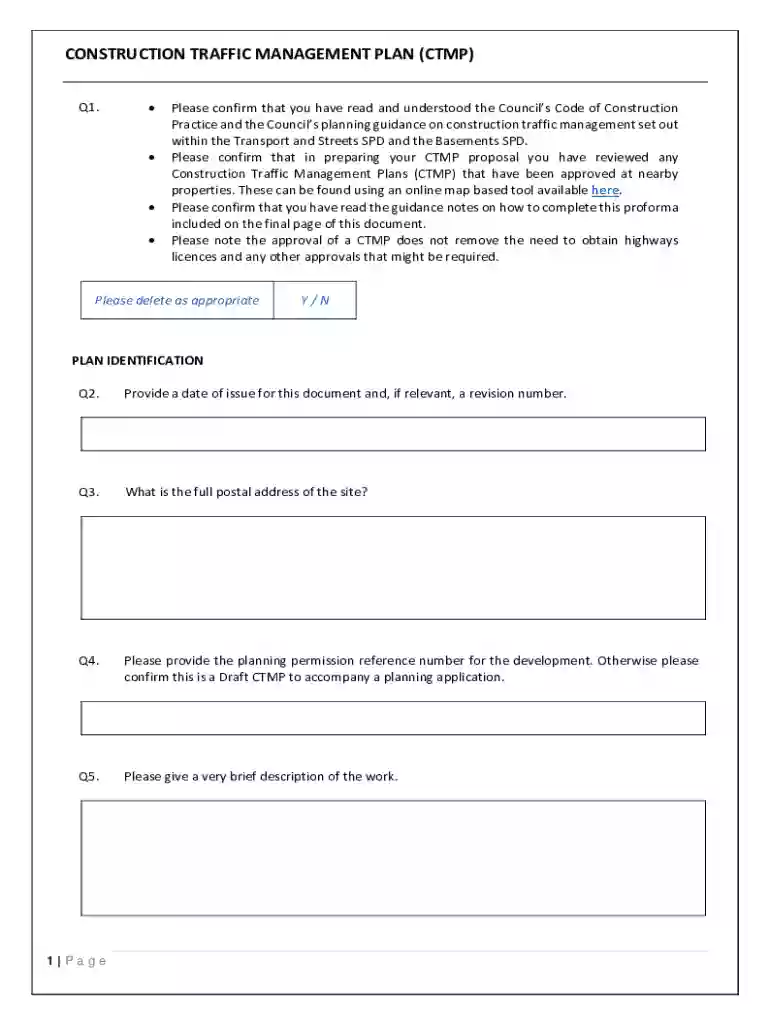
A Construction Traffic Management Plan (CTMP) is a comprehensive document used to manage and mitigate the impact of construction-related traffic on local roads and communities. It is designed to ensure safety and efficiency during construction activities by detailing strategies for vehicle routing, site access, pedestrian safety, and more. The CTMP outlines specific practices to minimize disruptions to residents and road users, maintaining smooth traffic flow while ensuring compliance with local regulations and codes.
Key Elements of the Construction Traffic Management Plan
The CTMP incorporates several critical components that together form a robust strategy for handling construction traffic. These elements include:
- Site Identification and Access: Detailed descriptions of the construction site, including entrances and exits to ensure safe access for construction vehicles.
- Vehicle Routing: Carefully planned routes that construction vehicles take to minimize congestion and avoid sensitive areas.
- Pedestrian Safety Measures: Steps to safeguard pedestrian movement around the construction site.
- Scheduling: Outlining specific times for deliveries and construction activities to reduce peak hour disruptions.
- Consultation with Neighbors: Engaging local communities to inform them of potential impacts and gather their inputs for a harmonious coexistence.
How to Use the Construction Traffic Management Plan
Utilizing a CTMP effectively involves understanding its guidelines to ensure all stakeholders adhere to the plan. The process includes:
- Reviewing Relevant Council Codes: Familiarize yourself with local regulations ensuring compliance.
- Identifying Key Stakeholders: Coordinate with site managers, local traffic authorities, and community representatives.
- Implementing the CTMP: Deploy the strategies detailed in the document in the field, utilizing the steps and recommendations provided.
- Monitoring and Adjustments: Continuously monitor traffic management effectiveness and adjust the plan as necessary based on real-world conditions.
Steps to Complete the Construction Traffic Management Plan
Completing a CTMP requires careful planning and attention to detail. Follow these steps:
- Research and Consultation: Gather information about the construction area, including community demographics, typical traffic patterns, and local regulations.
- Drafting the Plan: Assemble all relevant details, from vehicle routing to pedestrian pathways, according to the template or format set by local authorities.
- Reviewing the Plan: Collaborate with relevant authorities and potential stakeholders to review the draft CTMP, making changes where necessary to accommodate feedback.
- Finalizing the Plan: Once reviewed and modified, the final CTMP is prepared for submission to relevant development and road management authorities for approval.
Important Terms Related to the Construction Traffic Management Plan
Understanding key terms used in a CTMP is essential for its effective implementation. Some important terms include:
- Spoil Removal: The process of removing excavated material from the construction site.
- Traffic Control Devices: Signs, signals, and barriers used to direct and control road user movement.
- Peak Hour: The time periods during which traffic is typically at its highest.
Legal Use of the Construction Traffic Management Plan
A CTMP is a legally recognized document, required for obtaining approval from local authorities before commencing construction projects. It ensures compliance with statutory requirements related to traffic management, and failing to develop or adhere to the CTMP could result in legal repercussions, including fines or halt orders on construction projects.
Examples of Using the Construction Traffic Management Plan
Practical use of a CTMP can be illustrated through case studies:
- High-Rise Building Projects: In densely populated urban areas, a CTMP helps delineate clear vehicle and pedestrian pathways, reducing conflicts.
- Roadworks Projects: For major road improvements, a CTMP directs traffic conveniently around work zones, ensuring minimal impact on road users.
- School Construction Sites: Close coordination with school authorities helps implement pedestrian safety measures effectively.
State-Specific Rules for the Construction Traffic Management Plan
Different states in the U.S. may have unique requirements for CTMPs:
- California: Emphasizes environmental considerations, requiring plans to minimize emissions from construction vehicles.
- New York: Focuses on pedestrian and cyclist safety in densely populated areas.
- Texas: Prioritizes scheduling and routing to prevent disruptions during peak oil transportation times.
Penalties for Non-Compliance
Failure to comply with a CTMP can lead to severe consequences:
- Fines: Monetary penalties may be levied by local municipalities.
- Construction Delays: Non-compliance could result in enforced halt orders.
- Reputational Damage: Projects perceived as disruptive can harm the developer’s reputation and relationship with the community.