






Definition & Purpose of the Contractors Pre-Qualification Checklist
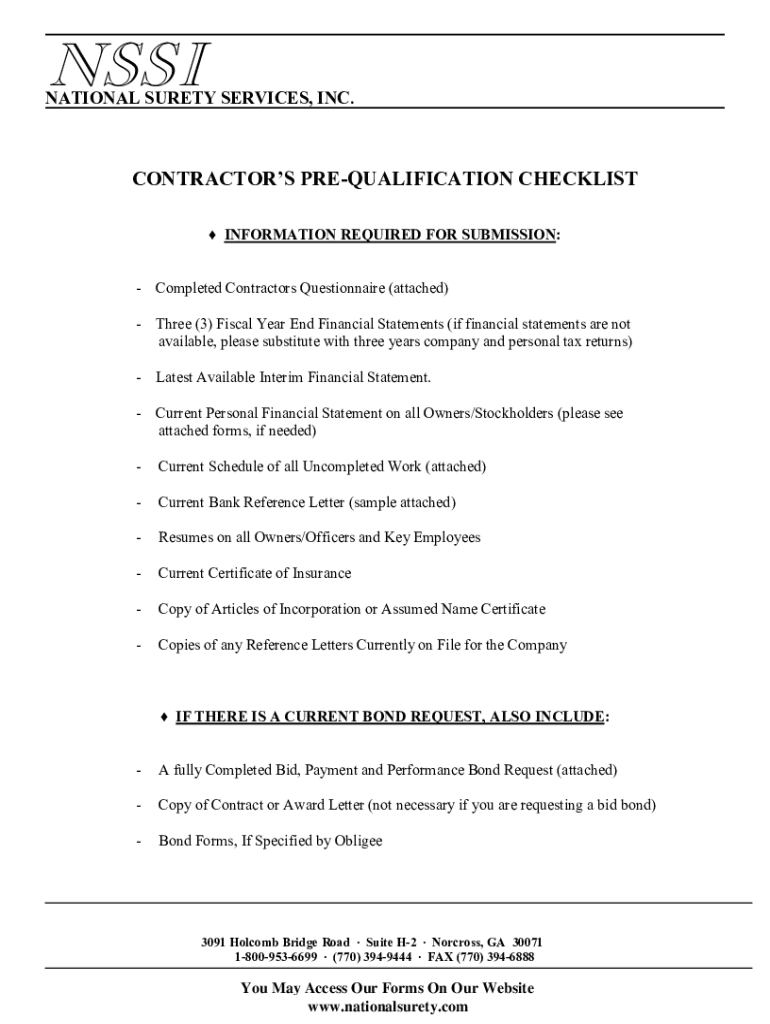
The Contractors Pre-Qualification Checklist from National Surety Services, Inc. is a vital document utilized to assess a contractor’s eligibility for bonding services. Its purpose is to gather all necessary information that reflects the contractor's financial stability and operational capability. This includes a detailed review of the firm's financial statements, owners’ personal financial conditions, and the qualifications of key personnel.
Examples of information typically required encompass:
- Financial statements from the past three years
- Personal financial statements of all owners
- Resumes of significant employees involved in decision-making
The checklist ensures a comprehensive evaluation, aiding insurers in assessing risk and determining bonding capacities.
How to Use the Checklist
Utilizing the Contractors Pre-Qualification Checklist involves several key steps to ensure thorough completion and submission. It is essential for contractors seeking bonding services to understand each component and provide accurate, detailed information.
- Gather Required Documents: Start by collecting all necessary financial reports, personal financial statements, and resumes of key employees.
- Complete Each Section Thoroughly: Each part requires specific data related to financial health and business operations. Complete every field with precision.
- Review for Accuracy: Before submission, review all inputs to confirm accuracy and consistency across all documents.
The checklist acts as an evaluative tool, prompting contractors to present their business's financial stability comprehensively.
Steps to Complete the Checklist
Detailed steps can guide contractors through the checklist, reducing time and errors:
- Initial Preparation: Compile basic corporate information, including business address, contact details, and organizational structure.
- Financial Documentation: Ensure financial statements, such as balance sheets and income statements, are up-to-date and reflect the past three years.
- Personal Financial Statements: Owners should provide detailed personal financial data to demonstrate personal fiscal responsibility.
- Employee Qualifications: Include detailed resumes of crucial employees, highlighting experience and role within the company.
- Document Review and Submission: Double-check information for completeness, then submit the checklist to the designated department within National Surety.
Following these structured steps aids in avoiding common pitfalls and miscommunications.
Key Elements of the Checklist
Several pivotal elements are incorporated into the checklist to form a comprehensive profile of the contractor’s business and financial health:
- Financial Statements: Key for assessing financial stability and historical performance.
- Personal Financial Data: Reflects the fiscal health of the business owners.
- Employee Credentials: Demonstrate the capability and expertise of personnel leading the company.
- Uncompleted Work & Bond Requests: Overview of current project commitments, affects bonding decisions.
These components provide essential insights for surety bond underwriters when evaluating a contractor's application.
Required Documents
Contractors need to provide a robust suite of documentation:
- Corporate Financial Statements: Include balance sheets, income statements, and cash flow statements.
- Owner's Personal Financial Data: Tax returns and personal balance sheets from the past year.
- Resumes of Key Personnel: Detailing qualifications and relevant project experience.
- Current Work Status: Listings of uncompleted work and prior bonding experiences.
Providing all mandated documents ensures a smooth vetting process.
Important Terms Related to the Checklist
Understanding specific terminology is crucial for accurate and informed checklist completion:
- Surety Bond: A legal instrument assuring project completion in terms of contractual obligations.
- Underwriter: A professional judging the risk and premium for insurance coverage or bonding.
- Financial Statements: Reports summarizing the fiscal condition of a business.
- Bond Capacity: The maximum amount of surety bond a contractor can qualify for.
These terms form the foundation of navigating the checklist with confidence.
Examples of Using the Checklist
Real-world scenarios show practical applications of the checklist:
- Construction Firms: Submit the checklist to pre-qualify for bonding on large infrastructure projects.
- Small Business Owners: Use it to gain insights on financial health for bonding readiness.
- Project Managers: Evaluate checklist submissions to determine internal project oversight before execution.
Each example highlights specific use cases where the checklist is employed for business advancement.
Who Typically Uses the Checklist
Key user groups include:
- Contractors: Ensuring they meet bonding prerequisites for upcoming projects.
- Surety Companies: To evaluate the financial and operational health of applicants.
- Project Owners: Assessing the capacity and stability of contractors in bid consideration.
Recognizing who uses the checklist underscores its necessity in construction and contracting environments.