01. Edit your form online
Type text, add images, blackout confidential details, add comments, highlights and more.

Type text, add images, blackout confidential details, add comments, highlights and more.

Draw your signature, type it, upload its image, or use your mobile device as a signature pad.

Send it via email, link, or fax. You can also download it, export it or print it out.
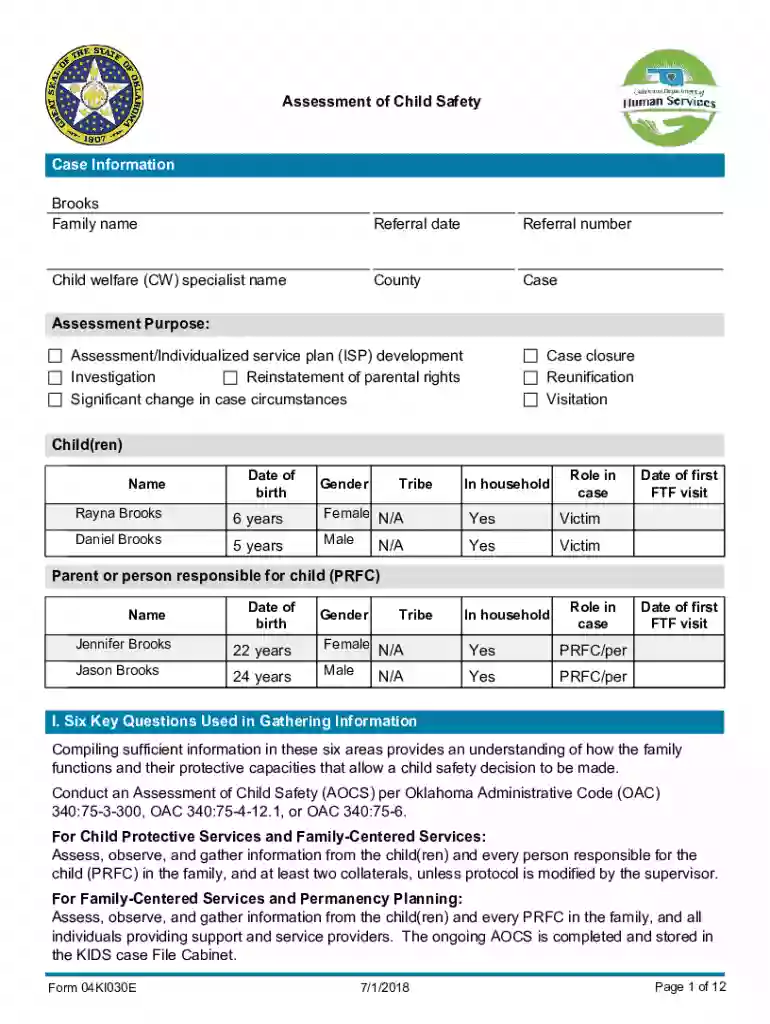
The Assessment of Child Safety is a systematic evaluation tool used to analyze family environments concerning the safety and well-being of children. Specifically, it applies to cases involving allegations of child maltreatment or neglect. This assessment aims to determine the presence of any risk factors that could jeopardize a child's safety and provides a framework for intervention strategies. It looks into family dynamics, parenting practices, and previous investigations related to discipline practices. By identifying protective capacities and potential safety threats, this assessment establishes whether children are in a safe environment or require intervention from social services.
Using the Assessment of Child Safety involves several key steps to ensure a thorough evaluation of the family situation. First, gather comprehensive data about the family, including historical and current child welfare concerns. Input this data into the assessment tool, paying close attention to indicators of risk such as physical discipline practices. The tool will guide you through analyzing the gathered information, focusing on evaluating risk factors and safety threats. You'll need to assess each family member's role and the parental capabilities in safeguarding the children. After completing the analysis, you'll generate findings that summarize the family dynamics and provide recommendations for further actions or interventions if required.
Initial Data Collection: Collect historical and current information about the family, including past allegations, investigation results, and current environment details.
Evaluate Parenting Practices: Focus on how discipline methods like physical punishment impact children's safety and well-being. Consider any previous findings on excessive discipline.
Analyze Family Dynamics: Investigate the relationships and interactions within the family to determine support systems and potential stressors contributing to maltreatment risks.
Assess Protective Capacities: Identify any protective factors within the family that may mitigate risk factors, such as supportive grandparents or community involvement.
Identify Safety Threats: Enumerate any immediate dangers to the children, such as ongoing abuse instances, and potential incidents based on current family practices and dynamics.
Generate Findings: Compile and summarize findings regarding child safety and provide recommendations for interventions, or if legal actions may be necessary.
The Assessment of Child Safety includes several essential elements that form the core of the evaluation process:
Family Interviews: Conduct thorough discussions with family members to gain a deep understanding of daily dynamics and children's roles within the family.
Observation of Interactions: Observe family members' interactions, with particular emphasis on identifying supportive and hostile behaviors towards children.
History of Prior Interventions: Review historical data about previous child welfare services or interventions the family has experienced, paying close attention to outcome effectiveness.
Physical Environment Evaluation: Examine the physical environment of the family home to assess potential safety risks, such as hazards in the home or neighborhood.
Legal and Protective Orders: Take into account any existing legal or protective orders involving the family to ensure compliance and awareness of restrictions.
The assessment tool is primarily used by child welfare professionals, including social workers, case managers, and family support specialists. These professionals rely on the assessment for making informed decisions regarding a child's safety within their home. Additionally, legal authorities, such as judges and attorneys in family courts, use the findings to guide child custody or welfare cases. Professionals in child advocacy roles also utilize the assessment to identify areas where families may need additional resources or support services to improve child safety.


The legal application of the Assessment of Child Safety is crucial in cases involving allegations of maltreatment or neglect. Findings from this assessment guide decisions in family courts regarding the removal or reunification of children with their families. The assessment must be thorough, unbiased, and factual, providing judges with detailed insights into the family's dynamics and risks. It also plays a pivotal role in the development of safety plans and interventions, ensuring that actions comply with legal standards and protect children's rights and welfare.
While there is a general framework for conducting the Assessment of Child Safety, each state in the U.S. may have specific guidelines, protocols, or criteria aligned with local laws and service capacities. For instance, some states prioritize the involvement of certain community resources or mandate specific documentation formats when reporting assessment findings. Knowing state-specific rules is essential for child welfare professionals to ensure compliance and proper application of the assessment across various jurisdictions.
Case studies illustrate the practical application of the Assessment of Child Safety. In a scenario involving the Brooks family, the assessment was utilized to investigate claims of maltreatment through physical discipline. Interviews with the children revealed instances of physical punishment, which were documented and analyzed. The assessment's findings led to a tailored intervention plan, featuring parenting classes and supervised visitations to ensure the children's future safety and improve familial relationships. Case-specific outcomes like these demonstrate the assessment's robust ability to influence child welfare positively.
We've got more versions of the Assessment of Child Safety form. Select the right Assessment of Child Safety version from the list and start editing it straight away!
At DocHub, your data security is our priority. We follow HIPAA, SOC2, GDPR, and other standards, so you can work on your documents with confidence.