






Definition & Meaning
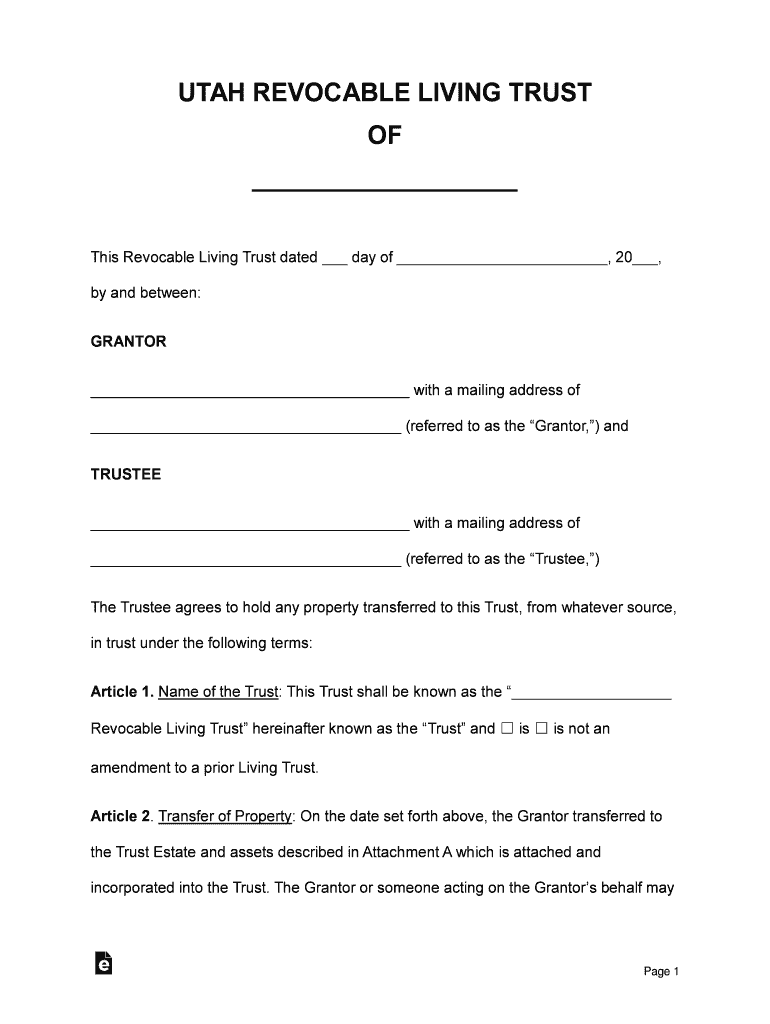
A Utah Revocable Living Trust Form is a legal document that allows a grantor to transfer their assets into a trust for management during their lifetime and distribution upon their death. This form outlines the specific roles and responsibilities of the grantor and trustee, ensuring clarity in the management of assets. It serves as a flexible estate planning tool, allowing modifications or revocation at any time during the grantor's life. By employing precise definitions and responsibilities, this form helps with estate management and reduces probate complications.
Purpose of a Living Trust
- Asset Management: Enables organized management during the grantor's lifetime and seamless distribution after their death.
- Avoid Probate: Allows assets to bypass the lengthy probate process, providing quicker access for beneficiaries.
- Privacy: Unlike a will, a trust is not public record, ensuring privacy for the grantor's estate plans.
- Flexibility: Offers the ability to modify or revoke terms as circumstances and wishes change.
Key Elements of the Utah Revocable Living Trust Form
Several key components are incorporated into the Utah Revocable Living Trust Form, which are crucial for its effective operation. Each aspect contributes to the overall function and purpose of the trust.
Grantor and Trustee Designations
- Grantor: The individual(s) who create the trust and transfer assets into it.
- Trustee: The person or entity responsible for managing the trust assets under the terms laid out.
- Successor Trustee: An appointed individual who takes over management if the original trustee cannot fulfill their duties.
Terms of Management and Distribution
- Asset List: Detailed list of assets included in the trust, ensuring all property is accounted for.
- Beneficiary Designations: Clearly identifies who receives the assets and in what proportions or under what conditions.
- Trustee Powers: Outlines the powers and limitations of the trustee to manage and dispose of trust assets effectively.
How to Obtain the Utah Revocable Living Trust Form - eForms
To acquire the Utah Revocable Living Trust Form, potential users have several options. The process of obtaining the form is designed to be as user-friendly as possible.
Accessible Sources
- Online Platforms: Many legal document websites offer downloadable versions of the form.
- Legal Advisors: Attorneys and estate planners can provide personalized versions that meet specific needs.
- State Resources: The form may be accessible through relevant state legal resources or agencies.
Importance of Choosing the Right Source
- Accuracy: Ensure that the downloaded form is up-to-date and complies with Utah state law.
- Comprehensiveness: Verify that the form includes all necessary provisions and clauses for your specific situation.
Steps to Complete the Utah Revocable Living Trust Form - eForms
Properly filling out the Utah Revocable Living Trust Form involves several steps, each requiring attention to detail and accuracy.
Detailed Process
- Gather Personal and Asset Information: Ensure all relevant personal data and comprehensive lists of assets are ready.
- Complete the Grantor and Trustee Sections: Fill in necessary details about the grantor and selected trustee(s), including successor trustees if applicable.
- Define Management Terms: Specify how the assets will be managed, including any specific powers granted to the trustee.
- Outline Beneficiary Distributions: Clearly define who the beneficiaries are and how and when they will receive their inheritance.
- Review Legal Compliance: Ensure the form adheres to Utah laws and consult with a legal advisor for verification.
- Sign and Notarize: Both the grantor and trustee typically sign the document in the presence of a notary to ensure its legitimacy.
Common Pitfalls
- Incomplete Asset Listings: Failing to include all assets can result in parts of the estate going to probate.
- Vague Distribution Terms: Be specific to avoid disputes among beneficiaries.
Legal Use of the Utah Revocable Living Trust Form - eForms
The Utah Revocable Living Trust Form serves a vital legal role in estate planning. Its use is governed by state laws, which dictate the form's validity and execution.
Compliance with State Laws
- Utah Statutes: The trust must comply with applicable state statutes, ensuring it's legally considered in asset distribution.
- Amendment Rights: The grantor retains the right to amend or revoke the trust, reflecting changes in their estate planning needs.
Legal Benefits
- Reduced Probate Costs: Eliminates the need for court proceedings to distribute assets.
- Structured Succession Planning: Provides clear instructions and mechanisms for successor trustees, reducing ambiguity.
Important Terms Related to Utah Revocable Living Trust Form - eForms
Understanding the terminology associated with the Utah Revocable Living Trust Form is crucial for proper execution and comprehension.
Key Terms
- Revocable: Indicates the grantor's ability to alter or dismantle the trust.
- Trust Estate: All assets and properties included within the trust.
- Grantor: Person creating and funding the trust.
- Trustee: Individual or organization managing trust assets on behalf of beneficiaries.
- Beneficiaries: Individuals or entities designated to receive the benefits from the trust.
Specific Examples
- Personal Property: Items such as jewelry or vehicles that are typically included in the trust.
- Real Estate: Homes and investment properties that may form a significant part of the trust estate.
State-Specific Rules for the Utah Revocable Living Trust Form - eForms
Utah has particular rules and requirements for establishing and implementing a revocable living trust. Understanding these specific regulations ensures compliance and effectiveness of the trust.
Utah Regulations
- Execution Requirements: Mandates notarization and witnessing for the trust to be legally enforceable.
- Trustee Obligations: Utah law requires trustees to follow precise fiduciary duties, including acting in the best interest of beneficiaries.
Adherence to Local Norms
- Proper Record Keeping: Trustees may need to provide accounting to beneficiaries, depending on the terms outlined.
- Registration of Real Property: If real estate is involved, recording the trust with relevant county offices may be required.
Examples of Using the Utah Revocable Living Trust Form - eForms
Real-world applications and scenarios demonstrate the effectiveness and utility of the Utah Revocable Living Trust Form in estate planning.
Practical Applications
- Family Trusts: Families use the trust to orderly transfer wealth and provisions for family members.
- Asset Protection: Protects certain family assets from creditors through structured asset management.
- Philanthropy: Trusts can include provisions for charitable contributions, enabling legacy-building through planned giving.
Notable Scenarios
- Blended Families: Allows for specific provisions to balance interests of current spouses and children from different marriages.
- Special Needs Planning: Facilitates provisions ensuring long-term care without jeopardizing eligibility for government assistance.