01. Edit your form online
Type text, add images, blackout confidential details, add comments, highlights and more.

Type text, add images, blackout confidential details, add comments, highlights and more.

Draw your signature, type it, upload its image, or use your mobile device as a signature pad.

Send it via email, link, or fax. You can also download it, export it or print it out.
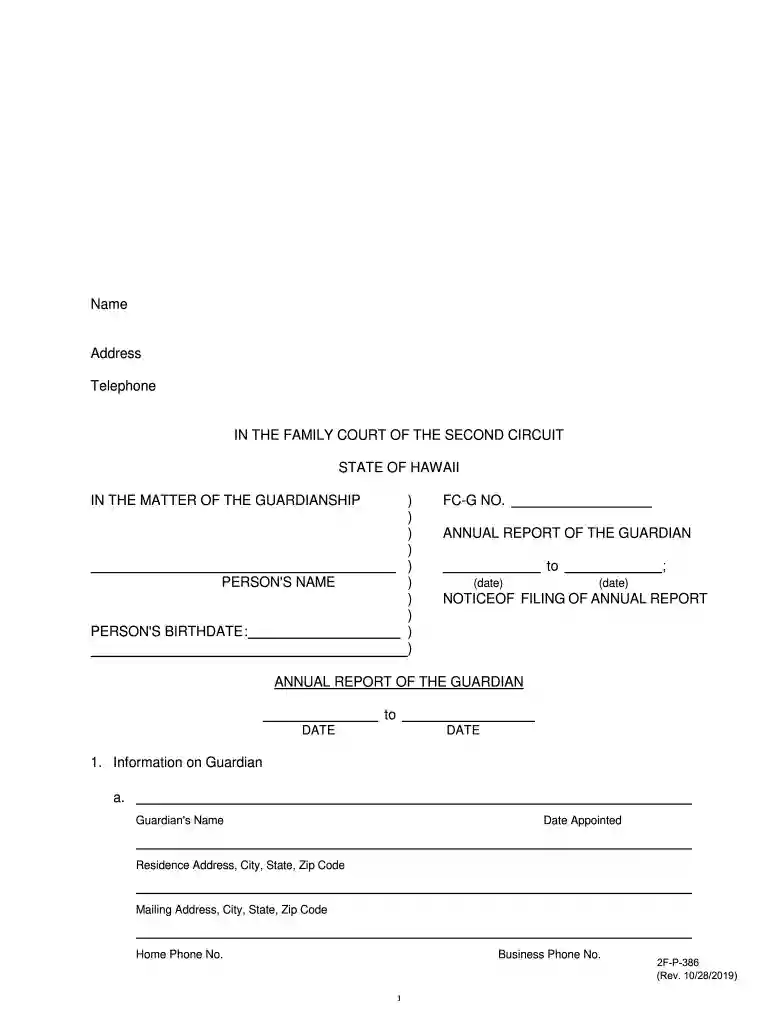
The "Annual Report of the Guardian - Hawaii State Judiciary" is a formal document required by the Family Court of the Second Circuit, State of Hawaii. This report provides a comprehensive overview of the guardianship of an incapacitated person. It includes detailed sections about the guardian's responsibilities, the current living conditions of the ward, and other pertinent aspects of care. The primary purpose of this report is to ensure that the well-being of the ward is systematically monitored and assessed, thereby allowing for informed judicial oversight.
This report is a legal requirement for guardians managing the care of an incapacitated individual. It is used to facilitate judicial review and ensure the guardian is fulfilling their responsibilities effectively. The judiciary relies on this document to monitor the guardian's actions and the ward's condition, providing a safeguard against neglect and ensuring compliance with state laws protecting vulnerable individuals.
The primary users of this report are guardians who have been granted legal authority by the court to care for an incapacitated individual. Secondary users include attorneys, family court judges, social workers, and healthcare providers involved in the ward's care.


Hawaii's Family Court has specific rules governing the guardianship reporting process. These rules mandate the timely submission of reports and full disclosure of all relevant details concerning the ward’s condition and the guardian’s actions. It's crucial for guardians to understand and adhere to these rules to avoid legal penalties or repercussions.
Guardians must adhere to specific filing deadlines as determined by Hawaii state law. Typically, the annual report is due on the anniversary of the guardianship order. Guardians should ensure timely submissions to avoid penalties and ensure continued compliance with state requisites.
Guardians can submit the annual report through various methods:
Selecting the most convenient and reliable method can help ensure timely processing and acknowledgment from the court authorities.
Failure to submit the annual report or omissions of critical information can lead to legal consequences. Penalties may include fines, court sanctions, or removal of guardianship responsibilities. Non-compliance may also lead to increased scrutiny and interventions from the court.
To file an "Annual Report of the Guardian - Hawaii State Judiciary," the individual must be a court-appointed guardian, responsible for the care of an incapacitated person. Eligibility is contingent on fulfilling court-imposed guardianship responsibilities and possessing legal authority to act on the ward's behalf.

We've got more versions of the Annual Report of the Guardian - Hawaii State Judiciary form. Select the right Annual Report of the Guardian - Hawaii State Judiciary version from the list and start editing it straight away!
At DocHub, your data security is our priority. We follow HIPAA, SOC2, GDPR, and other standards, so you can work on your documents with confidence.