01. Edit your form online
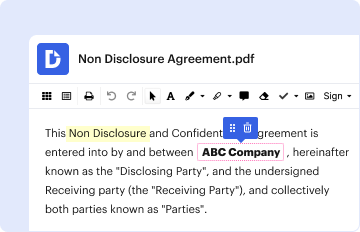
Type text, add images, blackout confidential details, add comments, highlights and more.

Type text, add images, blackout confidential details, add comments, highlights and more.
Draw your signature, type it, upload its image, or use your mobile device as a signature pad.

Send it via email, link, or fax. You can also download it, export it or print it out.
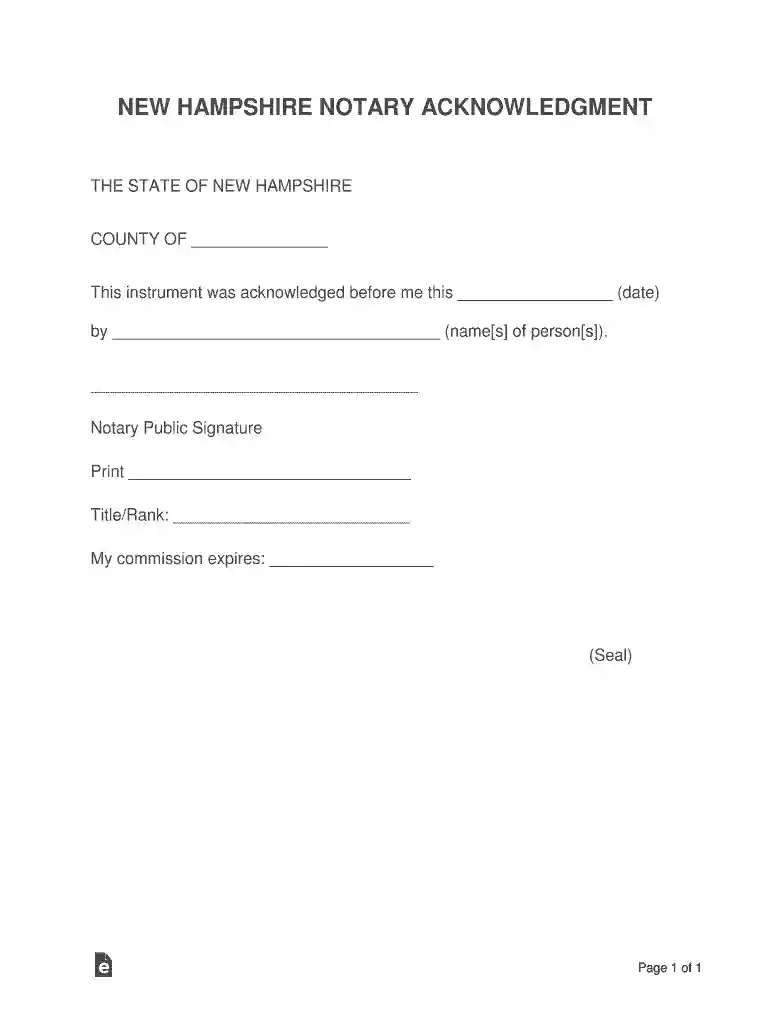
The New Hampshire Notary Acknowledgment form is a crucial document used to validate the identity of individuals signing legal papers. This form is particularly essential in ensuring that the signatures on a document are genuine and that the signatories have willingly signed the document without any coercion. In legal contexts, "acknowledgment" refers to a notary public's certification that the person signing a document is who they claim to be and has done so of their own free will.
Utilizing the New Hampshire Notary Acknowledgment form involves several key steps to ensure its legal validity. First, both the signer and the notary public must be present during the signing. The notary will verify the signer's identity using government-issued identification such as a driver’s license or passport. After this, the notary will witness the signing of the document. Once signed, the notary will complete the acknowledgment section, which includes their signature, seal, title, and commission expiration date, thereby affirming the document's authenticity.
Present Identification: The signer must present a valid identification document to the notary.
Sign the Document: With the notary public present, the document is signed by the individual requiring acknowledgment.
Notary Verification: The notary observes and verifies that the person signing is the same as the person on the ID.
Seal and Signature: The notary fills out the acknowledgment section, signs, and applies their official seal.
Record Keeping: The notary enters the transaction in their official notary journal for record-keeping purposes.
New Hampshire requires that notaries public perform their duties following state-specific protocols:
The legal significance of a New Hampshire Acknowledgment form cannot be overstated. It forms a foundational component of legal documentation processes, ensuring:
Various individuals and entities rely on the New Hampshire Acknowledgment form to validate legal documents:


Legal documents that commonly require a New Hampshire Acknowledgment include:
By following the outlined guidelines and state-specific rules, the New Hampshire Notary Acknowledgment form ensures that documentation is legally compliant and reduces the risk of disputes arising from unauthorized signatures.
We've got more versions of the New Hampshire AcknowledgmentsIndividualUS Legal Forms form. Select the right New Hampshire AcknowledgmentsIndividualUS Legal Forms version from the list and start editing it straight away!
| Versions | Form popularity | Fillable & printable |
|---|---|---|
| 2017 | 4.8 Satisfied (92 Votes) |
At DocHub, your data security is our priority. We follow HIPAA, SOC2, GDPR, and other standards, so you can work on your documents with confidence.