






Definition & Meaning
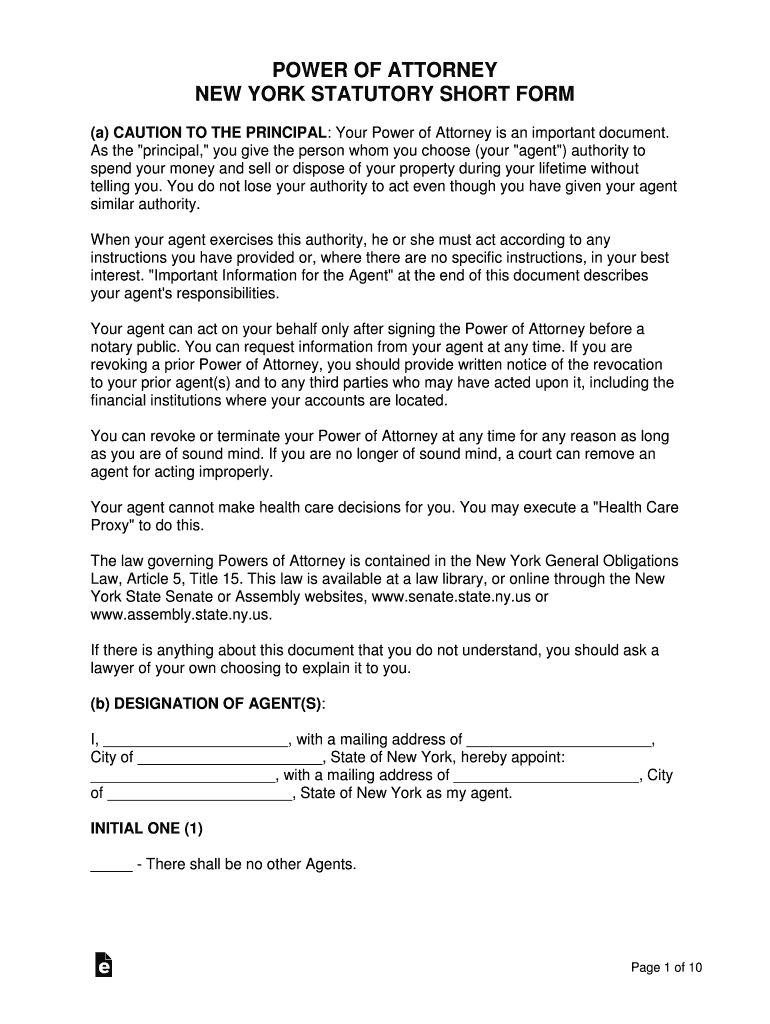
The New York Statutory Short Form Power of Attorney is a legal document that grants one individual, known as the agent, the authority to act on behalf of another person, the principal, in managing their financial affairs and property. This authority is effective during the principal’s lifetime and can encompass a wide range of actions such as selling property, managing bank accounts, and handling tax matters. The form is designed to provide a clear and concise format for appointing an agent under New York State law, ensuring that both parties understand the scope and limits of the authority granted.
Key Elements of the Power of Attorney
When drafting a Power of Attorney using the New York Statutory Short Form, several key elements must be included to ensure its validity:
- Principal and Agent Information: Include full names and addresses of both the principal and the designated agent.
- Specified Authority: Clearly outline the specific powers being granted, such as the ability to sell property or manage investments.
- Durability: Indicate whether the power of attorney is durable, meaning it remains in effect if the principal becomes incapacitated.
- Successor Agents: Appoint successor agents to take over if the primary agent is unable or unwilling to serve.
How to Use the New York Statutory Short Form
The usage of the New York Statutory Short Form involves several important steps:
- Understanding Needs: Determine the specific tasks the agent needs to perform.
- Choosing the Right Agent: Select a trusted individual who can competently handle the responsibilities.
- Completing the Form: Fill out the form accurately, using clear language to specify the powers and limitations.
- Notarization and Witnessing: The document must be signed in the presence of a notary public and witnesses to ensure its legal enforceability.
Steps to Complete the Form
Completing the New York Statutory Short Form Power of Attorney involves the following detailed process:
- Read Thoroughly: Review the entire form to understand all sections and their implications.
- Fill in Details: Provide personal details for the principal and agent, including addresses and contact information.
- Specify Powers: Select the applicable powers you wish to grant, checking the appropriate boxes.
- Signatures Required: The principal and agent must sign the form in the presence of a notary public and two disinterested witnesses.
- File and Store Securely: Keep a copy of the signed and notarized document in a safe place, accessible to both parties.
State-Specific Rules
New York has particular rules governing the execution and enforcement of a Power of Attorney using the statutory short form. Key considerations include:
- Mandatory Language: The form must include certain statutory language, ensuring compliance with state law.
- Revocation and Termination: The principal retains the right to revoke the power of attorney at any time, provided they deliver a written notice of revocation.
- Gifting Authority: The principal must explicitly grant any authority for the agent to make gifts on their behalf, often requiring an additional rider.
Legal Use of the Power of Attorney
The New York Statutory Short Form Power of Attorney can be utilized in various legal contexts:
- Real Estate Transactions: Authorizing the agent to buy or sell property on behalf of the principal.
- Banking: Managing financial accounts, writing checks, and controlling investments.
- Tax Filings: Preparing and submitting state and federal tax returns.
Who Typically Uses This Form
The form is commonly used by individuals who anticipate a need for assistance in managing their financial affairs due to:
- Age or Health Concerns: Elderly individuals preparing for potential incapacity.
- Frequent Travel: Business persons or expatriates who require someone in the U.S. to handle matters in their absence.
- Military Deployment: Service members who need a trusted representative during deployments.
Examples of Using the Form
Real-world scenarios where the New York Statutory Short Form Power of Attorney might prove essential include:
- Elderly Parent: An adult child is appointed to manage their aging parent's real estate sale to pay for long-term care.
- Investor Abroad: A business owner traveling overseas grants a partner the authority to manage and sell any of the company's local investment properties.
- Incapacitated Individual: A sudden medical emergency necessitates an immediate appointment of an agent to handle ongoing financial obligations.
Important Terms Related to the Form
Understanding the vocabulary associated with the New York Statutory Short Form Power of Attorney is crucial:
- Principal: The individual who appoints an agent to act on their behalf.
- Agent: The person granted authority to manage the principal's affairs.
- Durable Power of Attorney: Remains effective even if the principal becomes incapacitated.
- Notary Public: A state-official witnessing the signature to authenticate the document.
These blocks together provide a comprehensive guide for individuals who need to understand, complete, and implement the New York Statutory Short Form Power of Attorney, specifically focusing on financial and property management through the act of sale or related transactions.