






Definition & Meaning
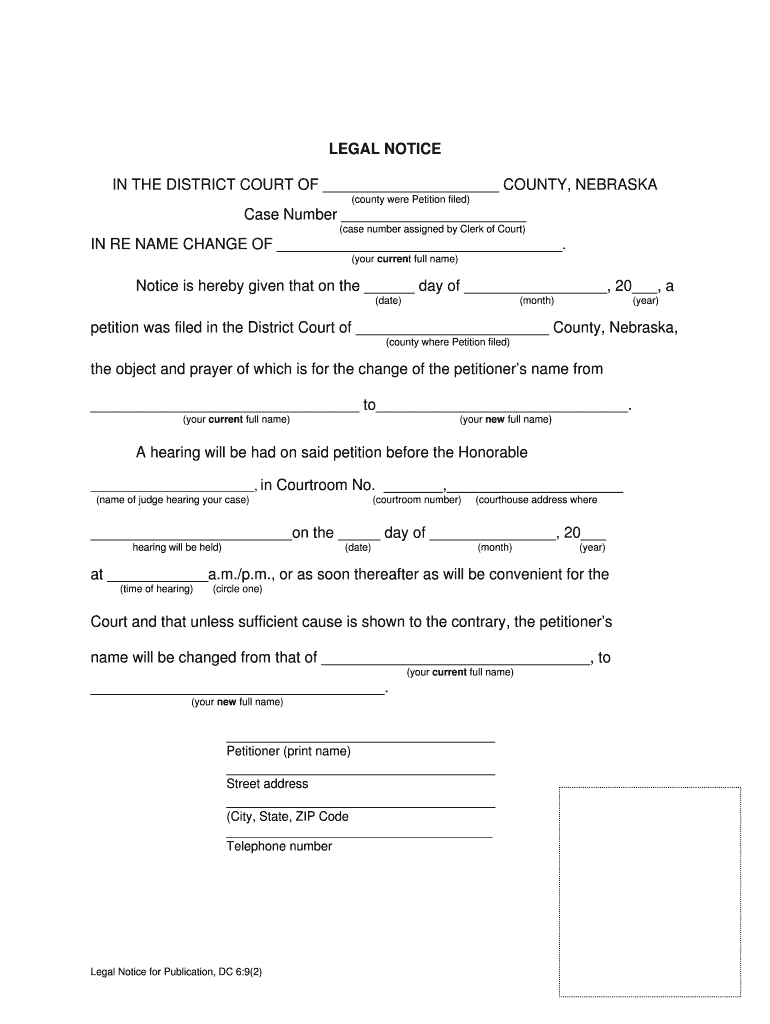
"In the District Court of County, Nebraska - eForms" is a legal document used for formal judicial proceedings within the Nebraska Court system. These forms are necessary when petitioning the court for specific requests such as name changes, legal settlements, or other filings that require court approval. The use of eForms simplifies the procedural aspects by allowing individuals to fill out and submit documents electronically, ensuring greater efficiency and reducing paperwork.
Steps to Complete the In the District Court of County, Nebraska - eForms
-
Accessing the Form: Visit the official website of the Nebraska Judicial Branch to download the required eForm. Ensure you select the correct form that matches your specific court case needs.
-
Filling Out the Form: Enter all requested information accurately. This typically includes your personal details, case specifics, and the particular action being requested from the court.
-
Review and Verification: Double-check all entered information for accuracy. Inaccurate information can lead to delays or rejection of the form by the court.
-
Submission: Once completed, the form can be submitted electronically via the court's official eFiling system or mailed to the appropriate District Court in Nebraska if electronic submission is not available.
Important Terms Related to In the District Court of County, Nebraska - eForms
- Petitioner: The individual or entity submitting the eForm requesting a legal action or decision.
- Respondent: The individual or entity against whom the legal action is directed.
- Affidavit: A sworn statement that may be required as part of the eForms to verify the truthfulness of the provided information.
- Jurisdiction: Refers to the authority of the District Court in Nebraska to hear and make a judgment on a case.
- Hearing: The scheduled court appearance where parties involved have the opportunity to present their case.
Legal Use of the In the District Court of County, Nebraska - eForms
These eForms are legally binding documents necessary for initiating or responding to legal proceedings in Nebraska. They are critical for ensuring that citizens' legal matters are heard and resolved within the court's system. The forms must be completed according to specified guidelines and submitted within stipulated time frames to maintain their validity in court.
State-Specific Rules for the In the District Court of County, Nebraska - eForms
- Jurisdiction Requirements: Only residents of Nebraska or individuals with legal matters pertinent to Nebraska can utilize these forms.
- Filing Fees: There may be specific filing fees associated with submitting certain eForms. These fees are subject to Nebraska state laws and court regulations.
- Document Retention: Nebraska law dictates how long eForms must be retained on record following submission and ruling.
Filing Deadlines / Important Dates
- General Deadlines: Filing deadlines can vary based on the type of legal request. Consult the Nebraska Judicial Branch's official guidelines for specific time frames.
- Response Timeframes: If you are served with an eForm, there is a specific amount of time provided for responses.
- Hearing Dates: Once the form is submitted, the court will usually set a date for a hearing based on their docket schedule.
Required Documents
Completing the eForms may require additional documentation, such as:
- Legal identification
- Previous court orders or judgments pertinent to the case
- Affidavits supporting the claims or requests made
Form Submission Methods (Online / Mail / In-Person)
- Online: The preferred method, accessible through Nebraska's eFiling portal.
- Mail: Acceptable for those without Internet access; must be sent to the correct District Court address.
- In-Person: Available for individuals who prefer direct submission or require assistance from court clerks.
Penalties for Non-Compliance
Failure to comply with the requirements for using or submitting the appropriate eForms can result in penalties such as:
- Dismissal of the submitted motion or petition
- Fines or additional court fees
- Delays in legal proceedings leading to prolonged resolution of the case