






Definition and Meaning
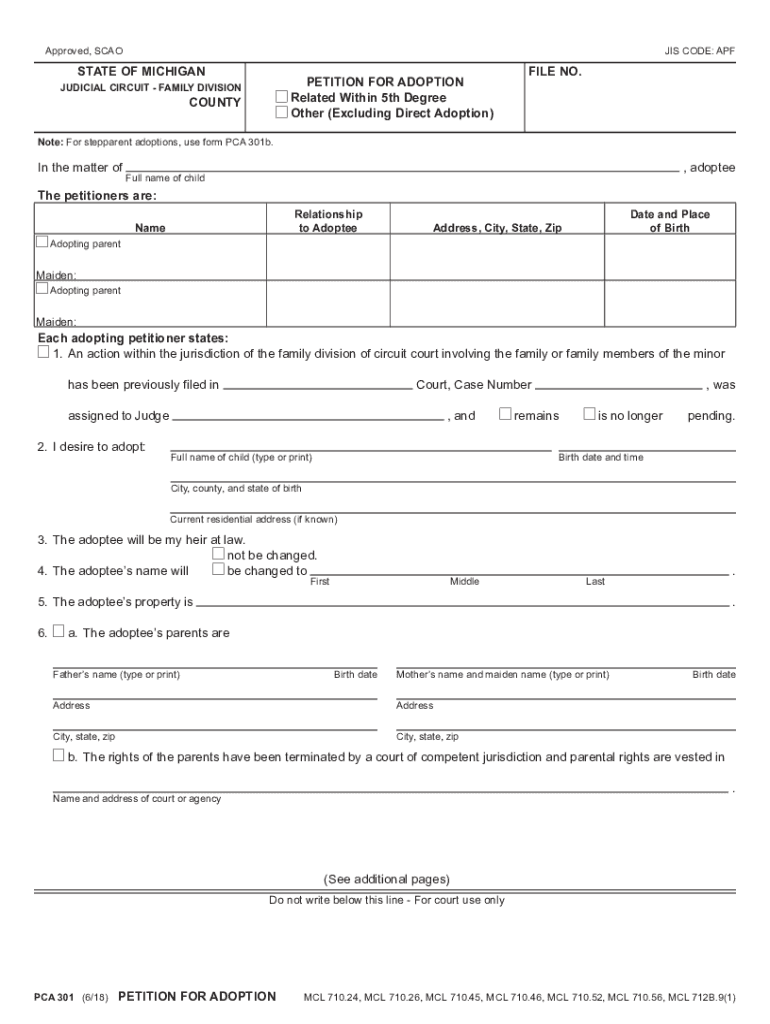
The phrase "ALL ADOPTIONS TO BE FILED AT FAMILY DIVISION OF" refers to the procedural directive that all legal adoption processes must be initiated and documented within the designated Family Division of a court system. This is a specialized division within the judicial branch that handles matters related to family law, inclusive of adoptions, divorce, custody, and other family-related legal issues. Adoptions involve legal proceedings where an individual or couple becomes the legal parents of a child who is not biologically their own, and these cases must be filed in the Family Division to ensure they are handled according to the specific legal standards and procedures set forth by the jurisdiction.
How to Use the Adoption Filing Form
When using the form to file an adoption in the Family Division, it is critical to follow the correct procedure to ensure all necessary information is provided. Begin by obtaining the official form from the court's website or directly from the Family Division’s office. Review the form thoroughly to understand the information requested, such as personal details of the adoptive parents and the child, reasons for adoption, and consent from necessary parties. Complete each section with accurate and truthful information, ensuring all required fields are properly filled out.
Necessary Information and Details
- Personal Information: Full legal names, addresses, and contact details of the adopting parents and the child.
- Consent: Signatures from biological parents or guardians, certifying their consent for the adoption.
- Background Checks: Information about any required background checks and clearances for the adopting parents.
- Historical Records: Previous adoption orders, if applicable, must be noted.
Steps to Complete the Adoption Form
Filing for adoption involves a series of methodical steps. Initially, gather all necessary documentation, such as birth certificates, marriage certificates, and any previously completed legal documents relevant to the adoption. Then, proceed as follows:
- Download and Print the Form: Access the form either online from the court’s official website or collect a physical copy from the courthouse.
- Fill Out the Form: Input all required details, ensuring precision and completeness.
- Attach Supporting Documents: Compile all additional paperwork that supports your application, including consent forms and background check results.
- Review and Validate: Double-check all entries and signatures for accuracy and completeness.
- Submit the Application: File the completed form along with all attachments at the Family Division of the court.
- Pay Applicable Fees: Be prepared to pay any filing fees, which vary by jurisdiction.
- Receive Confirmation: Await acknowledgment from the court, confirming receipt of your documents.
Required Documents for Adoption Filing
For successful filing, several documents must accompany the adoption form. Each jurisdiction may have specific requirements, but generally, the following documents are crucial:
- Proof of Identity: Copies of government-issued IDs for both adoptive parents.
- Consent Forms: Signatures from biological parents or legal guardians giving consent.
- Background Check Clearance: Reports confirming no criminal history that would disqualify the adopters.
- Financial Statement: An affidavit indicating the financial capability of the adoptive family.
Legal Use of Adoption Forms
In the United States, adoption forms serve as the essential legal instruments that initiate the process of legally transferring parental rights. The forms must be filed in accordance with state laws and are subject to legal scrutiny to ensure that all parties' rights are respected, and the best interest of the child is prioritized. These forms are not just procedural; they are also protective in ensuring that the adoption process is transparent, ethical, and thoroughly documented.
State-Specific Rules and Procedures
Adoption laws and procedures vary significantly across different states, and understanding these localized mandates is vital. The Family Division in each state court has its own set of rules outlining the adoption process, including who may adopt or be adopted, residency requirements, and specific court procedures.
- Residency Requirements: Some states require that adoptive parents be residents for a specific period before filing.
- Post-Adoption Procedures: States may mandate post-placement supervision and reports to ensure the welfare of the adopted child.
Form Submission Methods
Applicants can submit the adoption form through several methods, depending on their preferences and the jurisdiction’s facilities:
- Online Submission: Available in certain jurisdictions, allowing for a convenient and efficient filing process through the court’s online portal.
- In-Person Submission: Preferred by individuals who wish to hand-deliver documents to ensure their accurate receipt and processing.
- Mail Submission: Some courts accept applications via postal services, though this method may involve longer processing times.
Key Takeaways
Understanding and correctly executing the adoption filing process ensures compliance with legal requirements and facilitates a smooth transition for all parties involved. Proper completion and filing of adoption forms in the Family Division is pivotal in legally recognizing new parental roles. Always check state-specific regulations and ensure all documentation is complete to avoid delays or complications in the adoption process.