01. Edit your form online
Type text, add images, blackout confidential details, add comments, highlights and more.

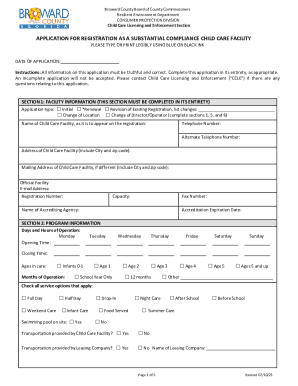
Type text, add images, blackout confidential details, add comments, highlights and more.

Draw your signature, type it, upload its image, or use your mobile device as a signature pad.

Send it via email, link, or fax. You can also download it, export it or print it out.
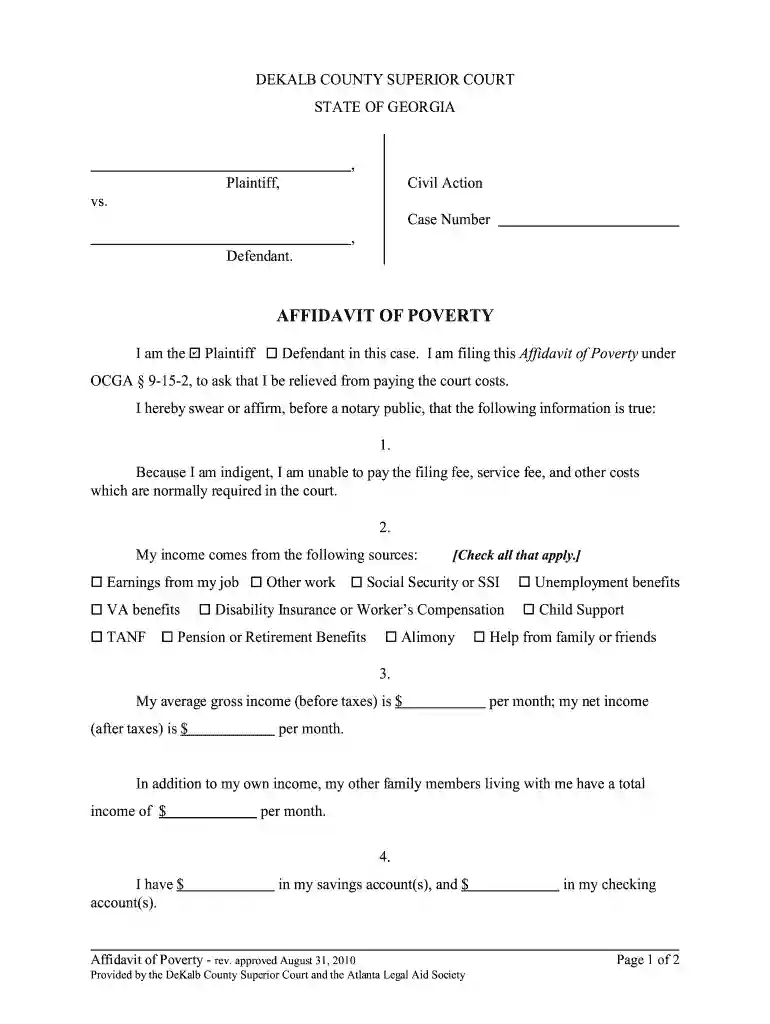
An affidavit of poverty is a legal document filed in court to request exemption from paying court fees due to financial hardship. In Georgia, this document assists individuals who require legal services but cannot afford court costs. Typically used in DeKalb County Superior Court, the affidavit requires detailed information related to the applicant's financial status.
To use the affidavit of poverty, individuals must accurately fill out the form and submit it to the appropriate court. Here’s a step-by-step guide:
In a scenario where a single parent with minimal income and substantial debt is unable to pay court filing fees, submitting an affidavit of poverty may result in those fees being waived, allowing legal procedures to proceed without financial impediments.
To properly complete the affidavit of poverty:
Eligibility to file an affidavit of poverty may depend on multiple factors:


The affidavit of poverty typically requires:
A retiree on a fixed income may submit the affidavit to litigate a will dispute, thereby bypassing court fees and securing a fair hearing.
While the affidavit of poverty serves a similar purpose across the U.S., Georgia has specific requirements:
Understanding key terms enhances the application process:
Using the affidavit of poverty must be undertaken with an understanding of its legal implications, as providing false information can lead to penalties, including dismissal of the waiver request or perjury charges. Proper legal guidance or consultation with Georgia Legal Aid services can ensure adherence to legal standards and reformulate the success probability of fee waivers.
We've got more versions of the affidavit of poverty - Georgia Legal Aid form. Select the right affidavit of poverty - Georgia Legal Aid version from the list and start editing it straight away!
| Versions | Form popularity | Fillable & printable |
|---|---|---|
| 2010 | 4.9 Satisfied (34 Votes) |
At DocHub, your data security is our priority. We follow HIPAA, SOC2, GDPR, and other standards, so you can work on your documents with confidence.