






Definition & Meaning
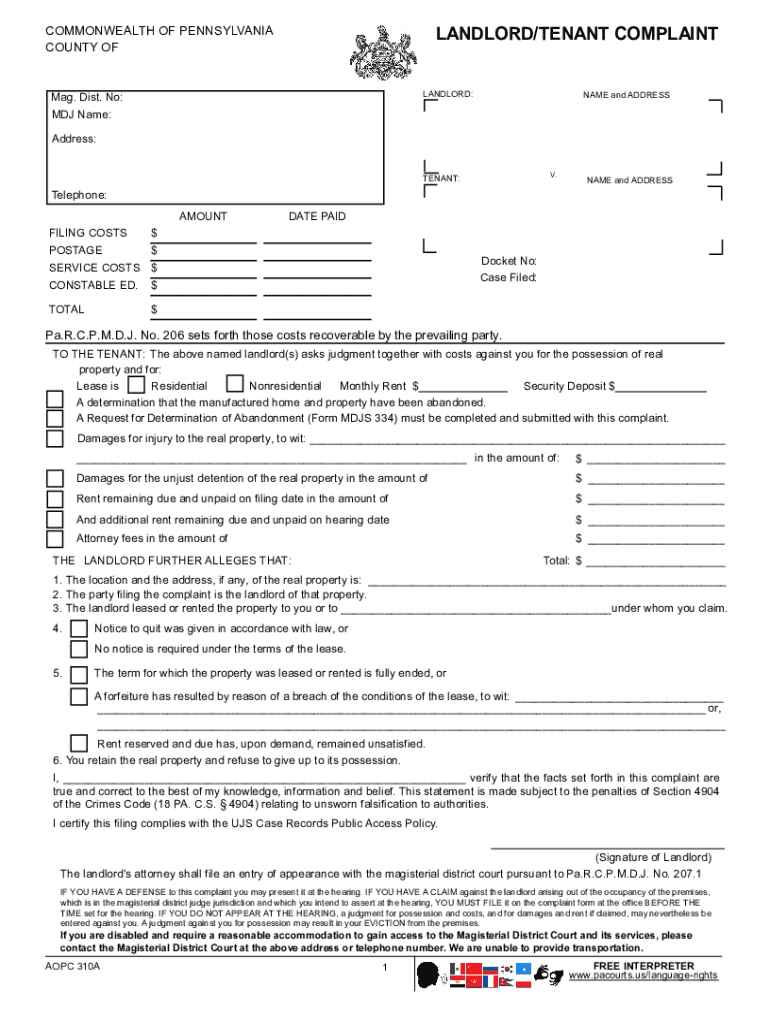
A Tenant Supersedeas Affidavit (Non-Section 8) is a legal document used by tenants to temporarily prevent the enforcement of a court judgment for eviction. This affidavit is typically filed when a tenant wishes to appeal an eviction decision and is required to demonstrate their ability to pay ongoing rent into the court registry. By filing this affidavit, tenants aim to supersede or stay the execution of the judgment while the appeal process is ongoing.
Key Elements of the TENANTS SUPERSEDEAS AFFIDAVIT (NON-SECTION 8) FILED PURSUANT
The affidavit includes several crucial components that must be meticulously filled out to ensure its validity:
- Tenant and Landlord Information: Names, addresses, and contact details of both parties involved.
- Court Case Details: Information such as case number, court name, and judgment date.
- Financial Status Declaration: A sworn statement verifying the tenant's financial ability to pay the rent into the court registry.
- Payment History: Records showing payment of any due or contested rent amounts.
- Intent to Appeal: Clear indication of the tenant's intention to appeal the eviction judgment.
Steps to Complete the TENANTS SUPERSEDEAS AFFIDAVIT (NON-SECTION 8) FILED PURSUANT
- Gather Required Information: Collect all necessary details about the eviction case and your financial status.
- Fill Out Tenant and Landlord Details: Enter the personal and contact information of both parties accurately.
- Detail Court Case Information: Include the specific case number, involved court, and the date of the eviction judgment.
- Declare Financial Capability: Provide a truthful account of your ability to deposit rent payments as required by the court.
- Submit Payment Records: Attach documented evidence showing any rent payments made or due.
- Sign the Affidavit: Ensure your affidavit is signed in the presence of a notary public to certify its authenticity.
- File with the Court: Submit the completed affidavit to the court handling the eviction case within the timeframe allowed.
Important Terms Related to TENANTS SUPERSEDEAS AFFIDAVIT (NON-SECTION 8) FILED PURSUANT
Understanding the associated terminology is essential for accurately completing and filing the affidavit:
- Supersedeas: A legal term referring to a writ that suspends the execution of a court judgment.
- Affidavit: A sworn written statement used as evidence in court.
- Tenant: The individual who occupies rental property owned by a landlord.
- Landlord: The property owner who leases space to tenants.
- Court Registry: A system for maintaining and recording documents and payments associated with court cases.
Legal Use of the TENANTS SUPERSEDEAS AFFIDAVIT (NON-SECTION 8) FILED PURSUANT
The affidavit serves as a critical legal tool in eviction proceedings by providing tenants an avenue to contest a judgment:
- Temporary Relief: Affords tenants temporary relief from eviction pending the outcome of an appeal.
- Legal Compliance: Ensures that tenants comply with requirements to hold eviction enforcement at bay lawfully.
- Financial Proof: Demonstrates a tenant's financial capability to meet ongoing rental obligations during the appeal.
State-Specific Rules for the TENANTS SUPERSEDEAS AFFIDAVIT (NON-SECTION 8) FILED PURSUANT
The requirements and processes for filing the affidavit can differ across various states. For instance:
- Deadline Variations: States may have different deadlines for submitting the affidavit post-judgment.
- Payment Structure: Regulations around payment of rent into the court might vary in terms of amount or frequency.
- Notarization Requirements: Specific notarization or witness requirements may differ across states.
Examples of Using the TENANTS SUPERSEDEAS AFFIDAVIT (NON-SECTION 8) FILED PURSUANT
Consider the following scenarios where a Tenant Supersedeas Affidavit might be applied:
- Pending Appeal: A tenant loses in an eviction case and decides to appeal, utilizing the affidavit to delay the eviction during the appeal.
- Payment Dispute: The tenant is facing eviction due to disputed unpaid rent and uses the affidavit to clarify financial capacity and gain time to resolve discrepancies.
- Rent Increase Challenges: Tenants contesting unauthorized rent hikes can utilize the affidavit to maintain residency during litigation.
Eligibility Criteria
To submit a Tenant Supersedeas Affidavit, tenants must meet certain criteria, including:
- Current on Rent Payments: Tenants must provide proof that they have maintained rent payments as stipulated by their lease agreement.
- Valid Reason for Appeal: Provide a plausible legal basis for contesting the eviction decision.
- Ability to Post Rent Continuation in Court: Document financial solvency for posting ongoing rent into the court registry.


Form Submission Methods (Online / Mail / In-Person)
The filing of the affidavit can be carried out through several methods, depending on the jurisdiction:
- Online Submission: Some courts may offer electronic filing systems for a streamlined process.
- Mailing Options: Physical affidavits may be mailed to the appropriate court office with necessary accompanying documents.
- In-Person Filing: Direct submission at the courthouse can often be completed at designated clerks' offices for immediacy and confirmation.
Why Should You Use the TENANTS SUPERSEDEAS AFFIDAVIT (NON-SECTION 8) FILED PURSUANT
This affidavit offers vital protection for tenants who believe they have grounds for contesting an eviction:
- Prevent Premature Evictions: Shields tenants from immediate removal while their case is appealed.
- Structured Financial Assurance: Establishes a transparent system for ensuring rent is managed and available as required by the court.
- Judicial Dialogue Opportunity: Affords courts context and additional information to reconsider the initial judgment.
Who Typically Uses the TENANTS SUPERSEDEAS AFFIDAVIT (NON-SECTION 8) FILED PURSUANT
This affidavit is primarily utilized by:
- Tenants Facing Eviction: Individuals at risk of losing their housing due to eviction proceedings.
- Legal Representatives: Attorneys managing eviction appeal cases on behalf of tenants.
- Tenants in Financial Disputes: Renters involved in lease agreement disputes, especially regarding rental payments or conditions.