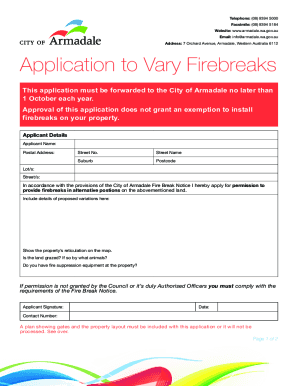
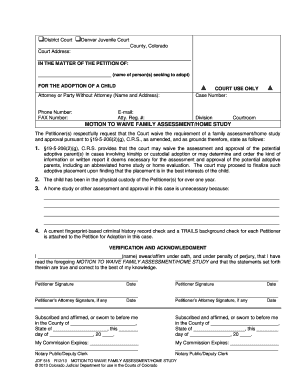
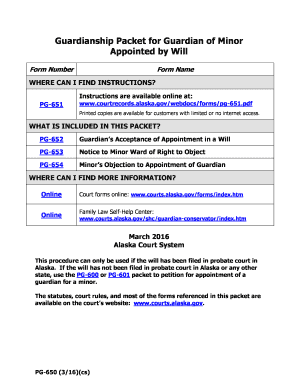
01. Edit your how to fill out a motion and order to show cause michigan online
Type text, add images, blackout confidential details, add comments, highlights and more.

Type text, add images, blackout confidential details, add comments, highlights and more.

Draw your signature, type it, upload its image, or use your mobile device as a signature pad.

Send how to fill out a motion and order to show cause michigan via email, link, or fax. You can also download it, export it or print it out.
A Motion and Order to Show Cause is a legal document used in the State of Michigan to request that the court require a party to appear and justify why they should not be held in contempt for violating a previous court order. This form is typically used in probate court but may apply to other courts depending on the circumstances. The purpose of this form is to ensure compliance with existing court orders by compelling a party to demonstrate why they have not adhered to these legal obligations.
There are several methods to obtain the Motion and Order to Show Cause form in Michigan. These forms are generally available from the local probate court where the initial order was issued. Alternatively, they can be accessed and downloaded from the Michigan Court's official website, which offers resources for various legal forms. Utilizing platforms like DocHub can streamline obtaining and working with these forms, given its compatibility with different document formats, including PDFs.
Gather Information: Begin by collecting all relevant personal information, such as the involved parties' names, addresses, and case numbers.
Detail the Non-compliance: Clearly outline the facts related to the alleged failure to comply with a previous court order. This should include dates, events, and specific actions or inactions.
Fill Out the Form: Enter the collected information into the form. Be precise and use legal terms where applicable to avoid misunderstandings.
Obtain Required Signatures: Ensure that all necessary signatures are obtained before submitting the form, including any legal representative overseeing the case.
File the Form: Submit the completed form to the appropriate court. It may be submitted online, via mail, or in person, depending on court requirements.
The Motion and Order to Show Cause form comprises several crucial sections:
Personal Information: This includes the names, addresses, and contact details of the moving party, the opposing party, and any legal representatives involved.
Allegations: A detailed description of the alleged non-compliance with the original court order.
Service Instructions: Guidelines on how the motion has been or will be served to the other party.
Court Details: Information on the court handling the case, such as the court's name, address, and the assigned judge.
Using the Motion and Order to Show Cause in Michigan involves understanding its legal implications. The form serves as a mechanism to enforce court orders, which may result in various penalties if non-compliance is proven. Legal advisors often recommend ensuring all documentation is complete and accurate to avoid delays or rejections. Consulting with a legal professional is advised to navigate potential complications effectively.
Contempt: A legal term referring to the act of disobeying or disrespecting a court order.
Probate Court: The court responsible for handling matters related to estates, will contests, trusts, and guardianships.
Service: The delivery of legal documents to a party to notify them of actions or decisions by the court.
Michigan has specific rules regarding how these forms are filled out and filed. For instance, there are certain requirements for how the motion must be served to the opposing party, and deadlines that must be adhered to. Double-check the rules and guidelines provided by the Michigan courts to ensure compliance with state-specific procedures.
Consider an example where a parent fails to comply with a child support order. The other parent could use this form to request the court to order the non-compliant parent to explain their actions. Alternatively, a trust administrator who has neglected their fiduciary duties may face similar motions filed against them.
Failure to comply with a show cause order could result in several penalties, including fines, additional court orders, or even imprisonment in severe cases. The court will have discretion over the consequences, emphasizing the importance of adhering to all court mandates and appearing as required.
We've got more versions of the how to fill out a motion and order to show cause michigan form. Select the right how to fill out a motion and order to show cause michigan version from the list and start editing it straight away!
| Versions | Form popularity | Fillable & printable |
|---|---|---|
| 2013 | 4.8 Satisfied (123 Votes) |
At DocHub, your data security is our priority. We follow HIPAA, SOC2, GDPR, and other standards, so you can work on your documents with confidence.