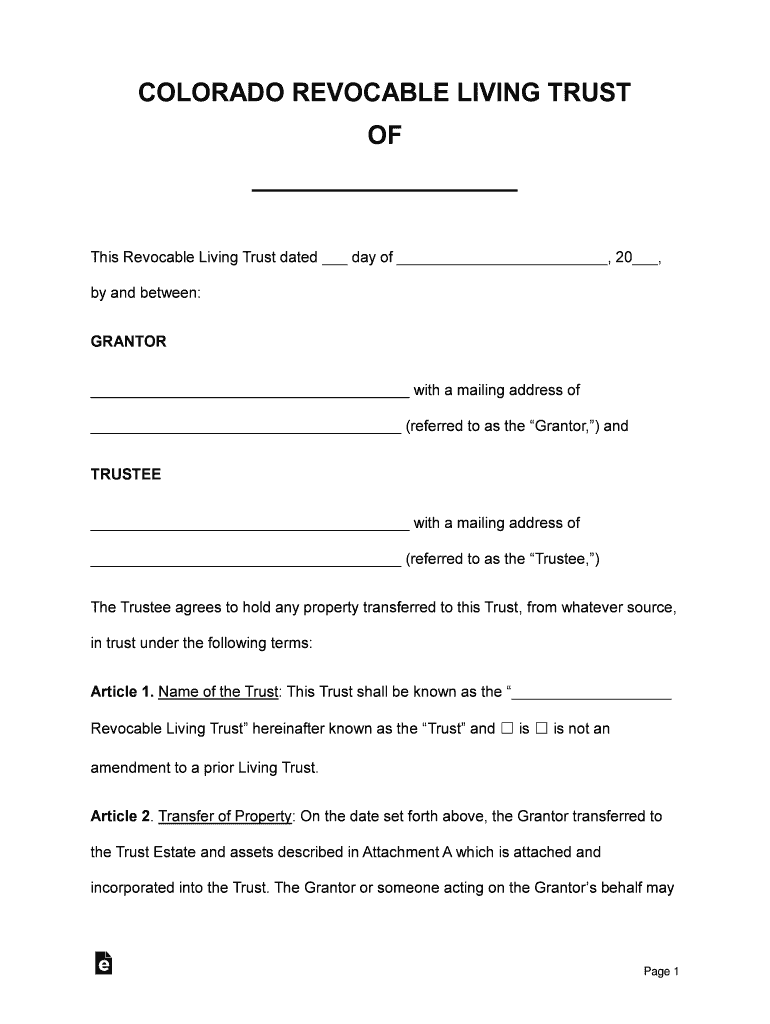







Definition & Meaning
The term "Living Trust Forms eForms Free Fillable Forms" refers to documents utilized in the creation and management of a living trust. A living trust is a legal entity created during an individual's lifetime, primarily used to manage, organize, and distribute assets upon death. It involves the transfer of property to a trustee, who manages the trust’s assets for the benefit of beneficiaries. These forms are designed to simplify the legal process involved in establishing or modifying a trust, making it an invaluable resource for estate planning.
Components of a Living Trust
- Grantor: The individual who establishes the trust.
- Trustee: The entity (person or organization) responsible for managing the trust as per the grantor's instructions.
- Beneficiaries: The individuals or organizations that receive benefits from the trust, usually upon the grantor's death.
Steps to Complete the Living Trust Forms eForms Free Fillable Forms
Completing the Living Trust Forms involves several crucial steps to ensure legal accuracy and compliance.
- Identify Participants: Clearly specify the grantor, trustee, and beneficiaries.
- Describe the Assets: Provide detailed information about the assets to be included in the trust.
- Define Conditions: Set terms for how and when beneficiaries will receive assets.
- Sign and Notarize: The document must be signed by the grantor and notarized to be legally binding.
Detailed Process
- Preparation: Gather personal information and a comprehensive list of assets.
- Customization: Tailor the form to specific needs, such as setting conditions for minor beneficiaries.
- Review: Ensure all details are accurate; consider consulting a legal professional.
Key Elements of the Living Trust Forms eForms Free Fillable Forms
Developing a thorough Living Trust requires understanding its key components and ensuring they're properly addressed.
Main Sections
- Trust Declaration: Initial statement outlining the trust’s purpose.
- Trustee Powers: Detailed list of the trustee's responsibilities and powers granted.
- Asset List: Catalog of all assets being transferred into the trust.
- Distribution Plan: Specifies how assets will be distributed among beneficiaries.
Legal Use of the Living Trust Forms eForms Free Fillable Forms
The legal framework for using Living Trust Forms ensures they meet estate planning objectives effectively, adhering to relevant laws.
Compliance Requirements
- Revocability: The grantor's right to amend or revoke the trust.
- Jurisdiction: The trust should comply with state-specific laws where it's executed.
- Legitimacy: A notary public must acknowledge the document for it to be enforceable.
State-Specific Rules for the Living Trust Forms eForms Free Fillable Forms
Estate planning laws can differ significantly by state, influencing how living trusts are managed.
Examples of Variations
- Community Property States: States like California may require detailed spousal asset sharing disclosures.
- Probate Exceptions: Some states exempt specific assets from probate, affecting trust creation.
- Tax Implications: Certain states impose taxes at the trust’s establishment or asset distribution.
Important Terms Related to Living Trust Forms eForms Free Fillable Forms
Understanding key legal and financial terms assists in accurately completing the forms.
- Revocable Trust: A type of living trust that can be altered or canceled by the grantor.
- Irrevocable Trust: Once established, it cannot be modified without beneficiary consent.
- Trust Instrument: Another term for the formal documents specifying terms of the trust.
Who Typically Uses the Living Trust Forms eForms Free Fillable Forms
These forms are primarily used by individuals seeking to manage their estate efficiently, but they are also relevant to certain professionals.


Typical Users
- Estate Planners: Professionals who assist in legal and financial aspects of trust creation.
- Grantors: Individuals with significant assets and specific distribution strategies.
- Financial Advisors: Offer guidance on the implications of trust formation and management.
Filing Deadlines / Important Dates
Although living trusts typically do not have fixed filing deadlines, certain timeline considerations are necessary.
Critical Timeframes
- Funding the Trust: Timely transfer of assets is crucial to validate the trust.
- Amendments: Changes must reflect current asset and beneficiary situations promptly.
- Annual Reviews: Regularly scheduled assessments to ensure the trust remains aligned with intentions.
Software Compatibility (TurboTax, QuickBooks, etc.)
While living trust forms are not tax returns, understanding software compatibility can assist in asset management linked to the trust.
Common Software Tools
- Document Management Systems: Platforms like DocHub facilitate the electronic signing and filling out of forms.
- Financial Planning Software: QuickBooks aids in tracking asset valuations included in the trust.
- Tax Software: TurboTax can help integrate trust income information for necessary tax reporting.