






Understanding the Order to Attend Child Custody Mediation Orientation and Parenting Education
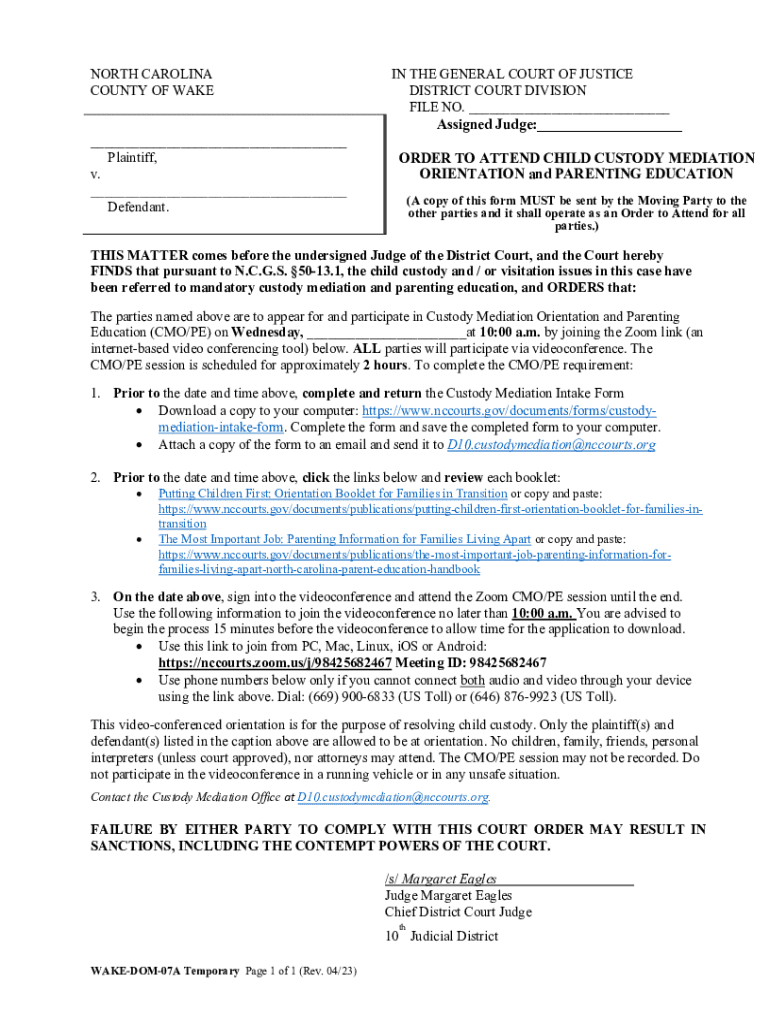
An "Order to Attend Child Custody Mediation Orientation and Parenting Education" is a court-issued document that mandates parties involved in a child custody case to participate in a structured mediation and education program. This type of order is typically aimed at helping parents understand the mediation process, improve co-parenting skills, and facilitate the resolution of custody disputes in a less adversarial manner. The order usually outlines specific requirements, such as completing an intake form and reviewing preparatory materials, and often specifies participation via virtual platforms like Zoom.
Steps to Complete the Order
- Receive the Order: Upon receiving the order from the court, carefully read through the document to understand all the requirements and deadlines.
- Fill Out the Intake Form: Complete any intake forms associated with the mediation session. These forms are typically required to gather information about the parties and the specifics of the custody arrangement.
- Review Educational Materials: Prior to the session, review any educational materials provided. These may include videos, reading material, or online modules focusing on co-parenting and conflict resolution.
- Attend the Scheduled Session: Join the mediation orientation and parenting education session at the scheduled time. Be prepared to participate actively and engage with the mediators and educators.
- Follow-Up Actions: After completing the session, follow any additional instructions provided by the court or mediation facilitator. This may include submitting a report or certificate of completion back to the court.
Who Typically Uses This Order?
Typically, this order is directed at parents going through a custody dispute within the family court system. The goal is to encourage collaboration and reduce contention during legal proceedings. Parents who are involved in a divorce, separation, or any case where child custody is being negotiated or disputed are required to comply. The order helps ensure both parties are equally informed and equipped to co-parent effectively.
Legal Implications and Compliance
Failing to comply with the "Order to Attend Child Custody Mediation Orientation and Parenting Education" can have serious legal repercussions. Courts may impose sanctions or penalties, and noncompliance could impact custody decisions. The order is legally binding, underscoring the necessity for participants to adhere to all outlined requirements.
- Potential Sanctions: Non-compliance may lead to fines, contempt of court charges, or unfavorable custody rulings.
- Impact on Custody Decisions: Demonstrating a willingness to cooperate in mediation and parenting education can positively affect the court's view in custody determinations.
Key Elements of the Order
- Mandatory Attendance: Specifies that attendance is compulsory for both parties.
- Intake and Preparatory Work: Outlines the need to complete an intake form and review educational material prior to the session.
- Session Details: Provides details on how to attend the session, often including virtual meeting links and timelines.
- Consequences for Non-Compliance: Clearly states the legal penalties or adverse effects associated with failing to fulfill the obligations of the order.
State-Specific Rules
The rules surrounding an "Order to Attend Child Custody Mediation Orientation and Parenting Education" may vary from one state to another. For example, North Carolina mandates participation in such programs as part of its legal custody proceedings, often leveraging virtual platforms to streamline the process. Participants should consult specific state laws or court orders applicable to their jurisdiction for tailored requirements and procedures.
- North Carolina Example: Participation is conducted via Zoom, with a focus on remote learning and accessibility.
- Variation in Materials: Educational materials and mediation processes might differ by state or even by court district.
Digital vs. Paper Versions
Increasingly, courts are offering digital versions of this order to streamline and expedite the process. These digital documents can often be completed, signed, and submitted online, reducing the need for physical paperwork and in-person court visits. Electronic communication and submissions align with contemporary legal practices and improve accessibility.
Examples of Use
Consider an example of divorced parents who are unable to agree on a visitation schedule. By participating in the mandated mediation orientation and parenting education session, they gain tools to better communicate and cooperatively establish a plan that serves the best interests of their child. A successful completion might even lead to an amicable agreement outside the courtroom, showcasing the order’s effectiveness in promoting dispute resolution.
- Real-World Scenario: A divorcing couple with differing views on custody use the orientation to come to an agreement on holiday schedules without needing further court intervention.
By comprehensively understanding and fulfilling the requirements of the "Order to Attend Child Custody Mediation Orientation and Parenting Education," participants can foster a more cooperative dynamic that benefits all involved, particularly the children at the center of custody cases.