
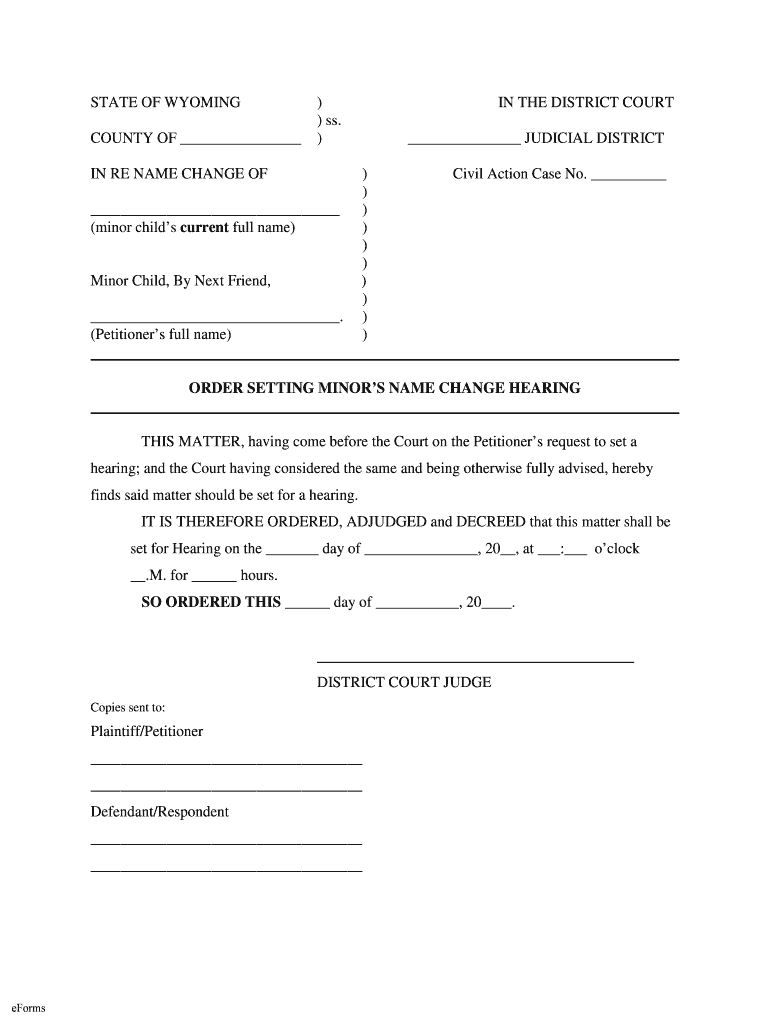







Definition & Meaning
The "Judicial District in Re Name Change - Equal Justice" form is utilized within the legal context of the United States for individuals seeking a court-sanctioned name change. It relates to a request filed in a judicial district's court system and serves as an official document to initiate the legal process required for a name change. It is pertinent in cases where individuals wish to change their legal name due to personal reasons, life changes, or identity reevaluation.
How to Use the Judicial District In Re Name Change - Equal Justice Form
To use this form effectively, you must accurately fill out all required sections, providing personal information such as your current legal name, desired new name, and reasons for the name change. The form should also include information about the petitioner and any relevant case numbers. Ensure the document is completed legibly and double-check for any errors or omissions, as inaccuracies can lead to delays or rejection.
Steps to Complete the Form
- Gather Required Information: Collect all necessary personal information, including identification documents and proof of residency.
- Fill Out the Form Completely: Enter all details in the appropriate sections. Be transparent about your reasons for the name change.
- Review for Accuracy: Check all entries for any mistakes or missing details.
- Submit the Form: File the completed form with the appropriate court in your judicial district, either in person or via mail.
Required Documents
Supporting documents are essential for this process and should accompany the form submission. Typical documents include:
- A copy of your birth certificate.
- Valid photo identification (e.g., driver's license).
- Proof of residency (e.g., utility bills, lease agreements).
- Any other documentation that supports your name change request, such as marriage certificates or divorce decrees.
These documents verify your identity and justify your request for a name change. Courts may require additional documents depending on your individual circumstances.
Who Typically Uses the Judicial District In Re Name Change - Equal Justice Form
This form is typically employed by individuals in specific life situations that necessitate a legal name change. Common users include:
- Adults looking to change their name for personal, cultural, or religious reasons.
- Individuals undergoing gender transitions desiring a name that aligns with their gender identity.
- Parents petitioning for a minor child's name change following familial changes such as adoption or remarriage.


State-Specific Rules for the Judicial District In Re Name Change - Equal Justice
Each U.S. state may have different requirements and procedures for processing name changes through the judicial system. It is crucial to understand the specific rules applicable in your state, which may dictate:
- The court fees associated with filing the form.
- Required public notice publication period (if applicable).
- Additional hearings or court appearances.
- Varying approval times based on the workload and specific guidelines of the state court.
Key Elements of the Judicial District In Re Name Change - Equal Justice
Key elements integral to the form include:
- Petitioner’s Details: Name, contact information, and other identifying details.
- Proposed New Name: The desired new name and justification for the change.
- Legal Acknowledgment: Signature and date from the petitioner affirming the accuracy and truthfulness of the provided information.
- Court Details: Information about the court district processing the request.
Legal Use of the Judicial District In Re Name Change - Equal Justice
The legal application of this form ensures an official change of name recognized by government entities and institutions. It is necessary for updating legal documents, such as:
- Social Security records.
- Driver’s license and state ID.
- Passport and travel documents.
- Financial records and accounts.
This legal acknowledgment facilitates a smooth transition in all areas requiring identification under a legal name.
Examples of Using the Judicial District In Re Name Change - Equal Justice
Consider hypothetical examples where this form could be applied:
- John Kevin wishes to change his name to Johnathan Kenneth for personal branding reasons. He submits the form with supporting documentation to the court in his residential judicial district.
- Mary wants to revert to her maiden name after a divorce. She completes the form, supported by her divorce decree, to legally change her name back.
Application Process & Approval Time
Processing times can vary based on jurisdiction, but generally, the steps include:
- Submission and Review: After the form and supporting documents are submitted, the court reviews the request.
- Court Hearing: A hearing may be set where the petitioner must be present and provide validation for the change.
- Decision: The court issues a final decision, approving or denying the name change request.
- Notification: Approved changes may require notification to relevant agencies to update records.
Important Terms Related to Judicial District In Re Name Change - Equal Justice
Understanding relevant legal terminology is useful:
- Petitioner: The person requesting the name change.
- Respondent: Any party opposed to the name change, if applicable.
- Decree: The court order finalizing the name change.
- Filing Fee: The cost associated with submitting the name change request.
Using these terms correctly can help navigate the procedural complexities associated with name changes in the legal system.




