






Definition and Meaning
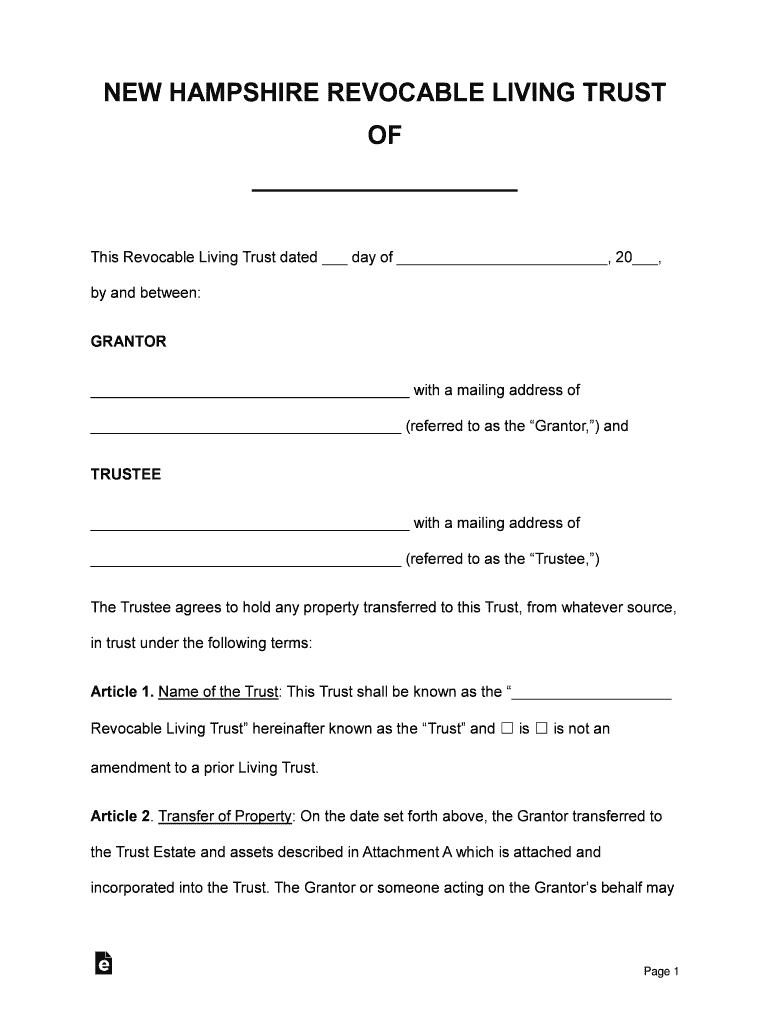
A New Hampshire Revocable Living Trust Form, commonly referred to as a Revocable Living Trust, is a legal document used to manage and distribute a person's assets both during their lifetime and after their death. It involves the Grantor, who establishes the trust, transferring ownership of their assets into the trust, which is then managed by a Trustee. This document outlines how the trust's assets should be managed and distributed to beneficiaries, ensuring that the grantor’s wishes are followed systematically.
Core Components
- Grantor: The individual who creates the trust and transfers assets into it.
- Trustee: The person or entity responsible for managing the trust in accordance with its terms.
- Beneficiaries: Individuals or entities that receive benefits or assets from the trust.
- Assets: Property or funds placed into the trust, managed and eventually distributed per the grantor’s instructions.
How to Use the New Hampshire Revocable Living Trust Form
The New Hampshire Revocable Living Trust Form serves as a blueprint for how a grantor's assets should be handled. Here's a step-by-step guide on using the form:
- Identify the Participants: Begin by naming the grantor and trustee. Establish clear roles and responsibilities.
- List the Assets: Detail the assets you want to include in the trust, such as real estate, stocks, or personal property.
- Designate Beneficiaries: Specify the individuals or entities who will benefit from the trust.
- Outline Management Rules: Set instructions for how assets should be managed during the grantor's lifetime.
- Define Distribution Terms: Detail how assets should be distributed upon the grantor's death.
- Notarization: Have the document signed and notarized to ensure its validity.
Key Elements of the New Hampshire Revocable Living Trust Form
Several key elements are included in the New Hampshire Revocable Living Trust Form that define its function:
- Revocability: The grantor retains the ability to alter or revoke the trust at any time while they are alive and mentally competent.
- Asset Management: Guidelines for how the trustee should manage the trust assets, including investments and daily administration.
- Successor Trustees: Instructions for appointing a new trustee if the original trustee is unable or unwilling to serve.
- Distribution Instructions: Clear directives on how and when beneficiaries will receive their distributions.
Legal Use of the New Hampshire Revocable Living Trust Form
This form is legally binding and carries specific legal implications. It must comply with New Hampshire state laws to be enforceable:
- Compliance with State Laws: Ensure the trust is compliant with state-specific requirements regarding asset management and distribution.
- Legal Capacity: The grantor must be of sound mind when establishing the trust.
- Proper Execution: The document should be signed, witnessed, and notarized to meet legal standards.
Steps to Complete the New Hampshire Revocable Living Trust Form
Completing the New Hampshire Revocable Living Trust Form involves several steps to ensure all details are accurately captured:
- Gather Information: Collect details about your assets, beneficiaries, and trustees.
- Draft the Document: Use a template or legal software to format the trust according to state guidelines.
- Review Terms: Ensure all sections align with your intentions, particularly those about asset distribution.
- Execute the Document: Sign the document in the presence of a notary and witnesses.
- Fund the Trust: Transfer the ownership of assets into the trust.
State-Specific Rules for the New Hampshire Revocable Living Trust Form
New Hampshire has specific rules governing revocable trusts that must be adhered to:
- Trustee Requirements: Trustees may need to be bonded or secured depending on the trust's assets or conditions.
- Document Recording: Some trusts may require recording with local registries, especially those holding real estate.
- Revocation Process: Specific state provisions dictate how a trust can be revoked or amended.
Who Typically Uses the New Hampshire Revocable Living Trust Form
This form is predominantly used by individuals looking to ensure smooth estate planning and asset management:
- Individuals with Considerable Assets: Those with significant assets often use trusts to minimize estate taxes and manage distributions.
- Families with Minor Children: Parents might use trusts to manage inheritance for children who are not yet of age.
- Pet Owners: Individuals may establish provisions for the care of pets in their absence.


Important Terms Related to the New Hampshire Revocable Living Trust Form
Understanding crucial terms can aid in comprehending the form’s nuances:
- Settlor: Another term for the grantor.
- Corpus: The body, or principal, of the trust.
- Fiduciary Duty: The trustee's obligation to manage the trust responsibly and ethically.
- Remainderman: The individual or entity entitled to what remains of the trust after specific conditions are met.
Examples of Using the New Hampshire Revocable Living Trust Form
- Case Study - Family Legacy Trust: A couple established a trust to provide for their children’s education and healthcare needs, ensuring distributions occur upon reaching certain milestones.
- Real-World Scenario: An individual sets up a trust for their real estate, ensuring that upon their passing, the property is transferred to a named charity, bypassing probate entirely.
The New Hampshire Revocable Living Trust Form is a robust tool for estate planning, offering both flexibility and control over how assets are managed and distributed.