01. Edit your form online
Type text, add images, blackout confidential details, add comments, highlights and more.

Type text, add images, blackout confidential details, add comments, highlights and more.

Draw your signature, type it, upload its image, or use your mobile device as a signature pad.

Send it via email, link, or fax. You can also download it, export it or print it out.
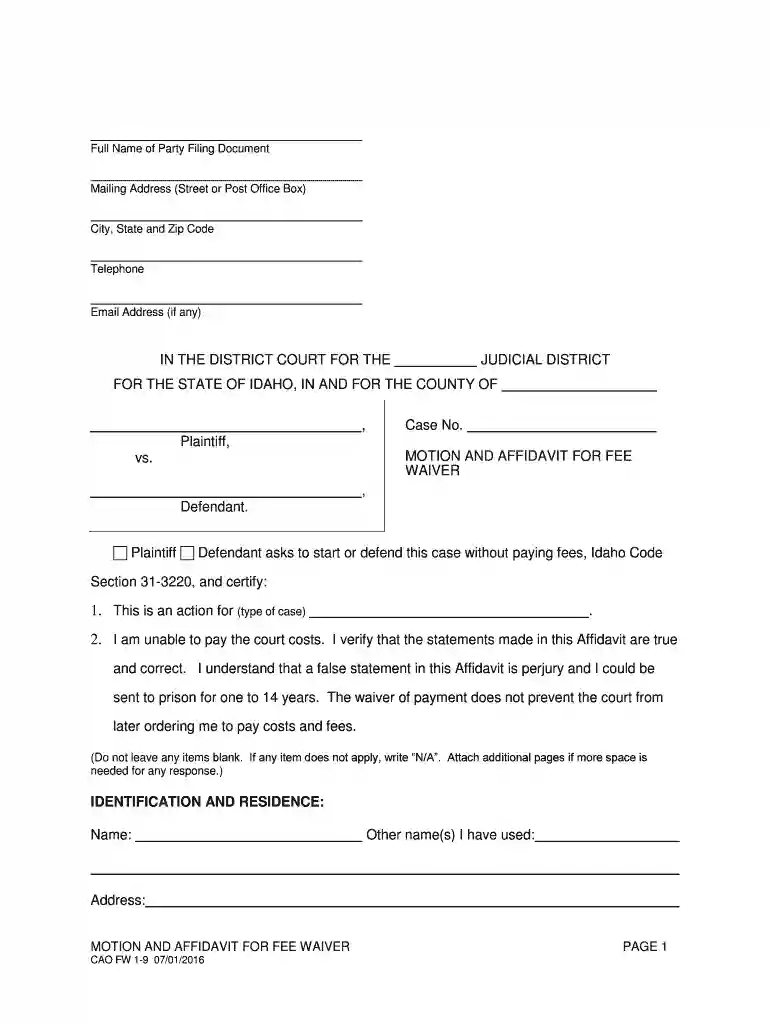
The "Idaho - Motion and Affidavit for Fee Waiver" is a legal document used within the Idaho District Court system. It allows plaintiffs or defendants to formally request the waiver of court-related fees due to their financial circumstances. The motion is typically submitted by individuals who cannot afford these fees, and it requires detailed documentation of their financial status to substantiate their claim for hardship. This document serves as both a motion, requesting the waiver, and an affidavit, certifying the accuracy of the submitted information under penalty of perjury.
To obtain the "Idaho - Motion and Affidavit for Fee Waiver," interested parties can visit the Idaho Judicial Branch's official website or the clerk's office at their local district courthouse. The form may also be available through legal aid organizations that assist low-income individuals. When accessing the form, ensure that it is the most current version as required by the court, which can often be confirmed via the court's website.
Download and Review the Form: Start by accessing the form through an official source and reviewing it carefully to understand all sections required to be completed.
Provide Personal Information: Include full name, address, and contact details to establish the applicant's identity to the court.
Detail Financial Situation: Accurately report on employment status, income, assets, and expenses. This section requires thorough verification as it supports the claim of financial hardship.
Certify the Affidavit: Sign the document in the presence of a notary public to affirm that the information provided is true and complete.
Submit the Document: Once completed, the form can be submitted to the court either in person or by mail, accompanied by any necessary supporting documentation.
This form is primarily used by individuals facing financial challenges who cannot afford court fees. Common users include low-income individuals, unemployed persons, and those receiving government assistance. It is also utilized by plaintiffs and defendants in civil cases who need financial relief to access legal proceedings.


Idaho may have unique procedural requirements that differ from other states. For instance, local rules regarding the supporting documents required or the judge's discretion in granting waivers could vary. Applicants should familiarize themselves with any Idaho-specific mandates, perhaps through court guides or legal aid services to ensure compliance.
Applicants need to provide supporting documentation such as recent pay stubs, tax returns, and bank statements to substantiate their financial claims. These documents help the court verify the individual's inability to pay the related fees and are crucial to the approval of the waiver application.
The "Idaho - Motion and Affidavit for Fee Waiver" can typically be filed through multiple channels:
We've got more versions of the Idaho - Motion and Affidavit for Fee Waiver form. Select the right Idaho - Motion and Affidavit for Fee Waiver version from the list and start editing it straight away!
| Versions | Form popularity | Fillable & printable |
|---|---|---|
| 2016 | 4.8 Satisfied (40 Votes) |
At DocHub, your data security is our priority. We follow HIPAA, SOC2, GDPR, and other standards, so you can work on your documents with confidence.