01. Edit your form online
Type text, add images, blackout confidential details, add comments, highlights and more.

Type text, add images, blackout confidential details, add comments, highlights and more.

Draw your signature, type it, upload its image, or use your mobile device as a signature pad.

Send it via email, link, or fax. You can also download it, export it or print it out.
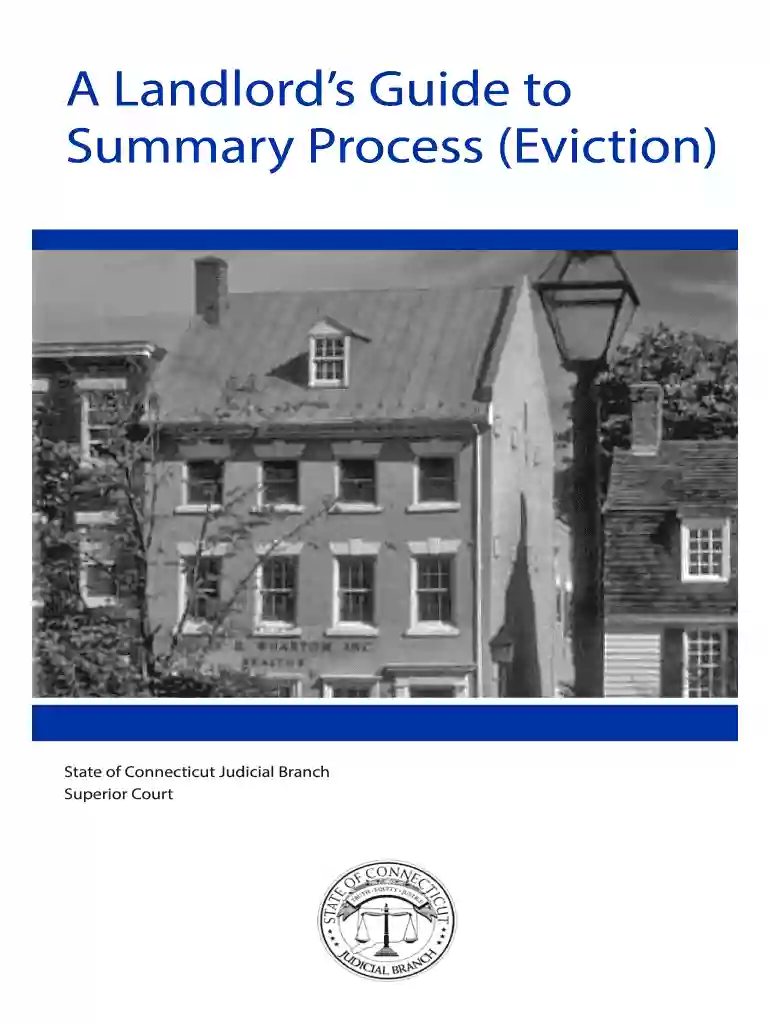
The term "A Tenant's Guide To Summary Process" refers to a detailed informational resource designed for tenants in Connecticut. It outlines the summary process, which is a legal procedure landlords use to evict tenants. The guide is aimed at providing tenants with a comprehensive understanding of their rights and responsibilities during the eviction process, as well as practical steps they can take if faced with a summary process action. It also serves as an educational tool to demystify the legal jargon and processes involved.
Understanding how to utilize the Tenant's Guide effectively is crucial for tenants facing eviction processes in Connecticut. The guide should be used as a resource for gaining an in-depth understanding of each stage of the eviction process, from the initial Notice to Quit to the conclusion of the legal proceedings. Tenants can refer to it for clarifications on legal terms, prepare questions for consultations with legal experts, and familiarize themselves with the required documentation they may need to present in court. Importantly, the guide is not a replacement for legal advice, but a supplement to empower tenants with knowledge.
Receiving a Notice to Quit: The process often begins with a landlord serving a Notice to Quit, informing the tenant of the landlord’s intention to regain possession of the property.
Filing of a Summons and Complaint: If the tenant does not vacate by the stated date, the landlord can proceed by filing a Summons and Complaint with the appropriate court.
Responding to the Complaint: Tenants must file a response, termed an "Answer," disputing or acknowledging the landlord's claims. The tenant may also file counterclaims if applicable.
Court Hearing: A trial date is set where both parties can present their evidence. The judge will render a decision based on the proceedings.
Judgment and Appeals: If the judgment is in favor of the landlord, the tenant may appeal within a specified period or face forcible eviction by a court officer.
In Connecticut, the tenant’s guide is specifically structured to comply with the state's legal framework regarding summary processes. The guide follows Connecticut’s unique procedural requirements, ensuring tenants understand the legal demands placed on them. This includes adherence to timeframes for filing responses and understanding tenant defenses admissible under Connecticut law. Knowledge of these specifics can prevent procedural missteps that might lead to an automatic ruling in favor of the landlord.
Tenant eviction processes in Connecticut are governed by unique state statutes that the guide addresses explicitly. This includes specifics about the timeframe within which actions must be taken post-service of notices, document submission protocols, and court hearing conduct. By following the guide, tenants can ensure they are in compliance with Connecticut’s legal standards, minimizing errors in legal proceedings.
While the guide is tailored to Connecticut, it’s important for tenants who have moved from other states to appreciate the differences. For example, tenant protections in Connecticut might differ from neighboring states like New York or Massachusetts in terms of the notice period or acceptable grounds for eviction. Understanding these nuances can greatly influence how a tenant should approach their defense strategy or seek legal counsel.


We've got more versions of the A Tenant's Guide To Summary Process - Lawyer in Connecticut form. Select the right A Tenant's Guide To Summary Process - Lawyer in Connecticut version from the list and start editing it straight away!
At DocHub, your data security is our priority. We follow HIPAA, SOC2, GDPR, and other standards, so you can work on your documents with confidence.