






Definition & Meaning of the Business Entity Questionnaire
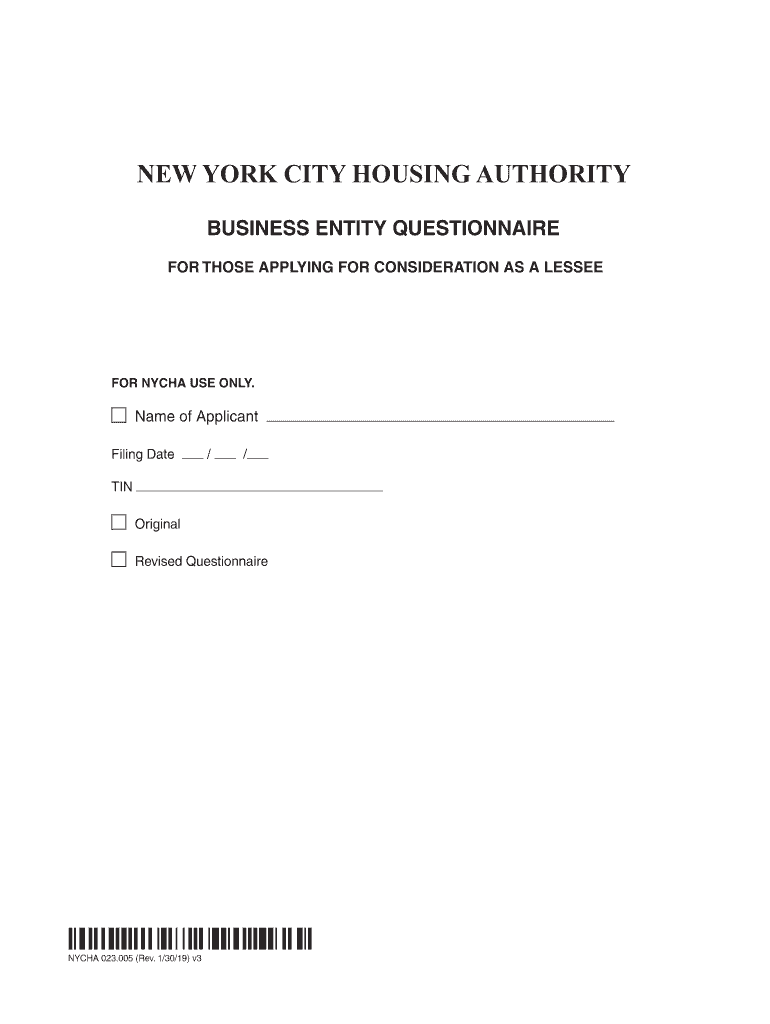
A Business Entity Questionnaire is a critical document used for assessing the responsibility and eligibility of business entities, particularly when they are applying to lease space or engage in business agreements. This form collects detailed information about the business to ensure compliance with various legal and operational standards. Typically required by organizations such as the New York City Housing Authority (NYCHA), the questionnaire encompasses numerous sections that gather data on the business's history, financial integrity, and operational practices.
Importance of the Business Entity Questionnaire
- Compliance Assessment: Ensures the business entity meets specific criteria and legal standards.
- Risk Evaluation: Helps landlords or business partners evaluate potential risks associated with the business entity.
- Transparency: Provides clear and documented information regarding the business's operations, principals, and financial status.
Steps to Complete the Business Entity Questionnaire
Completing the Business Entity Questionnaire requires careful attention to detail. Follow these steps for thorough and accurate completion:
- Gather Necessary Information: Collect relevant data about your business history, organizational structure, and financial records.
- Answer Completely: Ensure all sections of the form are filled out accurately; incomplete forms may lead to delays or rejection.
- Provide Notarized Certifications: Ensure that all current principals' certifications are notarized as per the form's requirements.
- Review for Accuracy: Double-check all entries for accuracy to avoid any discrepancies that might lead to compliance issues.
- Submit as Directed: Follow the specified submission process, whether online, by mail, or in person.
Sections to Expect on the Business Entity Questionnaire
- General Applicant Information: Includes basic details like business name, address, and contact information.
- Business Organization History: Covers the background and historical data of the business's formation and evolution.
- Financial Information: Requires disclosure of financial statements to assess the business's economic health.
- Compliance and Litigation History: Asks for records of past compliance checks or any legal issues that the entity has faced.
Key Elements of the Business Entity Questionnaire
The form is detailed and includes various essential elements that necessitate comprehensive responses:
- Principals of the Applicant: Information about the key individuals who own or manage the business.
- Integrity Information: Seeks information about the business's ethical practices and any past violations.
- Litigation Activity: Requires disclosure of any ongoing or past litigation involving the business entity.
Importance of Accurate Completion
- Avoidance of Penalties: Inaccurate or misleading information can lead to penalties or even disqualification from leasing opportunities.
- Strengthened Business Credibility: A thorough and transparent submission can enhance the entity's credibility.
Who Typically Uses the Business Entity Questionnaire
Primarily used by business entities seeking to lease commercial spaces or engage in certain contracts, this questionnaire is crucial for:
- Real Estate Leasing: Businesses looking to secure commercial lease agreements.
- Government Contracts: Entities that must demonstrate compliance and reliability when engaging in public sector contracts.
- Financial Services: Firms may use this data to assess risk before offering loans or credit facilities.


Legal Use of the Business Entity Questionnaire
The Business Entity Questionnaire serves various legal functions, including:
- Due Diligence: Forms part of the due diligence process in evaluating a business entity’s viability.
- Contractual Obligations: Helps ensure that entities meet all necessary legal and operational requisites before they can officially engage in a contract.
State-Specific Rules for the Business Entity Questionnaire
While the core structure of the questionnaire may remain similar, certain states might have specific requirements or modifications:
- Documentation Variations: States like California or New York may require additional documentation or have unique filing processes.
- State Compliance: Some states offer digital submission options, whereas others might mandate in-person submissions to ensure authenticity.
Examples of State Variations
- California: May require additional environmental compliance history for certain industries.
- Texas: Could necessitate specific financial disclosures pertinent to state tax laws.
Digital vs. Paper Version of the Business Entity Questionnaire
Given the increasing digitization of document workflows, consider the benefits and challenges of each format:
-
Digital Version: Allows for easy editing, submission, and storage. It also facilitates electronic signatures, streamlining the overall process.
-
Paper Version: May be necessary for submissions where digital processes are not accepted or when notarizations are required in hard copy.
Software Compatibility
When opting for digital completion, platforms like DocHub ensure compatibility with various file formats and seamless integration with services such as Google Workspace, enabling efficient and secure form handling.
Required Documents for Submitting the Business Entity Questionnaire
Submitting the Business Entity Questionnaire often necessitates attaching official documents that substantiate information provided:
- Financial Statements: Include recent balance sheets and income statements to verify financial integrity.
- Operational Licenses: Attach copies of relevant business licenses and certifications.
- Identity Proofs: Provide identification for principals involved in the business.
Document Compilation Tips
- Organize Chronologically: Align documents in the order of their relevance to each section of the questionnaire.
- Verification: Ensure all documents are up-to-date and certified where necessary.