







Definition & Meaning
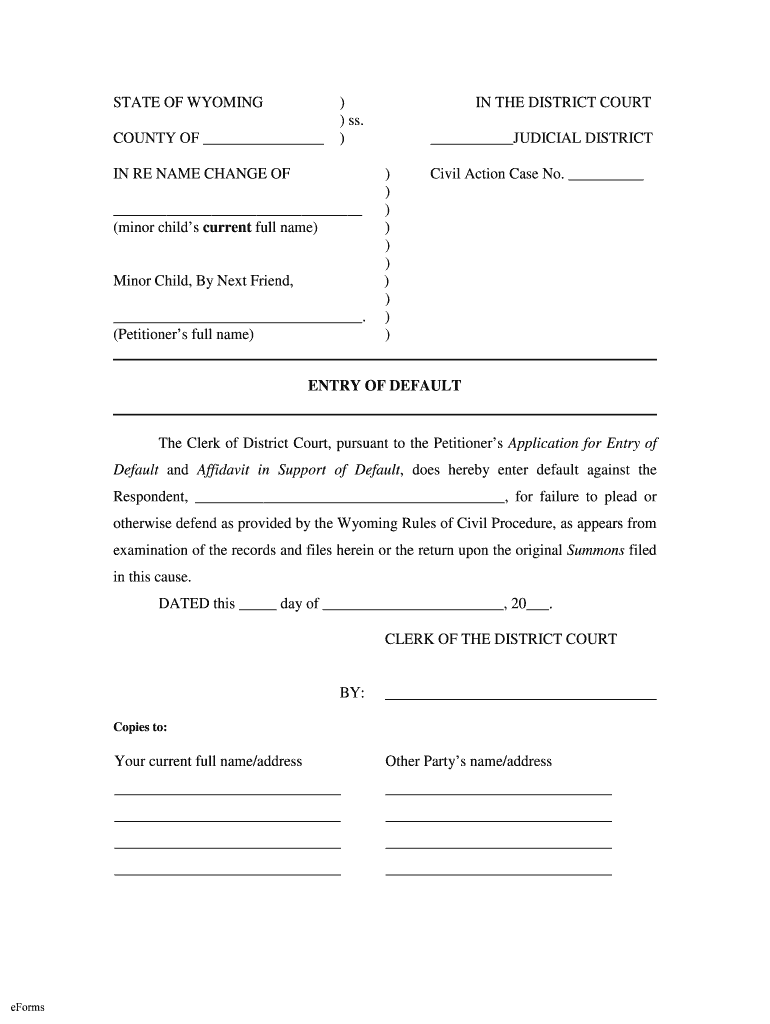
The "Judicial District In Re Name Change - eForms" is a legal document typically used in the United States for individuals seeking a legal name change through the court system. It involves filing a petition in the appropriate judicial district, where the court will review and, if applicable, grant the request for a name change. This form is essential for those looking to change their name due to personal reasons, marriage, or other legal necessities. It ensures the name change is officially recognized and documented within legal frameworks.
How to Use the JUDICIAL DISTRICT IN RE NAME CHANGE - eForms
To use the Judicial District In Re Name Change - eForms effectively, follow these steps:
- Access the Form: Obtain the document from your county or state court’s website or a legal forms repository like DocHub.
- Complete Personal Information: Fill in your current legal name, address, and contact details accurately.
- State Reason for Name Change: Clearly articulate the reason you seek a name change. Common reasons include marital changes, personal preference, or correcting an error.
- Provide Supporting Evidence: Attach necessary documents, such as a marriage certificate or birth certificate, which may be required to substantiate your request.
- Sign and Date: Ensure you sign and date the form appropriately before submission.
Steps to Complete the JUDICIAL DISTRICT IN RE NAME CHANGE - eForms
Completing the form involves several critical steps:
- Gather Documentation: Start by collecting necessary identification documents, including any legal proofs supporting your name change request.
- Filling Out the Form: Utilize a platform like DocHub to fill out the form online for ease and convenience. This digital approach allows you to save and edit your form iteratively.
- Include Petition Details: Clearly list the details of the petition, including your current and desired new name.
- Provide a Justification: Explain the legal or personal motivation for the name change.
- File with the Court: Submit your completed form to the appropriate court within your judicial district. This can typically be done in person, by mail, or via authorized online portals.
Required Documents
Before filing your name change request, ensure you have the following documents ready:
- Government-issued ID: Driver’s license, passport, or birth certificate.
- Proof of Citizenship: U.S. birth certificate or naturalization certificate.
- Legal Documents: Marriage certificate, divorce decree, or adoption papers if applicable.
- Petition for Name Change: Completed form with the correct information.
- Character Witness Affidavits: In some cases, character testimonials may be required.
State-Specific Rules for the JUDICIAL DISTRICT IN RE NAME CHANGE - eForms
Each state in the U.S. has unique rules and regulations governing the name change process. It’s crucial to:
- Research Local Laws: Understand specific state requirements, such as the need for a public announcement in a local newspaper.
- Filing Fees: Be aware of and prepare for state-specific filing fees, which can vary significantly.
- Wait Periods: States may impose wait periods between filing your petition and the court hearing date to allow for public objection.
Legal Use of the JUDICIAL DISTRICT IN RE NAME CHANGE - eForms
This form serves several legal purposes:
- Official Name Change: It is recognized by the government as the official process to modify an individual’s legal name.
- Identity Verification: The form ensures legal consistency across all personal identity documents, such as social security card and driver's license.
- Personal Identification: It aids in establishing a consistent legal identity following significant life events or personal decisions.
Key Elements of the JUDICIAL DISTRICT IN RE NAME CHANGE - eForms
The form consists of important sections, each requiring careful attention:
- Applicant Information: Personal details of the petitioner.
- Reason for Name Change: Must be credible and legally substantiated.
- Proposed Name: The desired new legal name.
- Notarization and Witnesses: Some jurisdictions demand the form be notarized or endorsed by third-party witnesses.
Penalties for Non-Compliance
Failure to properly complete the "Judicial District In Re Name Change - eForms" or follow through with the legal process can lead to:
- Denial of Petition: Incomplete or inaccurate information may result in rejection.
- Legal Complications: Failing to update your name across all legal documents can lead to future legal issues.
- Financial Penalties: In some jurisdictions, incorrect filings may incur additional fees or fines.
Form Submission Methods (Online, Mail, In-Person)
Different methods are available for submitting your form, depending on your judicial district:
- Online Submission: Some states offer online portals for direct submission to expedite the process.
- Mail: Mail the completed form with accompanying documents to your district court.
- In-Person: Visit the courthouse to file your documents in person, which may include an immediate receipt of filing.
By understanding the "Judicial District In Re Name Change - eForms," its requirements, and the legal implications, petitioners can effectively navigate the process to achieve a legal name change.




