01. Edit your form online
Type text, add images, blackout confidential details, add comments, highlights and more.

Type text, add images, blackout confidential details, add comments, highlights and more.

Draw your signature, type it, upload its image, or use your mobile device as a signature pad.

Send it via email, link, or fax. You can also download it, export it or print it out.
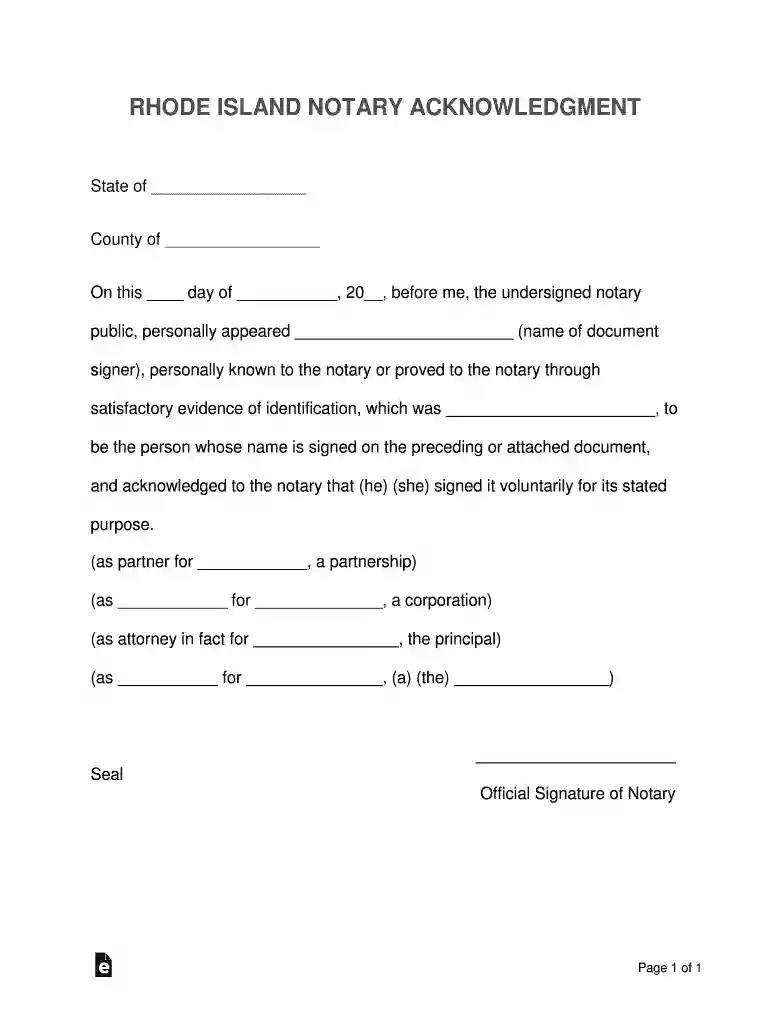
RI Notarial Certificates are official documents utilized in the state of Rhode Island to certify that a notary public has verified the identity of a signer. This verification is crucial in legal circumstances as it confirms that a document was signed willingly and without coercion. The certificate typically includes details such as the state and county where the notarial act took place, the date of the notarization, the notary's signature, and their official stamp or seal. Notarial certificates are a critical component of many legal processes and serve to legitimize the signatures on a document, ensuring they hold up in court.
To effectively use RI Notarial Certificates, it is essential to follow several key steps. Begin by presenting the document that requires notarization to a licensed notary public. The notary will then verify the identity of the signer, typically by examining government-issued ID. Once identity and intent are confirmed, the notary will oversee the signing of the document. After witnessing the signature, the notary will complete the notarial certificate section by filling in the necessary details and affixing their official seal, thereby completing the notarization process.
RI Notarial Certificates carry significant legal weight. They are utilized in a wide range of legal, financial, and personal transactions, such as real estate proceedings, affidavits, power of attorney documents, and contracts. Notarial certificates can also play a vital role in preventing fraud by confirming the authenticity of the signatures. Their use ensures compliance with state laws and regulations, thereby safeguarding the interests of all parties involved in the transaction.
Rhode Island has specific regulations governing the use of notarial certificates. For instance, notaries must be commissioned by the state of Rhode Island, and they must adhere to the fee structures outlined in state notarial regulations. Notaries are also required to maintain a detailed log or register of notarial acts, which may be subject to periodic audits. Compliance with these state-specific standards is mandatory to ensure the legality and validity of the notarization.
RI Notarial Certificates are commonly used by legal professionals, real estate agents, financial advisors, and individuals engaging in significant agreements or transactions. Businesses may require notarial certificates for various corporate actions, while individuals might need them for personal legal documents, such as prenuptial agreements or wills. The notary's role is to guarantee that the document execution is legally binding and compliant with Rhode Island law.


We've got more versions of the RI Notarial Certificates form. Select the right RI Notarial Certificates version from the list and start editing it straight away!
| Versions | Form popularity | Fillable & printable |
|---|---|---|
| 2017 | 4.8 Satisfied (210 Votes) |
At DocHub, your data security is our priority. We follow HIPAA, SOC2, GDPR, and other standards, so you can work on your documents with confidence.