







Definition & Meaning
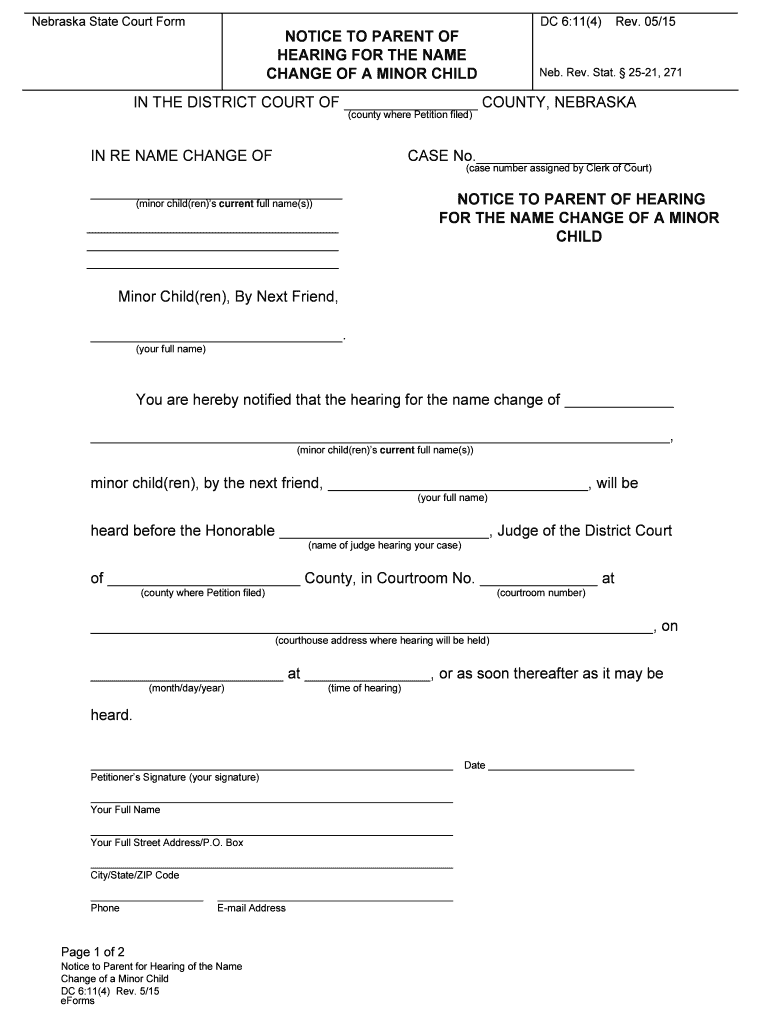
The "Notice to Parent of Hearing for the Name Change of a Minor Child (DC 6" serves as a legal notification to parents regarding a court hearing where the name change of a minor is discussed. In Nebraska, this document ensures that both parents are informed of the pending legal action, allowing them the opportunity to attend the hearing and voice any concerns. It contains critical information like the court's name, the case number, and the particulars of the minor child whose name is proposed for change.
How to Obtain the Notice to Parent of Hearing for the Name Change of a Minor Child (DC 6)
To obtain this notice, start by contacting the local court in Nebraska where the case will be heard. The court's clerk can provide guidance on how to acquire the form. It’s also possible to access the notice online through the state's judicial website, where downloadable templates may be available. It’s important to ensure the form is correctly filled out and submitted in advance of the hearing to ensure proper notification.
Steps to Complete the Notice to Parent of Hearing for the Name Change of a Minor Child (DC 6)
-
Gather Required Information: Collect details such as the minor child’s current legal name, case number, and the court hearing venue.
-
Fill in the Form: Enter the necessary information into the corresponding fields, ensuring all entries are accurate, to avoid any legal issues later.
-
Certification of Service: Include a certification of service, confirming that the other parent has been duly notified.
-
Verification: Have the form reviewed for completeness and accuracy. It is crucial for legal compliance that every detail matches the specifics of the case.
Why Use the Notice to Parent of Hearing for the Name Change of a Minor Child (DC 6)
The notice serves as a critical legal document ensuring all parties concerned are aware of a name change procedure. Its purpose is to uphold transparency and integrity within family law proceedings, preventing unauthorized or undisclosed changes to a minor's legal name. By facilitating communication between parties, it helps ensure that both parents have the opportunity to express their views or concerns regarding the proposed name change.
Who Typically Uses the Notice to Parent of Hearing for the Name Change of a Minor Child (DC 6)
Primarily, this notice is used by parents or legal guardians involved in the process of changing a minor child's name. It can also be utilized by legal professionals representing either parent, ensuring that they have complied with notification requirements. Court officials may also issue this notice to inform the involved parties about the hearing.


Key Elements of the Notice to Parent of Hearing for the Name Change of a Minor Child (DC 6)
- Court Details: The specific court where the hearing will be held.
- Case Number: Unique identifier for the legal proceedings.
- Minor's Details: Current legal name and date of birth of the minor child.
- Hearing Date and Time: Ensures both parents know when the hearing will occur.
- Certification of Service: Provides proof that the other parent has been informed.
Legal Use of the Notice to Parent of Hearing for the Name Change of a Minor Child (DC 6)
This notice is legally binding in Nebraska, requiring compliance with state laws regarding name changes for minors. It ensures that all statutory requirements for notifying concerned parties are met, which is crucial in safeguarding the minor's best interests and permitting due process.
State-Specific Rules for the Notice to Parent of Hearing for the Name Change of a Minor Child (DC 6)
In Nebraska, specific state laws dictate the procedure for notifying parents about name change hearings for minors. It is essential to follow these guidelines to ensure the notice is legally valid. This includes the method of delivery, timelines for issuance, and details that the notice must encompass.
Examples of Using the Notice to Parent of Hearing for the Name Change of a Minor Child (DC 6)
Consider a scenario where a parent wishes to change the child’s surname after a divorce. The form would allow them to notify the other parent of the forthcoming hearing. Another example is in cases of remarriage, where a parent desires to update the child's surname to reflect the new family structure, thereby ensuring all legal parties are informed and involved in the process.
Form Submission Methods (Online / Mail / In-Person)
The notice can be submitted via various channels:
- Online: Submission might be possible if the court system supports digital filing.
- Mail: Mail the completed form to the appropriate courthouse.
- In-Person: Deliver whythe form directly to the court to ensure immediate receipt and processing, receiving confirmation of submission.




