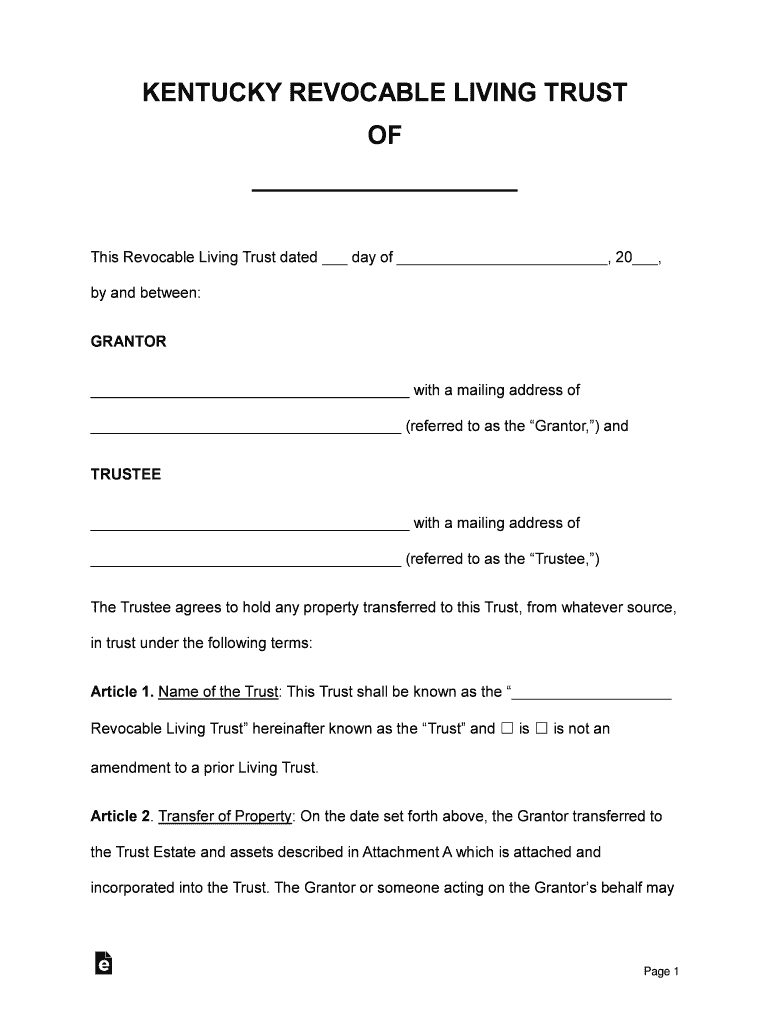







Definition & Purpose of the Kentucky Revocable Living Trust Form
A Kentucky Revocable Living Trust Form is a legal document designed to manage and protect assets during a person's lifetime and ensure their smooth distribution upon death. This document involves a Grantor who establishes the trust and a Trustee responsible for managing the trust according to the outlined terms. The Revocable Living Trust provides flexibility, allowing the Grantor to amend or terminate the trust as circumstances evolve. This form is commonly used in estate planning to avoid probate, manage personal finances, and maintain privacy concerning the distribution of assets.
Key Features of a Revocable Living Trust
- Control and Flexibility: The Grantor retains control over the assets and can make changes to the trust terms or beneficiaries without requiring court intervention.
- Avoidance of Probate: Assets held in the trust bypass the probate process, ensuring a quicker and more private distribution.
- Management in Incapacity: Provides a mechanism for managing the Grantor’s affairs if they become incapacitated, as the appointed Trustee can step in to manage the estate.
- Continued Income and Benefits: The Grantor can continue benefiting from the income generated by the trust assets during their lifetime.
Steps to Complete the Kentucky Revocable Living Trust Form
Completing this form requires careful consideration and precision. Follow these steps to ensure the document is accurately filled out:
- Identify the Parties Involved: Specify the names of the Grantor and Trustee, including any Successor Trustees who would take over if the original Trustees cannot serve.
- Detail the Trust Property: List all assets to be included in the trust, such as real estate, bank accounts, investments, and personal property.
- Define Beneficiaries: Clearly outline who will benefit from the trust during the Grantor’s lifetime and who will receive the trust assets after the Grantor’s death.
- Set Conditions and Instructions: Include specific terms for property management, allocation of expenses, and any special instructions regarding particular assets.
- Notarization and Signatures: Once the document is completed, it must be signed by the Grantor in the presence of a notary public to validate the trust.
Important Terms Related to the Kentucky Revocable Living Trust Form
Understanding key legal terms associated with this form is essential for accurately executing the document:
- Grantor: The individual who creates the trust and funds it with their assets.
- Trustee: The person or institution responsible for managing the trust and carrying out its terms.
- Beneficiary: Any person or entity entitled to receive benefits or assets under the trust.
- Trust Estate: The collection of assets and properties held in the trust for the benefit of the beneficiaries.
- Successor Trustee: A designated individual who takes over trustee responsibilities if the original Trustee can no longer manage the trust.
Legal Use of the Kentucky Revocable Living Trust Form
The Kentucky Revocable Living Trust Form serves several critical functions within the legal realm:
- Asset Protection: Ensures that a person's assets are handled as they wish during and after their lifetime.
- Compliant with State Laws: Designed to adhere to Kentucky’s legal requirements for trusts, providing assurance of legality.
- Private Estate Management: The form provides privacy by keeping asset distribution out of the public domain, unlike wills that go through probate.
- Incapacity Planning: Offers a plan for estate management if the Grantor becomes unable to do so themselves due to physical or mental incapacity.
State-Specific Rules for the Kentucky Revocable Living Trust Form
While many aspects of a revocable living trust are consistent across jurisdictions, Kentucky has specific statutory rules:
- Trustee Responsibilities: Kentucky law requires trustees to act in good faith and in the best interests of the beneficiaries, providing regular updates on the trust’s status.
- Amendments and Revocations: Kentucky permits flexibility in modifying or revoking a trust, provided the Grantor is mentally competent and follows the legal process.
- Property Transfers: To be legally effective, any real estate inclusion must be legally conveyed to the trust, often by a recorded deed.
Key Elements of the Kentucky Revocable Living Trust Form
Creating a comprehensive trust necessitates the inclusion of certain elements to protect the Grantor's intentions:
- Trust Declaration: States the purpose of establishing the trust and acknowledges the voluntary transfer of assets.
- Asset Management Instructions: Detailed guidelines for how trustees should manage and distribute assets, focusing on the beneficiaries’ well-being.
- Appointment Clauses: Defines the roles of trustees and successor trustees, including procedures for appointing new ones if necessary.
- Term of the Trust: While the trust can typically last indefinitely, conditions for its termination should be specified.
Examples of Using the Kentucky Revocable Living Trust Form
Real-world scenarios help illustrate the utility and flexibility of a Revocable Living Trust:
- Private Asset Distribution: An individual seeks to distribute their estate among heirs discreetly without public probate proceedings.
- Incapacity Planning: A grantor arranges for their finances and healthcare needs to be managed by a trusted family member in case of incapacity.
- Successor Planning: Preparing for business ownership transfer to ensure the continuity of family-operated ventures.
Required Documents for Establishing a Kentucky Revocable Living Trust
A complete trust form often requires supporting documentation that confirms and legitimizes its contents:
- Deeds and Titles: Legal documents establishing ownership and transferring property into the trust.
- Inventory List: A comprehensive list of all assets to be included in the trust.
- Beneficiary Details: Identification documents or information sheets for all named beneficiaries.
- Legal Identification: Proof of identity for both the Grantor and Trustees.
Software Compatibility and Integration
Utilizing digital tools can streamline the management and modification of the trust form:
- DocHub Integration: Compatible with formats like PDF, DOC, and similar files for seamless digital processing and signing.
- Google Workspace: Direct integration facilitates effortless document editing and sharing from Google Drive.
- Security Features: Robust encryption protocols ensure the security of personal data and legal documents throughout the process.