01. Edit your form online
Type text, add images, blackout confidential details, add comments, highlights and more.

Type text, add images, blackout confidential details, add comments, highlights and more.

Draw your signature, type it, upload its image, or use your mobile device as a signature pad.

Send it via email, link, or fax. You can also download it, export it or print it out.
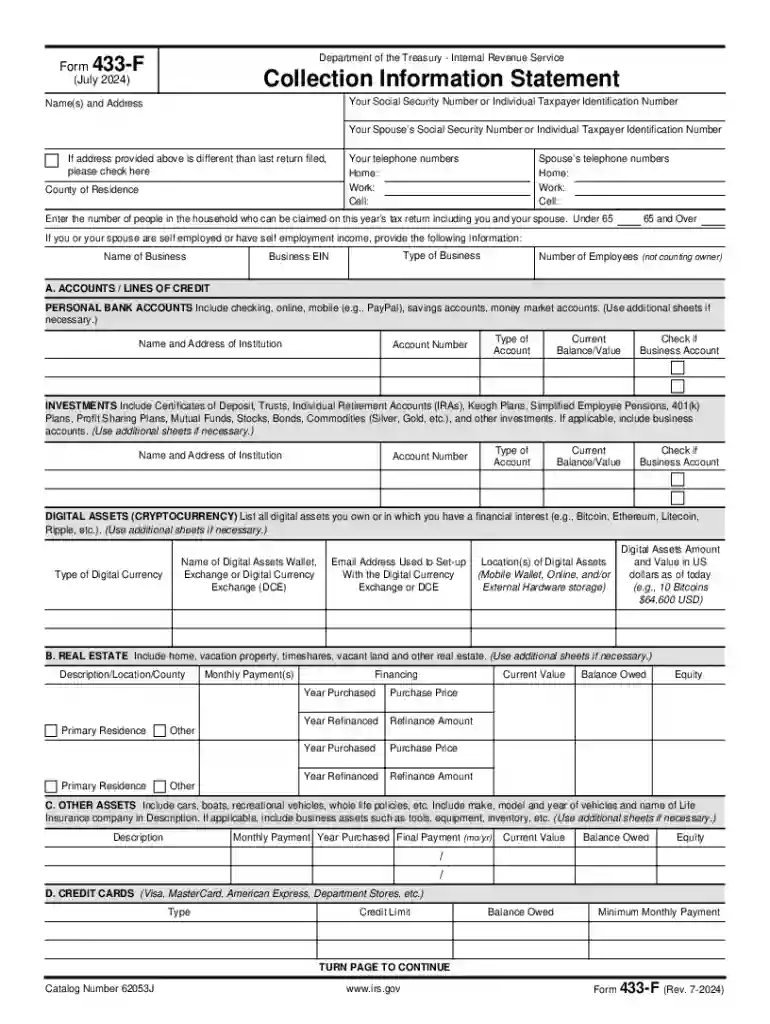
Form 433-F, or Collection Information Statement, is a critical document employed by the IRS to gather comprehensive financial information from individuals or businesses. Its primary purpose is to evaluate the taxpayer's ability to pay outstanding tax liabilities. This form is essential for facilitating the determination of payment options, such as installment agreements, when a taxpayer cannot immediately settle their tax debt.
Form 433-F collects detailed information across several categories, including personal and spouse details, accounts and lines of credit, real estate, other assets, and credit card accounts. Additionally, it delves into the specifics of employment details, non-wage income, and necessary living expenses. By providing a full picture of a taxpayer's financial situation, the IRS can tailor debt resolution strategies accordingly.
Form 433-F is easily accessible for taxpayers needing to submit their financial details to the IRS. Taxpayers can obtain this form through several methods:
IRS Website: The most direct way to access Form 433-F is by visiting the official IRS website. The form is available for download in PDF format, ensuring that you have the most current version.
Local IRS Office: For those who prefer a physical copy, visiting a local IRS office can be a convenient option. Staff can provide a printed version of the form and answer any questions you may have about it.
By Mail: You may also request to have the form mailed to you. Contact the IRS or obtain a form request from other tax resource platforms that accommodate mailing requests.
Filling out Form 433-F requires careful attention to detail. Here is a step-by-step guide to help you through the process:
Personal Information: Begin with your basic details, including full name, address, and taxpayer identification number.
Revenue Sources: Provide details of all streams of income, including wages, non-wage income, and any benefits received.
Asset Details: List all tangible assets such as real estate, vehicles, and investments. Be thorough to ensure an accurate representation of your financial standing.
Liabilities and Expenses: Document all outstanding debts and necessary living expenses. This includes mortgage or rent, utilities, insurance, and daily living costs.
Review and Submit: Carefully check all sections to ensure accuracy, then submit the form through the appropriate channels - online or by mail.
Understanding the terminology used in Form 433-F is crucial for precise completion. Here are some key terms to be aware of:
Installment Agreement: A payment plan by which taxpayers can settle their tax liabilities over time rather than in a lump sum.
Non-Wage Income: Income not derived from employment, such as dividends, interest, rental income, and pensions.
Necessary Living Expenses: Essential expenditures required to maintain health and well-being, like food, clothing, housing, utilities, and medical expenses.
Form 433-F must be used consistently with IRS guidelines to ensure its legality in financial assessments. Here are key points regarding its legal use:
Accurate Representation: Providing false information on Form 433-F is against IRS regulations and could lead to penalties or legal action.
Verification: The IRS may request additional documentation to verify the information submitted with Form 433-F, such as bank statements or proof of income.
Confidentiality: Information collected through Form 433-F is used solely for tax administration; it’s protected under privacy laws that prevent unauthorized disclosure.
Form 433-F comprises several crucial sections each addressing a specific aspect of a taxpayer’s financial situation:
Personal and Spouse Information: Collects identifying details for the taxpayer and their spouse.
Accounts and Lines of Credit: Requests data about bank accounts, credit cards, and lines of credit.
Real Estate Information: Involves details about any owned property, including current valuation and mortgage information.
Employment and Income: Focuses on employment status and income levels, supplemented by non-wage income details.
Expenses and Liabilities: Encompasses a comprehensive list of living expenses and other financial obligations.
Adherence to IRS guidelines when completing Form 433-F ensures a seamless process and aids in establishing payment agreements. Major guidelines include:
Timely Submission: Be aware of IRS deadlines related to your financial situation and ensure forms are submitted promptly.
Complete Disclosure: Avoid omitting any pertinent financial information; full disclosure helps the IRS make viable payment arrangements.
Documentation: Maintain a thorough record of all documents referenced or attached to Form 433-F for future reference or inquiries.
Submitting Form 433-F can be done through various channels, each with its advantages:
Online Submission: This method is faster and more convenient, allowing you to submit directly through IRS e-services. It also offers immediate confirmation of receipt.
Mail: While slower, mailing remains a reliable traditional option. Ensure that you send it to the correct IRS address and obtain proof of posting for your records.
Adhering to the correct submission processes helps ensure that your application is processed efficiently.
We've got more versions of the Form 433-f form. Select the right Form 433-f version from the list and start editing it straight away!
At DocHub, your data security is our priority. We follow HIPAA, SOC2, GDPR, and other standards, so you can work on your documents with confidence.