
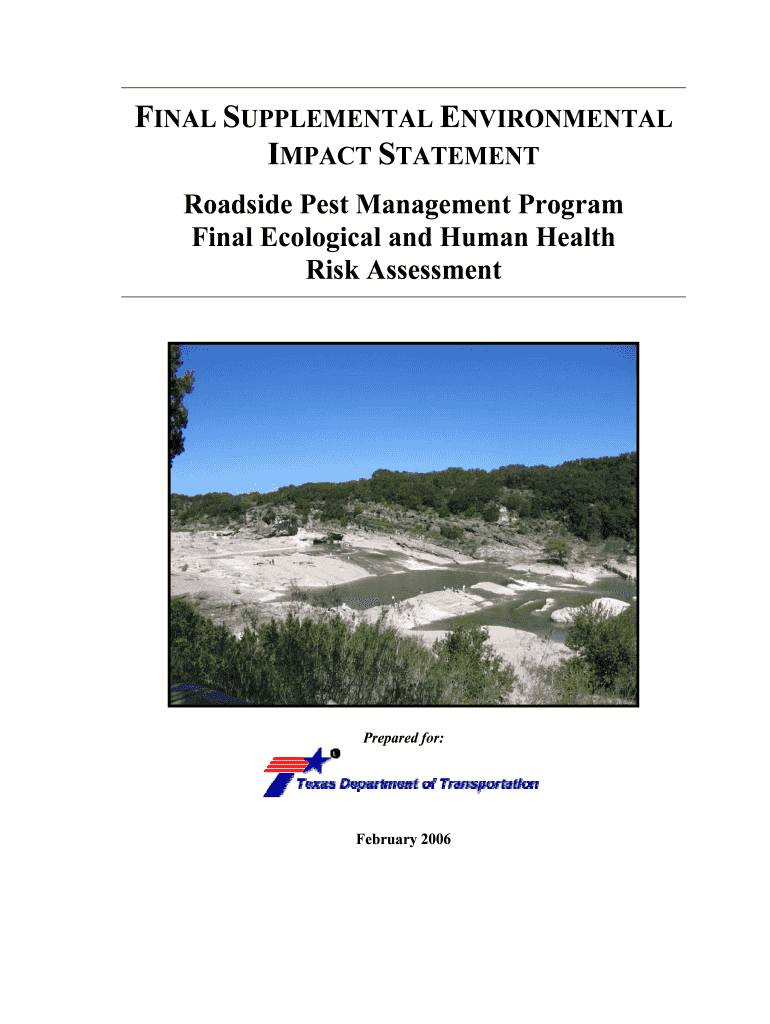







Definition and Meaning
The "Final Supplemental Environmental Impact Statement" is a comprehensive report prepared to evaluate the potential ecological and human health risks associated with the Roadside Pest Management Program managed by the Texas Department of Transportation (TxDOT). This document serves as an essential tool to assess environmental impacts, detailing the risks posed by various pesticides used in roadside management. The primary goal of the report is to ensure that these management practices are within acceptable safety thresholds, thereby protecting ecological and human health.
Key Elements of the Final Supplemental Environmental Impact Statement
The document encompasses several critical components to provide a well-rounded assessment:
- Chemicals Information: This section enumerates specific chemicals utilized in pest management, detailing their properties and potential health effects.
- Ecological Risk Assessments: It evaluates how these chemicals might affect various ecological receptors, including plants, wildlife, and aquatic ecosystems.
- Human Health Risk Assessments: This involves a detailed analysis of potential health risks for humans due to direct contact or through contaminated water and food.
- Management Practices: Recommendations for minimizing harmful impacts and strategies for responsible pesticide use are discussed.
Steps to Complete the Final Supplemental Environmental Impact Statement
Following a systematic approach is crucial in drafting a thorough impact statement:
- Identify Hazardous Chemicals: Compile a list of all pesticides used along roadsides.
- Assess Exposure Scenarios: Determine various scenarios where the environment or human health may be at risk.
- Conduct Risk Analysis: Perform detailed ecological and human health risk assessments based on identified exposure scenarios.
- Draft Mitigation Strategies: Develop plans to reduce or eliminate identified risks, focusing on alternative practices where applicable.
- Review and Revise: Engage stakeholders and experts to review the draft, ensuring accuracy and comprehensiveness before finalizing.
How to Obtain the Final Supplemental Environmental Impact Statement
Interested parties can acquire the document through several means:
- Online Access: Check the official TxDOT website, where completed environmental documents are often made available.
- Public Libraries and Repositories: Certain public libraries may house these statements in their collections, especially those near TxDOT headquarters.
- Government Offices: Physical copies may be requested from relevant government environmental or transportation offices in Texas.
Legal Use of the Final Supplemental Environmental Impact Statement
The document holds significant weight in legal and regulatory contexts:
- Regulatory Compliance: Ensures that TxDOT's practices adhere to federal and state environmental regulations.
- Litigation and Disputes: Serves as an evidence base in legal challenges concerning pesticide use and its associated risks.
- Policy Formulation: Can inform future policy decisions and legislative efforts aimed at enhancing environmental protection measures.
State-Specific Rules for the Final Supplemental Environmental Impact Statement
While this document primarily pertains to Texas:
- State Variances: Other states may have their distinct regulations and guidelines governing the creation and use of environmental impact statements.
- Localized Conditions: Regional ecological differences necessitate adjustments in risk assessments and preferred mitigatory practices.
Who Issues the Form
The Texas Department of Transportation (TxDOT) is responsible for compiling and issuing the Final Supplemental Environmental Impact Statement. The department coordinates with various environmental and health agencies to incorporate comprehensive data and expert inputs throughout the document's development process.
Penalties for Non-Compliance
Failing to adhere to the guidelines outlined in the impact statement can attract significant penalties:
- Regulatory Fines: TxDOT or any contracting entities may face monetary fines for violating environmental regulations.
- Operational Delays: Non-compliance may lead to project holds until corrective measures are ensured.
- Legal Consequences: Potential litigation resulting from environmental damage or health impacts could lead to further sanctions.
Important Terms Related to the Final Supplemental Environmental Impact Statement
Understanding key terms aids in comprehending the report:
- Pesticides: Chemical substances used to eliminate pests that might affect roadside vegetation.
- Ecological Receptor: Organisms or habitats potentially impacted by chemical exposure.
- Mitigation Strategies: Plans implemented to minimize adverse environmental effects.
- Direct Spray Applications: The method of applying pesticides directly to target areas, highlighted for its potential risks.




