






Definition and Meaning
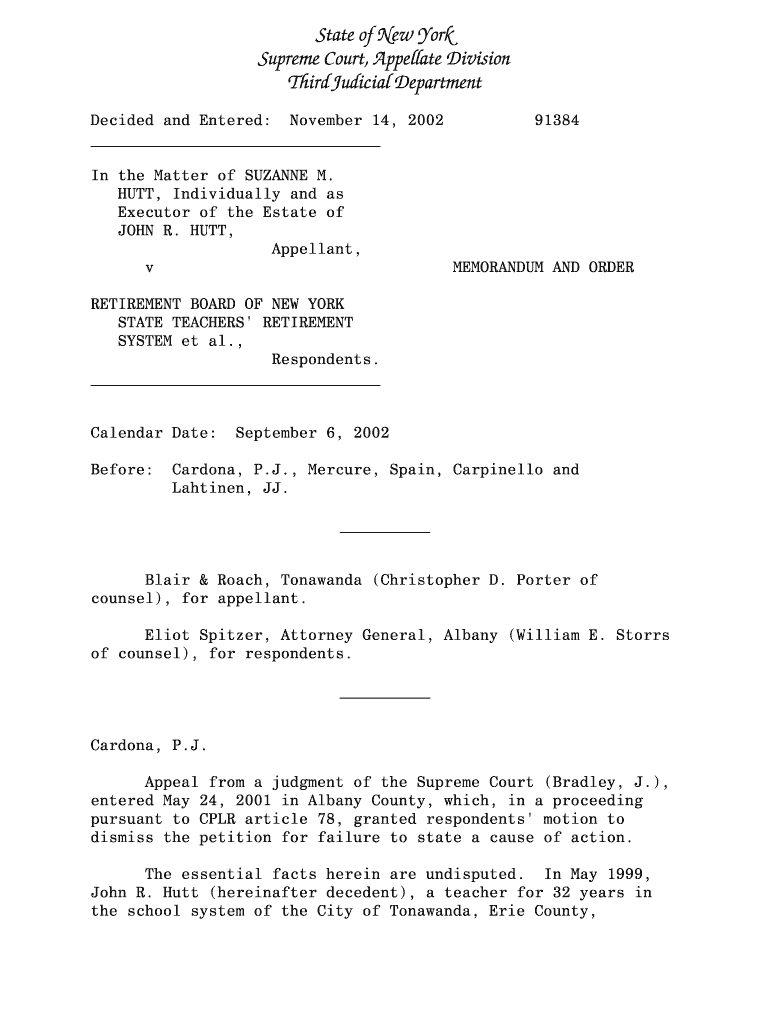
The "State of New York Supreme Court, Appellate Division Third Judicial Department Decided and Entered: N" refers to the formal orders and decisions entered by this specific appellate court in New York. This court is one of the intermediate appellate courts responsible for reviewing decisions rendered by lower courts to ensure the proper application of law and justice. Each decision may address various legal issues, ranging from civil disputes to criminal matters, and provides binding resolutions within its jurisdiction.
How to Use the Form
When engaging with the documents issued by the State of New York Supreme Court, Appellate Division Third Judicial Department, it is important to understand their role in legal proceedings. These documents can be used for legal reference, filing appeals, or as precedents in future cases. Legal professionals may cite these decisions in arguments or briefs to support their client's position. Understanding the content and implications of these documents is essential for ensuring robust legal strategies.
Steps to Complete the State of New York Supreme Court, Appellate Division Third Judicial Department Decided and Entered: N
- Review the Decision: Begin by thoroughly reading the decision to understand the court's reasoning and conclusions.
- Seek Legal Advice: Consult an attorney to interpret complex legal terminology and implications relevant to your specific case.
- Prepare Documentation: Gather all necessary documentation that may support your case if you plan to appeal or respond.
- Follow Filing Procedures: Submit any appeals or responses according to the court’s protocols within the specified timeline.
- Monitor Response: Keep track of any subsequent court communications or directives to ensure compliance and proper case management.
Key Elements of the Document
- Court's Findings: Details of the evidence and legal standards considered.
- Rulings: Specific judgments or orders issued by the court.
- Legal Precedents: Citations of prior cases or legal principles influencing the decision.
- Dissenting Opinions: Any differing views from judges, if applicable, contributing to a comprehensive understanding of the case.
State-Specific Rules
The Third Judicial Department follows the legal statutes and precedents unique to New York, meaning that any decisions reflect the state’s laws and judicial interpretations. Variations in state laws versus federal regulations may impact how the decisions are utilized or interpreted in other jurisdictions.
Examples of Using the Document
Legal practitioners might reference a specific decision when crafting arguments for cases involving similar legal questions or factual circumstances. For instance, in cases concerning retirement system benefits, a decision involving benefits might inform arguments for or against claims in similar proceedings.
Legal Use of the Document
These documents hold significant legal weight as they reflect the application of New York law regarding specific appeals. They provide guidance on how similar legal issues may be decided and serve as authoritative sources for attorneys and judges across the state's judicial system.
Important Terms Related to the Document
- Appellate Review: The process of examining the decisions made by lower courts.
- Binding Precedent: Previous court decisions that must be followed by lower courts.
- Petitioner/Respondent: The parties involved in an appeal, where the petitioner initiates the appeal and the respondent opposes it.
- Judicial Discretion: The leeway given to judges in making decisions based on their interpretation of the law.
Required Documents for Filing
When dealing with decisions from the Appellate Division, it is crucial to prepare comprehensive documentation such as briefs, legal memoranda, and supporting evidence. Each document must adhere to specific formatting and filing requirements set by the court.
Form Submission Methods
Submissions related to appellate decisions can typically be made online, via mail, or in person, depending on the specific requirements of the court. Each method follows precise protocols to ensure the validity and acknowledgment of legal documents.
Penalties for Non-Compliance
Failure to adhere to appellate rules can result in case dismissal or unfavorable judgments. Non-compliance with court decisions may also lead to legal penalties, including fines or sanctions, emphasizing the importance of following procedural guidelines meticulously.